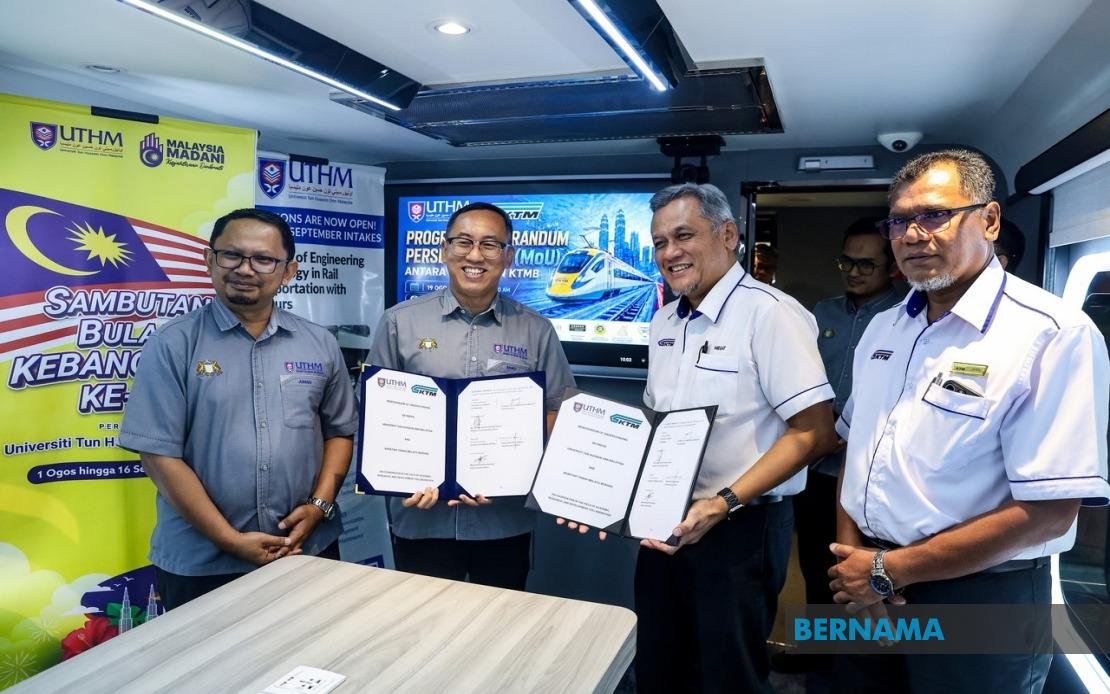
In a move aimed at building stronger expertise within Southeast Asia's rail sector, Universiti Tun Hussein Onn Malaysia (UTHM) and Keretapi Tanah Melayu Bhd (KTMB) have formalized an extended collaboration spanning three years from October 2026 to July 2029. The renewed partnership represents a significant deepening of ties between Malaysia's premier technical institution and the nation's major railway operator, building upon a foundation established in 2019. The agreement encompasses work-based learning programmes, collaborative research initiatives, professional competency development, and systematic knowledge transfer from industry to academia.
The strategic initiative addresses a critical need in Malaysia's transportation infrastructure development. With the country investing heavily in rail expansion and modernization, the shortage of specialist professionals equipped with both theoretical knowledge and practical operational experience has become increasingly acute. By institutionalizing the linkage between academic training and industry operations, UTHM and KTMB are creating a structured pathway to develop the next generation of rail engineers and technologists. This approach aligns with broader regional trends where countries like Singapore and Thailand have similarly integrated academic institutions with their transport authorities to maintain technical excellence.
According to Prof Dr Mas Fawzi Mohd Ali, UTHM's vice-chancellor, the collaboration positions the university's ambitious Global Technopreneur University 2030 (GTU2030) initiative in practical context. This vision emphasizes the integration of scientific knowledge, cutting-edge technology, innovation processes, and entrepreneurial thinking into how universities prepare professionals. Rather than remaining confined to classroom instruction, students enrolled in UTHM's Bachelor of Rail Transportation Engineering Technology with Honours programme will gain direct access to real-world rail operations, exposure to contemporary technology systems, and understanding of the complex challenges that rail operators navigate daily. Such immersive learning experiences have proven elsewhere to accelerate competency development and improve graduate job readiness.
The evidence from the previous partnership speaks compellingly to this model's effectiveness. Nearly 200 UTHM graduates have completed the rail transportation engineering programme and entered the workforce, with many now employed at KTMB itself while others have secured positions in neighbouring Singapore and as far afield as Saudi Arabia. This geographical distribution of Malaysian rail professionals demonstrates that the educational quality meets international standards and that graduates are sufficiently skilled to compete in global labour markets. The capacity to export engineering talent while simultaneously meeting domestic rail sector needs represents a significant achievement in technical education.
Work-based learning forms the operational core of the renewed arrangement. Rather than a one-way relationship where KTMB simply hosts interns, the agreement envisions genuine collaboration where university academics and railway operators jointly explore research questions, share technical expertise, and develop solutions grounded in both theoretical rigour and operational reality. Students participating in work-based learning benefit directly by acquiring technical and professional competencies while simultaneously applying academic concepts to tangible infrastructure challenges. For KTMB, the arrangement provides access to emerging talent, fresh perspectives on technical problems, and the research capacity of a major university.
Research and development collaboration represents another significant pillar of the partnership. UTHM's academic researchers and sophisticated laboratory facilities combined with KTMB's operational datasets, engineering challenges, and field experience create conditions for genuinely innovative problem-solving. Malaysian rail infrastructure faces numerous technical and operational challenges—from maintenance optimization and signalling modernization to energy efficiency and safety systems—where applied research can deliver substantial improvements. By pooling these complementary resources, the partnership can develop practical solutions tailored to Malaysia's specific operational context rather than simply importing foreign technologies or approaches.
Megat Khairulazhar Khairodin, KTMB's chief corporate officer, emphasized the railway operator's perspective on this collaboration. For KTMB, accessing UTHM's specialized expertise, technological resources, and research facilities enables the organization to address pressing operational and technical issues more effectively. The rail industry globally has become increasingly technology-intensive, requiring continuous learning and adaptation by operators. Rather than relying solely on external consultants or technology vendors, KTMB gains a institutional partner capable of developing deep understanding of the operator's specific needs and constraints. This localized partnership model often yields superior outcomes compared to generic external solutions.
The partnership extends beyond the core institutions to encompass broader rail education infrastructure. The collaboration specifically includes academic consultation for diploma, bachelor's and postgraduate programmes offered through KTM Academy (MyRA), the railway operator's training establishment. This integration ensures that formal rail education across multiple levels incorporates the latest operational practices and technical knowledge. Additionally, structured activities such as industry forums, academic site visits, and competency development workshops create channels for systematic knowledge exchange between practitioners and educators. The commitment by KTMB to sponsor five staff members pursuing master's degrees in rail-related fields at UTHM demonstrates the operator's serious investment in deepening its organizational capabilities.
For Malaysia's broader economic development, this partnership carries implications beyond the rail sector itself. Transportation infrastructure quality fundamentally shapes a nation's economic competitiveness, affecting everything from manufacturing supply chain efficiency to labour mobility and urban development patterns. A well-developed domestic capacity in rail technology reduces dependency on imported expertise and foreign technology vendors, improving cost-effectiveness and adaptability. Moreover, the demonstration of successful academia-industry collaboration in transportation provides a model that could extend to other critical infrastructure sectors including ports, airports, and utilities. Malaysia's positioning as a regional hub increasingly depends on having world-class professional capabilities across multiple technical domains.
The timing of this renewal reflects Malaysia's expanding rail ambitions. The country continues developing its rail network through projects such as the Klang Valley Double Tracking Project, the Pan-Borneo Highway integration with rail services, and ongoing maintenance and modernization of the existing national network. These programmes require sustained supply of qualified professionals at various levels. UTHM and KTMB's commitment to a further three-year partnership cycle indicates confidence that the collaboration model has proven its value and warrants expansion. The document exchange aboard a KTMB train travelling from Kluang Station to KL Sentral—itself symbolic of the rail infrastructure connecting the peninsula—occurred during celebrations of Malaysia's 69th National Month, underscoring how technical development serves broader national aspirations.
Looking forward, the success of this model may encourage similar partnerships in other Southeast Asian countries where technical education and infrastructure development remain critical challenges. Malaysia's experience demonstrates that well-structured collaboration between universities and operating companies can simultaneously address immediate industry manpower needs while building research and innovation capabilities. As the region's economies increasingly compete on the basis of infrastructure quality and technological sophistication, the mechanisms for developing specialized professional expertise become ever more strategically important. The UTHM-KTMB partnership represents a pragmatic approach to this challenge, rooting academic excellence in the realities of operational industry.

