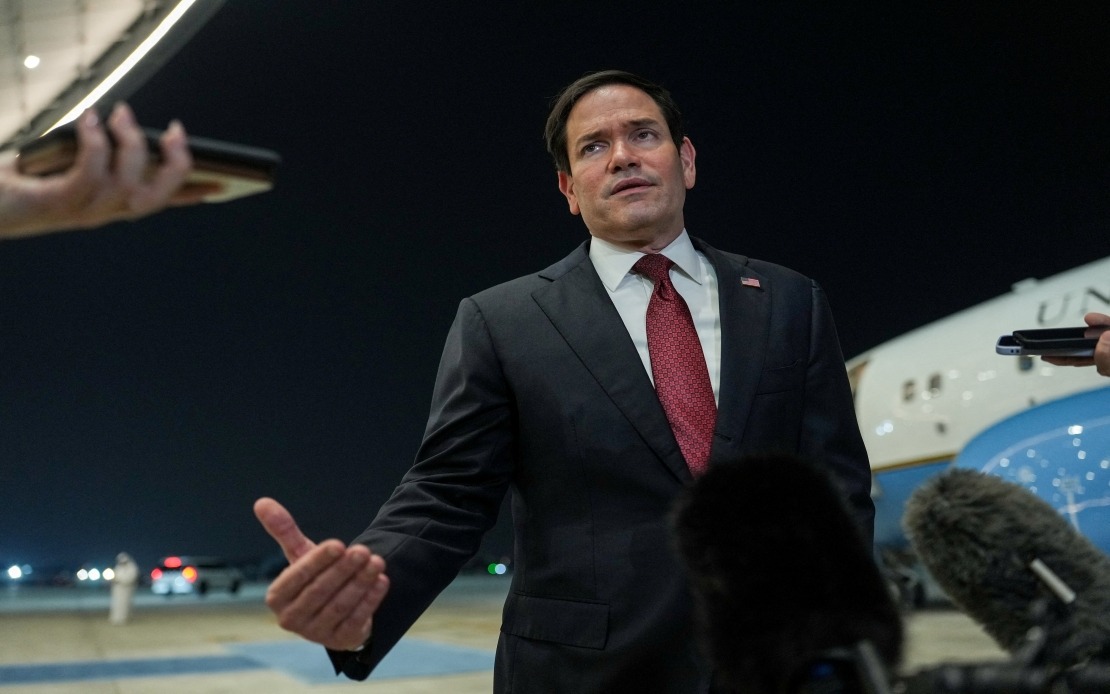
The United States will not be a financial contributor to any reconstruction fund for Iran, according to Secretary of State Marco Rubio, who addressed speculation about international investment mechanisms aimed at supporting Iranian economic development. Speaking to journalists on Tuesday, Rubio made clear that Washington's position remains distinct from potential involvement by other parties, particularly Gulf states that have been mentioned in preliminary discussions about economic cooperation frameworks.
Rubio's statement appears designed to temper expectations about American participation in such arrangements, even as diplomatic channels between Washington and Tehran remain active. The clarification comes amid ongoing negotiations between the two countries, which have recently demonstrated signs of progress toward de-escalation. The Secretary of State emphasised that any decisions regarding which nations might contribute to such a fund remain premature at this stage, suggesting that discussions are still in formative phases with no concrete commitments established.
The American position reflects broader strategic calculations about how engagement with Iran should proceed, particularly given the complexity of sanctions regimes and congressional oversight of foreign assistance. By explicitly excluding federal government involvement, Rubio signalled that any Iran-related economic initiatives would need to come through private sector channels or bilateral arrangements between other nations, not through direct US government funding mechanisms.
For Malaysia and Southeast Asian observers, this development carries significance given the region's substantial commercial ties with both Iran and the United States. The clarity on American non-participation removes one potential complication from regional trade calculations, though it also suggests that Washington intends to maintain distance from direct economic reconstruction efforts that might be perceived as normalisation beyond security agreements.
The Secretary of State suggested that Iran itself possesses the capacity to generate economic opportunities should it choose to pursue certain pathways. This framing emphasises agency and responsibility, implying that Tehran must take constructive steps before international financial support materialises. Rubio linked progress on reconstruction possibilities directly to advancement on security matters that remain contentious between the nations.
Recent diplomatic activity has accelerated considerably, with both countries engaging in substantive talks in Burgenstock, Switzerland, where Qatar and Pakistan served as mediators. The US delegation was led by Vance, while Iran's parliamentary speaker Mohammad Bagher Ghalibaf headed the Iranian negotiating team. Both American and Iranian representatives subsequently reported constructive discussions, though specifics remain closely held.
A significant development occurred when Iran and the United States remotely signed a memorandum last week that formally ends the military conflict that commenced on February 28. This agreement represents a pivotal moment in US-Iran relations, establishing concrete timelines for mutual actions including American naval blockade lifting and Iranian restoration of shipping activities in the Strait of Hormuz. Such commitments address immediate security concerns that have destabilised regional commerce and energy markets.
The nuclear dimension of the emerging agreement appears structured as a separate negotiation track, with Iran committing to refrain from nuclear weapons acquisition while both parties establish a 60-day window to reach a comprehensive accord on Tehran's nuclear programme. This compartmentalisation allows for progress on immediate military de-escalation while preserving space for complex nuclear discussions that involve technical verification, sanctions architecture, and long-term confidence-building measures.
President Donald Trump had previously dismissed reports of a purported US$300 billion fund allegedly connected to any emerging US-Iran arrangement, suggesting scepticism about the scale or nature of financial commitments being contemplated. Trump's rejection of those figures aligned with Rubio's subsequent clarification that American government resources would not be deployed toward Iranian reconstruction activities.
For Southeast Asian economies dependent on stable energy supplies and predictable maritime commerce, the formalisation of these US-Iran understandings reduces geopolitical uncertainty. The Strait of Hormuz remains critical to regional shipping and energy flows, making the memorandum's provisions regarding Iranian shipping restoration particularly relevant to ASEAN nations and their trading partners.
Rubio's emphasis on linkage between reconstruction possibilities and security progress suggests a graduated approach to normalisation, where economic benefits would emerge only as Iran demonstrates sustained compliance with agreed security measures. This framework differs markedly from comprehensive sanctions relief or immediate reconstruction financing, instead proposing a conditional progression where trust must be established through verifiable actions before major financial commitments materialise.
The involvement of Qatar and Pakistan as mediators reflects broader regional diplomatic patterns, with these nations leveraging their historical relationships and geographic positioning to facilitate communication between antagonistic parties. Their mediation role also underscores how regional powers continue shaping outcomes even as superpower negotiations dominate headlines.
Moving forward, the critical question for international observers involves whether the nascent security agreements will hold and whether subsequent negotiations on nuclear matters proceed smoothly. The trajectory of US-Iran relations over coming months will substantially influence regional stability calculations and investment decisions affecting Southeast Asia's broader commercial and security environment.

