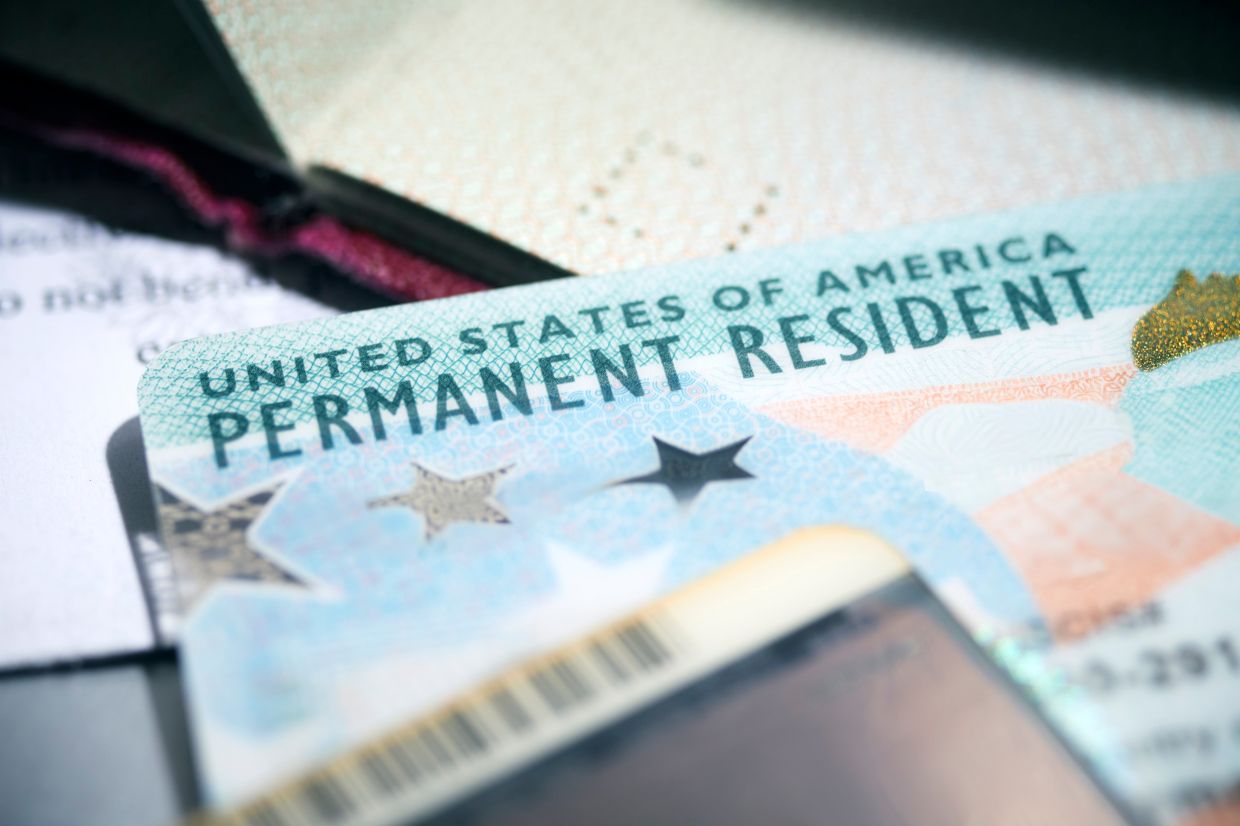
American embassies and consulates worldwide have halted immigrant visa interviews to retrain staff on a stricter interpretation of the "public charge" doctrine—a legal standard that examines whether visa applicants are likely to depend on government benefits. The temporary freeze represents a significant escalation in immigration enforcement and emerged just days after a federal court rejected a separate travel ban affecting 75 countries that was premised on similar security and administrative concerns.
The State Department has instructed officers to evaluate the public charge test comprehensively and uniformly across all visa processing centres. While the underlying assessment criteria—applicant age, physical health, family composition, financial resources, educational attainment, professional qualifications and employment prospects—have long existed in immigration law, the new directive calls for substantially more rigorous application of these benchmarks. In certain instances, officers may now require applicants to post public charge bonds as a condition of approval, a practice that adds both financial and procedural complexity to the immigration process.
Sarah Pierce, director of social policy at Washington-based think tank Third Way and a former analyst at US Citizenship and Immigration Services, characterised the Trump administration's execution as unusually disruptive in scope and speed. Her assessment reflects concerns from immigration practitioners who work directly with applicants. Charles Kuck, an immigration attorney in Atlanta who has defended over 100 clients against administration policies, stated that officers are being explicitly trained to reject cases using public charge reasoning. He specifically noted that family-sponsored applicants would encounter substantially steeper hurdles, while diversity lottery applicants—a visa category important for smaller nations without strong family networks in the United States—would also face heightened scrutiny.
A critical distinction exists between interview cancellation and petition revocation. The State Department has deferred interviews but has not announced the revocation of previously approved petitions or the loss of applicant priority dates in the visa queue. Pierce clarified this procedural difference, explaining that while State has postponed scheduling, it has provided no timeline for resuming normal operations. The practical consequence is grinding delay for people who have already made substantial commitments: purchasing airline tickets, liquidating property, and undergoing medical examinations in preparation for their interviews. This uncertainty particularly affects diversity visa holders, whose visas must be issued by September 30 each year or expire; delays of even weeks create acute time pressure.
The freeze applies exclusively to green card interviews conducted abroad and does not immediately extend to other visa categories including H-1B employment visas, student visas, and tourist visas. However, Kuck noted that the public charge doctrine could legally apply to non-immigrant categories in the future, even though current implementation appears limited to immigrant visa holders. Pierce cautioned that much of the broader H-1B reform agenda remains forward-looking, noting that a proposed US$103,000 visa fee has not yet taken effect and lottery restructuring does not immediately affect those already selected.
Those most vulnerable to disruption are applicants who still require visa stamps issued outside the United States. Officers traditionally weighed the standard criteria unless evidence suggested "unusually significant concerns," and a properly completed I-864 affidavit of support from a sponsor was ordinarily sufficient in family cases. However, the new enforcement posture has shifted the baseline expectations. While Pierce stops short of calling the approach a comprehensive legal ban, she warned that aggressive implementation of these standards could effectively function as a blanket prohibition for certain populations, particularly those with limited financial resources or smaller family support networks.
The lack of statutory guidance creates substantial discretion in officer decision-making. Kuck identified this interpretive vacuum as a significant problem, noting it permits inconsistent application across different embassies and consulates. When officers identify fraud, discover material changes in applicant circumstances, or detect clear errors in USCIS approval decisions, they retain the ability to return files for reconsideration. However, Pierce emphasised that consular officers cannot unilaterally override USCIS determinations; when disputes arise, USCIS makes the final judgment. Family-sponsored cases prove particularly difficult to unwind because fundamental relationship status—whether spouses or immediate relatives—cannot easily be revised. Employment-based petitions receive greater scrutiny on reconsideration, though many initially returned cases ultimately receive re-approval after additional documentation.
Practical guidance for applicants involves careful documentation and restricted international travel. Those holding lawful status should avoid leaving the United States except in genuine emergencies, as re-entry depends on possessing valid visas. Pierce advised applicants to weigh international travel carefully if returning requires obtaining new visa stamps abroad. Workers visiting should carry employment documentation including recent pay stubs and employer letters. Persons lacking lawful status—including those on 240-day extensions after H-1B expiration or those with pending green card or asylum applications—face substantial risk and should not travel internationally.
The enforcement environment has intensified across multiple dimensions simultaneously. The administration has dramatically expanded both the volume and aggressiveness of immigration enforcement activities, which magnifies the consequences of bureaucratic errors and processing delays. Applicants arriving with new status determinations now receive fixed duration rather than open-ended permission, typically limited to four years plus a 30-day grace period, a reduction from the previous 60-day extension window. Those navigating this environment should ensure the National Visa Centre maintains current contact information including working telephone numbers and mailing addresses, as communication breakdowns could jeopardise eligibility.
For Malaysian and Southeast Asian readers, these policy shifts carry particular significance. While the region does not depend heavily on diversity visas, substantial numbers of Southeast Asian professionals utilise H-1B and family-sponsored pathways to the United States. The broader tightening of public charge interpretation may affect skilled workers attempting to bring family members through marriage-based immigration, particularly if spouses lack independent income documentation. Companies sponsoring technical workers should anticipate more extensive background verification and financial documentation requirements from visa-dependent employees. The freeze's impact on processing timelines creates uncertainty for multinational corporations managing expatriate deployments, potentially affecting project planning and staffing arrangements across Southeast Asian offices of American firms.

