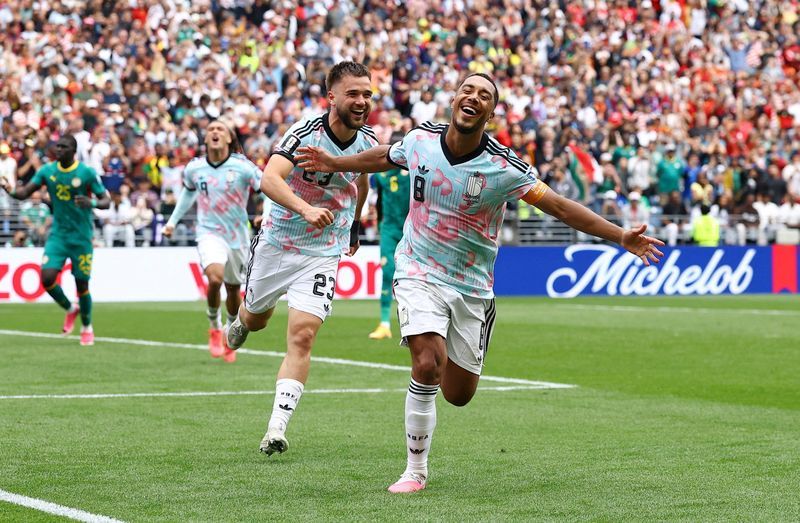
The United States will face Belgium in a knockout World Cup encounter at Seattle on Monday, seeking to maintain momentum built through a series of impressive performances that have transformed modest pre-tournament expectations into genuine aspirations for a deep tournament run. The match represents a significant moment for American soccer, contested in one of North America's most intimidating stadiums where the home crowd's roar could prove a decisive factor in determining which team advances to the quarter-finals.
Before the World Cup began, most observers and supporters alike considered qualification for the round-of-16 as a reasonable achievement for the U.S. team. However, the actual tournament has unfolded quite differently, with Mauricio Pochettino's squad delivering consecutive victories against Paraguay and Australia in group play, followed by an especially impressive 2-0 triumph over Bosnia where they played the final 36 minutes with only ten players following a red card. These results have substantially elevated national sentiment and team confidence, creating an atmosphere where advancing further feels genuinely possible rather than merely aspirational.
The Belgium squad, conversely, has offered considerably less convincing performances throughout the competition. The European side escaped a dangerous encounter with Senegal, trailing through much of regular time before mounting a late comeback that included two goals to force extra time and eventually secure advancement through a penalty decision reviewed by VAR. The sequence left Senegal frustrated with the officiating intervention, while raising questions about Belgium's capacity to perform when facing genuine adversity, a concern that looms large as they face a resurgent American challenge.
Belgium enters this match as the custodian of a fading era in European football. The team represents what many observers have labeled the country's "Golden Generation," anchored by midfield maestro Kevin De Bruyne, striker Romelu Lukaku, and goalkeeper Thibaut Courtois. This tournament may well represent the final World Cup opportunity for this constellation of established stars, adding emotional weight to the encounter. Should Belgium exit now, it would mark the beginning of a transition phase away from the experienced collective that has defined the nation's recent football identity.
The American defensive unit enters this contest as a critical variable. Pre-tournament analysis had identified the back line as a potential vulnerability within Pochettino's tactical framework, yet the performance against Bosnia demonstrated substantial improvement and technical cohesion. The U.S. will likely require that elevated defensive standard to contain Jeremy Doku, a Belgian attacking talent who has delivered a subdued contribution to the tournament thus far and may finally deliver the breakout performance his talent suggests he is capable of producing.
The historical context of these nations' previous meeting adds another layer to Monday's encounter. In 2014, Belgium eliminated the United States in the round-of-16 in Brazil, winning after extra time in a match defined by an extraordinary goalkeeping display from American Tim Howard, who made a record-setting 16 saves. That match captured the American capacity for resilience and near-misses, with the team mounting a late rally that ultimately fell short of forcing additional extra time. Current memories of that disappointment linger within the U.S. soccer community and could serve as psychological motivation.
The U.S. faces a significant personnel concern entering the match, as striker Folarin Balogun is unavailable due to suspension. Balogun had scored during the opening period of the Bosnia match before receiving a red card midway through the second half, forcing his absence at this crucial juncture. This absence requires Pochettino to make consequential decisions regarding team selection and tactical orientation as the Americans attempt to extend their campaign and maintain the growing momentum that has captivated national attention and transformed expectations.
For Malaysian and broader Southeast Asian observers, this match carries relevance beyond mere sporting interest. The tournament demonstrates how investment in structured football development, experienced coaching, and squad cohesion can yield results that exceed initial projections. The U.S. trajectory contrasts sharply with the more erratic performances typical of many Asian nations competing at the World Cup level, offering instructive lessons regarding the importance of sustained planning and continental competitive experience.
The Seattle venue itself contributes meaningfully to this encounter's narrative dimension. Playing at the Seahawks' home stadium provides genuine environmental advantage, as the venue consistently ranks among the loudest in North American sports facilities. The sound environment creates measurable impact on opposition communication and concentration, a factor the U.S. can leverage against a Belgium side that has demonstrated vulnerability under pressure throughout the tournament. This geographic benefit transforms the match into something more than a straightforward competition between two equal technical forces.
U.S. midfielder Tyler Adams encapsulated the team's elevated ambitions when discussing the encounter, noting that the squad aims to "leave our mark on the game and a legacy behind," while emphasizing that advancing further accelerates the tournament's profile and popular engagement. This sentiment reflects how the American team's unexpected success has democratized expectations, shifting from hoping to compete respectably to genuinely believing in advancement possibilities. For Belgium, Monday represents either the beginning of a successful championship run or the moment when the Golden Generation's window finally closes.
The match will reveal whether the U.S. can maintain the defensive discipline and attacking efficiency demonstrated thus far, or whether Belgium's deeper European pedigree and championship experience prevail despite underwhelming earlier performances. Both teams understand the significance of the encounter, though only one will progress to face more elite opposition in the tournament's later stages. The intensity of the Seattle environment, combined with the tactical battle between these contrasting sides, promises a memorable encounter that will substantially shape the remainder of the World Cup narrative.

