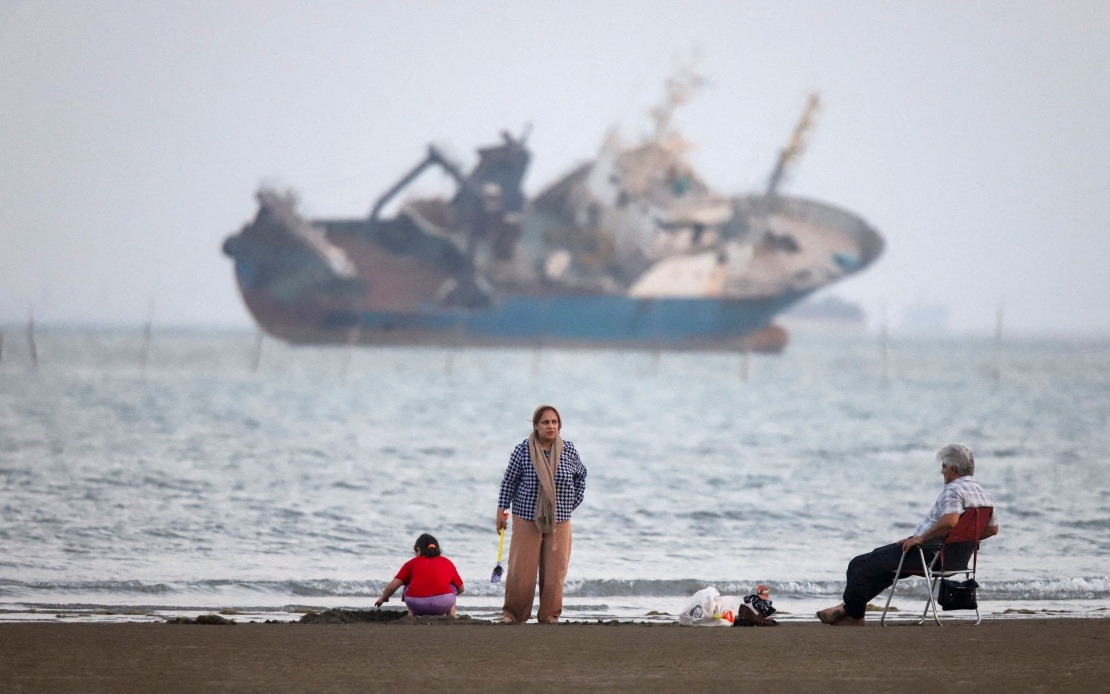
The United States Treasury Department announced a fresh round of Iran-related sanctions on Friday, targeting financial networks and individuals accused of facilitating Iranian government operations, in response to escalating maritime tensions in one of the world's most strategically vital shipping corridors. The Office of Foreign Assets Control, the Treasury's enforcement arm, designated multiple entities and individuals it linked to Iran's leadership structure and military apparatus following recent incidents involving commercial vessels transiting the Strait of Hormuz.
The sanctions package focused on Ali Ansari, described by OFAC as closely connected to Iran's Supreme Leader Mojtaba Khamenei and the Islamic Revolutionary Guard Corps, along with a network of shadow financial operators. These designations represent Washington's continued use of financial leverage as a pressure mechanism against Tehran, particularly targeting the informal banking channels through which sanctioned entities circumvent international restrictions.
Three exchange houses operating from major Iranian cities formed the core of the financial targeting. The Mohammad Darbani and Partners Exchange, the Mohsen Khandan and Partners Exchange, and the Lavasani and Partners Exchange—all registered as general partnerships based in Tehran and Shiraz—were added to OFAC's Specially Designated Nationals List, freezing any US-connected assets and prohibiting American individuals and entities from conducting business with them. These shadow exchanges typically facilitate currency conversions and fund transfers for sanctioned actors operating outside formal banking systems.
The sanctions also extended beyond Iran's borders, reaching Smart Global Limited, a holding company incorporated in Saint Kitts and Nevis in the Caribbean. The inclusion of this offshore entity underscores the transnational scope of Iran's financial networks, with various jurisdictions serving as bases for operations designed to obscure beneficial ownership and evade international oversight. Such arrangements allow sanctioned individuals and organizations to maintain global business interests despite restrictions.
The timing of these sanctions reflects mounting concerns in Washington regarding Iranian actions in the Persian Gulf, following a pattern of attacks targeting commercial shipping in the Strait of Hormuz. This waterway, through which roughly one-third of seaborne traded oil passes annually, has become increasingly volatile, with multiple incidents affecting vessels of various nationalities. For maritime commerce throughout Southeast Asia and globally, disruptions or uncertainties in this corridor carry significant economic implications, potentially driving up insurance costs and shipping delays.
Tehran's response came swiftly through Foreign Minister Seyed Abbas Araghchi, who disputed the American characterization on the social media platform X. Araghchi contended that Iran has complied with international agreements while accusing the United States Treasury Secretary of violating specific provisions of what he referenced as a memorandum of understanding. His statement suggests ongoing diplomatic friction over the interpretation and implementation of existing understandings between the parties.
Araghchi's assertion that "there can only be mutual compliance" signals Tehran's insistence on reciprocal adherence to agreements, implying that American actions have breached understandings that Iran believes it has honored. This rhetorical position reflects a broader Iranian narrative portraying itself as the aggrieved party seeking international recognition of American violations. The exchange illustrates the deep mistrust characterizing US-Iran relations, with each side accusing the other of bad faith conduct.
For Malaysia and other Southeast Asian nations, these escalating US-Iran tensions carry tangible consequences beyond political theater. The Strait of Hormuz sits at the gateway to the Indian Ocean and beyond, serving as the maritime artery through which substantial portions of regional trade flow. When tensions rise in this zone, maritime insurance premiums increase, shipping routes face uncertainty, and energy costs potentially rise—factors that directly influence Malaysia's import and export costs, inflation rates, and overall economic competitiveness.
The sanctions regime targeting Iranian financial networks also reflects a broader American strategy of economic pressure designed to constrain Iranian government revenues and operational capacity. By systematically targeting the financial infrastructure that sustains Iranian activities, Washington seeks to raise the costs of Iranian operations in the Gulf and beyond. However, the effectiveness of such measures remains contested, with evidence suggesting that Iran has developed sophisticated mechanisms for circumventing sanctions through informal networks, cryptocurrency transactions, and sympathetic third-party jurisdictions.
The designation of Caribbean-registered entities demonstrates how sanctions enforcement increasingly requires international coordination and offshore monitoring. Shell companies and holding entities in jurisdictions with lighter regulatory oversight provide convenient vehicles for sanctions evasion, requiring sustained intelligence gathering and international cooperation to effectively identify and counter. This challenge extends beyond Iran, affecting global efforts to combat illicit financial flows and constrain the operations of designated entities.
Looking forward, the pattern of tit-for-tat sanctions and counter-accusations suggests little room for diplomatic resolution in the near term. The maritime incidents in the Strait of Hormuz appear likely to trigger additional American responses, potentially further constraining Iranian financial operations and deepening the cycle of escalation. For regional observers, including those in Southeast Asia, such dynamics reinforce the importance of maintaining diversified trade routes, cultivating relationships with multiple partners, and building resilience against disruptions to critical maritime corridors.

