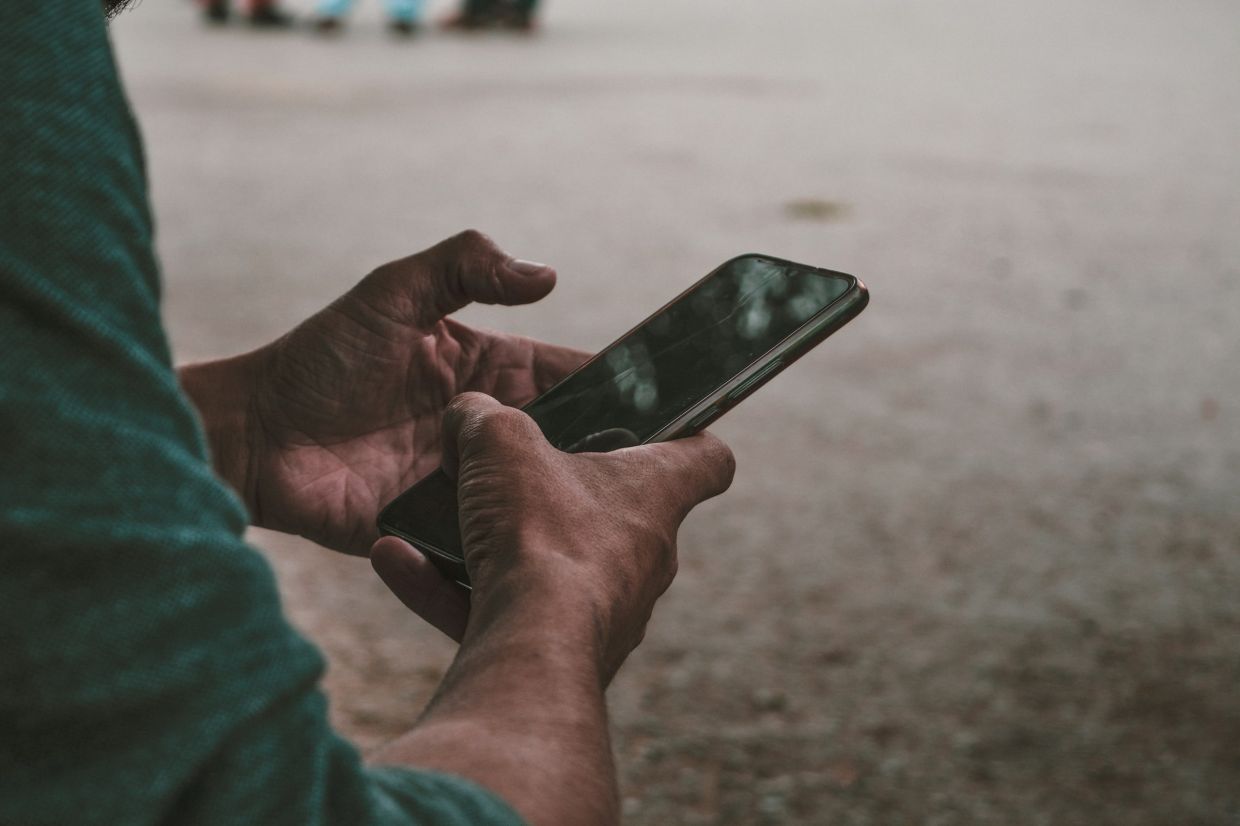
The United States Supreme Court has delivered a significant decision constraining law enforcement's ability to conduct mass surveillance of citizens through cellphone location data. In a 6-3 ruling, the court determined that geofence warrants—tools that cast a wide net to identify every mobile device within a geographic area during a specific timeframe—trigger constitutional safeguards under the Fourth Amendment. The decision represents a rare consensus between the court's ideological wings, with Justice Elena Kagan joining two fellow liberal justices and three conservative colleagues in the majority opinion.
At the heart of the case lies a fundamental question about privacy expectations in the digital age. Justice Kagan articulated the court's position with clarity: individuals retain a reasonable expectation of privacy regarding their cellphone's location information, and law enforcement infringes upon this constitutionally protected right whenever they demand such data from technology companies, regardless of whether the request covers only a limited timeframe or comes through a third-party intermediary. This pronouncement signals that the court views location data as inherently sensitive personal information deserving robust constitutional protection.
The case emerged from a 2019 armed bank robbery in Virginia. Police obtained a warrant to search cellphone location records stored by Google, leading them to Okello Chatrie, who was subsequently linked to the crime. Chatrie, armed with a firearm, allegedly fled with US$195,000 (RM793,845) from the targeted financial institution. He was eventually convicted and now serves a 12-year prison sentence. The facts of the case illustrated law enforcement's perspective: geofence warrants represent an efficient investigative tool that can quickly narrow suspect pools and generate leads in serious criminal investigations.
Chatrie's legal team, represented by attorney Adam Unikowsky, mounted a straightforward constitutional challenge. They contended that geofence warrants authorize indiscriminate searches through every individual's location account within a defined perimeter, thereby violating Fourth Amendment protections. This argument framed the issue not merely as a privacy concern but as a structural constitutional problem—the warrants inherently sweep up innocent bystanders' information in pursuit of criminal suspects. The appeal resoned with the court's majority, which recognised the tension between security interests and privacy rights.
Government attorneys defending the practice offered a pragmatic counterargument: smartphone users retain ultimate control by choosing to disable location services on their devices. This position emphasised individual agency and the optional nature of location tracking. However, the court's majority appeared unconvinced by this logic, recognising that most users neither fully understand how location data accumulates nor possess practical ability to opt out of location collection entirely, particularly given the integrated nature of modern smartphones.
The court's decision, however, did not categorically prohibit geofence warrants. Instead, it remanded the case to lower courts for determination of whether the specific search in Chatrie's prosecution was constitutionally reasonable. This approach leaves significant questions unresolved and permits continued police use of the technique subject to case-by-case judicial review. Lower courts must now weigh factors such as the geographic scope of the geofence, the temporal duration, the nature of the alleged crime, and the availability of less intrusive investigative methods.
The ruling carries substantial implications for criminal investigations across the United States. Geofence warrants gained prominence following their deployment to identify individuals present at the January 6, 2021 Capitol riot, when supporters of then-President Donald Trump stormed the building in an effort to prevent congressional certification of Joe Biden's election victory. That high-profile application demonstrated how this investigative technique could facilitate mass identification of protest participants, raising concerns about chilling effects on lawful political assembly and protest activities.
The American Civil Liberties Union of Virginia's legal director, Eden Heilman, hailed the decision as a crucial limitation on law enforcement overreach. Heilman emphasised that the ruling refutes any notion that police possess unlimited authority to weaponise emerging technologies for mass surveillance purposes. The statement underscored a broader principle: technological capability does not automatically translate into constitutional legitimacy. Citizens do not forfeit privacy protections merely by using cellular devices, a position increasingly relevant as smartphones become ubiquitous personal tracking devices.
Google's approach to location data storage has shifted substantially in recent years. The technology giant no longer maintains location history data on company servers and has systematically deleted accumulated location information. This corporate decision reflects growing privacy consciousness within the technology sector and recognition that excessive data retention poses both legal risks and reputational challenges. However, other major technology companies continue collecting and storing granular location information, maintaining infrastructure that permits precisely the type of dragnet searches the Supreme Court has now circumscribed.
For Malaysian and Southeast Asian observers, this decision offers instructive lessons about judicial approaches to technology regulation and privacy protection. As regional governments increasingly explore digital surveillance capabilities—particularly location tracking through mobile networks and applications—the Supreme Court's framework emphasises that constitutional protections and judicial oversight provide essential counterbalances to security interests. The ruling suggests that even democratic societies with established legal traditions must vigilantly guard against surveillance overreach.
The decision also illuminates tensions between public safety imperatives and individual privacy that will intensify as technology advances. Law enforcement agencies genuinely benefit from geofence warrants in serious criminal investigations, yet unfettered access to such tools creates genuine risks of political misuse and unjustified intrusions into lawful activities. The Supreme Court's middle-ground approach—permitting continued use while requiring reasonableness determinations—reflects an attempt to navigate these competing concerns, though questions remain about how lower courts will implement this standard.
Looking forward, the ruling will likely spawn extensive litigation as defence attorneys challenge geofence warrant applications across the country. Technology companies may face mounting requests for location data accompanied by judicial orders of varying stringency. Legislatures may also intervene with explicit statutory frameworks governing geofence warrants, potentially establishing clearer standards than courts can develop through incremental case-by-case analysis. The intersection of technology, privacy, and security will continue demanding sophisticated legal and policy responses.

