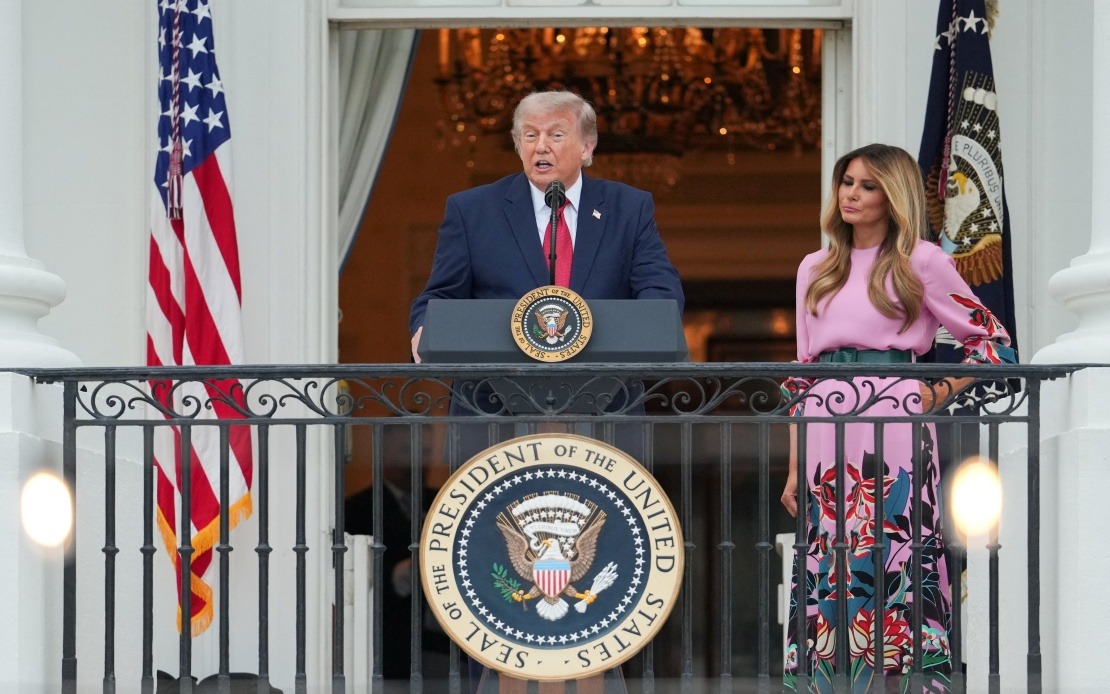
The United States Supreme Court has intervened in an escalating constitutional dispute by temporarily blocking a lower court's suspension of construction work on President Donald Trump's planned ballroom at the White House. Chief Justice John Roberts issued a brief order on Friday allowing the controversial project to continue, effectively freezing the appeals court's previous ruling that had halted construction pending further review. The temporary measure remains in effect until the Supreme Court makes a final determination on the merits of the case, marking a significant development in a legal battle that has consumed considerable judicial resources and public attention over several years.
The dispute centres on whether the president has the authority to undertake such a substantial construction project on the White House grounds without explicit congressional approval. An appellate court recently determined that Trump exceeded his executive powers by proceeding without seeking formal authorisation from lawmakers, ruling that construction must be suspended until the matter receives proper legislative attention. The decision reflected longstanding constitutional principles regarding the separation of powers and the limits of executive authority, particularly when major decisions involve federal property and substantial expenditures.
Heritage conservation groups and preservation advocates have mounted the primary legal challenge, arguing that the ballroom represents an inappropriate expansion of the White House complex that disregards both historical significance and architectural integrity. These organisations contend that the administration failed to conduct proper public consultation before advancing the project, and they emphasise concerns about the massive financial commitment—estimated at hundreds of millions of dollars—that such construction demands. The criticism extends beyond conservation circles to include fiscal watchdogs and lawmakers questioning whether such expenditures represent appropriate use of federal resources during times of competing budgetary priorities.
The Trump administration has consistently justified the project on national security grounds, portraying the new ballroom as essential infrastructure designed to protect state functions and visiting dignitaries. According to the president's recent public statements, the structure incorporates sophisticated protective measures including bulletproof materials, drone-resistant design features, and missile-defence capabilities. Trump emphasised that these security enhancements need not compromise aesthetic considerations, declaring the facility would simultaneously achieve both protection and visual appeal for state occasions.
Physically, the project represents a substantial expansion of the historic residence. Construction commenced in 2025 on the former site of the East Wing, with the new structure covering several thousand square metres. The administration argues this enlargement is operationally necessary, enabling the White House to host significantly larger state banquets and diplomatic functions than its current facilities accommodate. This expansion capacity allegedly addresses genuine constraints in the existing infrastructure when managing major international events and formal ceremonial occasions.
For Malaysian and Southeast Asian observers, this dispute illustrates ongoing tensions within American governance between executive authority and legislative oversight—principles that resonate across democratic systems in the region. The case demonstrates how constitutional safeguards designed to check concentrated power can slow or complicate administrative initiatives, even those justified on security grounds. Malaysia's own experience with development projects on sensitive government property provides instructive parallels regarding stakeholder consultation and institutional accountability.
The Supreme Court's temporary order represents a procedural decision rather than a final judgement on the merits. By halting the lower court's suspension, the justices have prioritised allowing the project to proceed while the fundamental constitutional questions remain unresolved. This approach suggests the Court may be signalling scepticism toward the appeals court's reasoning, though formal opinions explaining the Court's thinking have not yet been issued. The decision creates uncertainty for all parties, as the underlying dispute continues through the judicial system without a definitive resolution.
The ballroom's legal challenges have accumulated over years, reflecting the project's complexity and the various stakeholders invested in its outcome. Beyond conservation groups, congressional members have expressed concerns about the bypassing of their institutional role in approving major federal expenditures. Some lawmakers have questioned whether the security rationale adequately justifies the expense and architectural intervention, while others have criticised the lack of transparency in project planning and execution.
Looking forward, the Supreme Court's full resolution of this case could establish important precedent regarding executive discretion in federal property management and the extent to which security considerations can override other institutional checks. The decision may influence how future administrations approach major modifications to sensitive government facilities, either expanding executive flexibility or reinforcing congressional prerogatives. For now, construction continues, but the constitutional questions that prompted the appeals court's intervention remain pending before the nation's highest court, ensuring this dispute will likely extend further into the judicial and political calendar.

