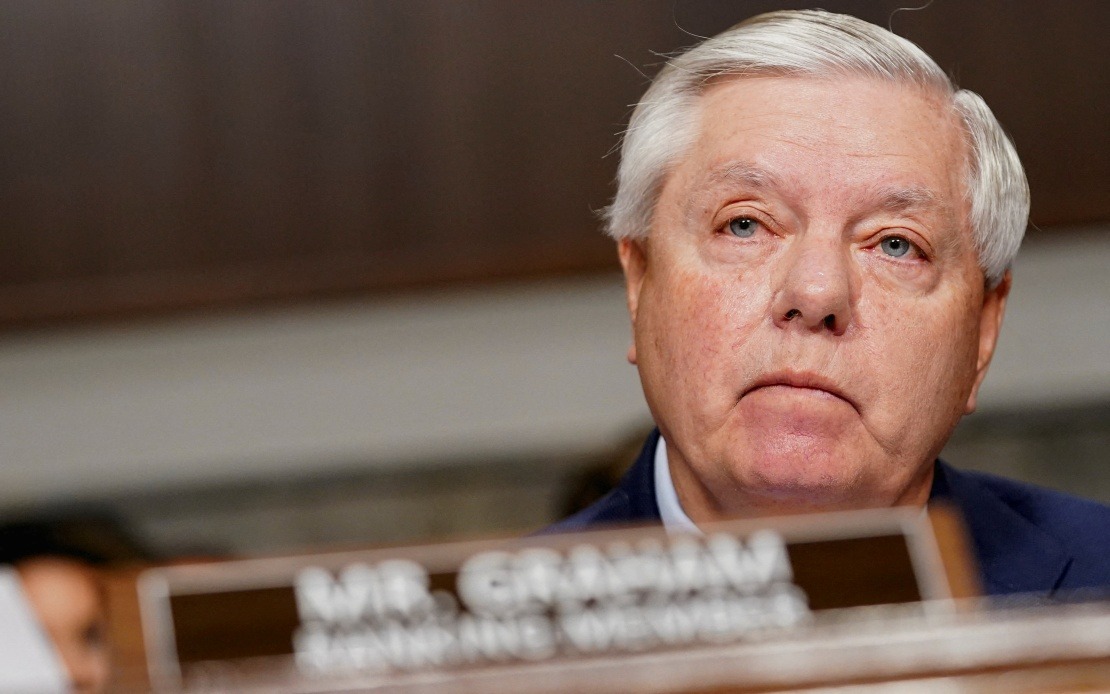
Republican Senator Lindsey Graham of South Carolina passed away on Saturday evening, July 11, following an abrupt and brief illness, according to an announcement from his office released on Sunday. The 71-year-old legislator had represented his state in the upper chamber of Congress for more than two decades, establishing himself as one of the most vocal figures in American politics during a period of significant partisan tension.
Graham's death marks the loss of a pivotal figure in Republican politics who wielded considerable influence within his party and maintained a complex relationship with the Trump administration. His family requested privacy and prayers during what they described as an incredibly difficult time, with little additional detail provided regarding the nature of his illness in the official statement.
First elected to the Senate in 2002, Graham had secured reelection three times since his initial victory, most recently in 2020. His longevity in the chamber reflected his political durability and the deep support he maintained among Republican voters in South Carolina, where he had cultivated a strong grassroots following. At the time of his death, he was actively preparing to campaign for a fifth consecutive six-year term in November's election, signalling his intention to remain a central figure in Senate politics.
Graham's prominence extended far beyond South Carolina's borders. As chair of the Senate Budget Committee, he held significant power over fiscal policy discussions and budget negotiations, positions that granted him influence over appropriations and federal spending priorities. His role placed him at the forefront of debates over government funding and economic policy that have direct implications for international relations and military commitments abroad.
The senator maintained an exceptionally close relationship with President Donald Trump, frequently serving as a confidant and advocate for the former president's policies and positions within the Republican caucus. This alliance shaped much of Graham's public positioning in recent years, particularly regarding defence matters and America's global engagements. His unwavering support for Trump's agenda represented a significant shift from his earlier career, when Graham had occasionally critiqued the former president's approach to international relations.
Graham's death arrives at a particularly consequential moment in global affairs, particularly regarding American support for Ukraine. Just days before his passing, on Friday, he had completed a visit to Kyiv, where he conducted meetings with Ukrainian President Volodymyr Zelenskyy. These discussions, which focused on American military and financial assistance to Ukraine amid its ongoing conflict with Russia, underscored Graham's sustained engagement with international security issues and his advocacy for robust American involvement in Ukrainian affairs.
For Malaysian observers monitoring American political dynamics, Graham's passing removes from the Senate a legislator whose positions on Asian security and regional affairs carried weight within the Republican establishment. His views on America's role in maintaining regional stability and countering regional powers shaped broader Republican approaches to Indo-Pacific policy, though his influence had become increasingly intertwined with Trump's particular vision of American foreign policy.
The sudden nature of Graham's death and the limited information surrounding his illness left many questions unanswered about succession arrangements and the immediate impact on Senate operations. With control of the chamber hanging in balance in an increasingly polarised Congress, Graham's departure at such a critical electoral moment carried implications for Republican legislative capabilities heading into the November elections.
Graham's career spanned a transformative period in American politics marked by the rise of populism within the Republican Party and fundamental recalibrations of long-standing alliances and policy frameworks. His evolution from a more traditional Republican establishment figure to a staunch Trump loyalist illustrated the broader ideological realignment that had reshaped the party during the past decade.
The loss of such a prominent senator during an election cycle raises questions about campaign momentum and party positioning in what has become one of the most contentious political environments in recent American history. His absence will be felt acutely within Republican leadership circles, where his voice had become instrumental in shaping party strategy and defending administration policies on major international and domestic matters.

