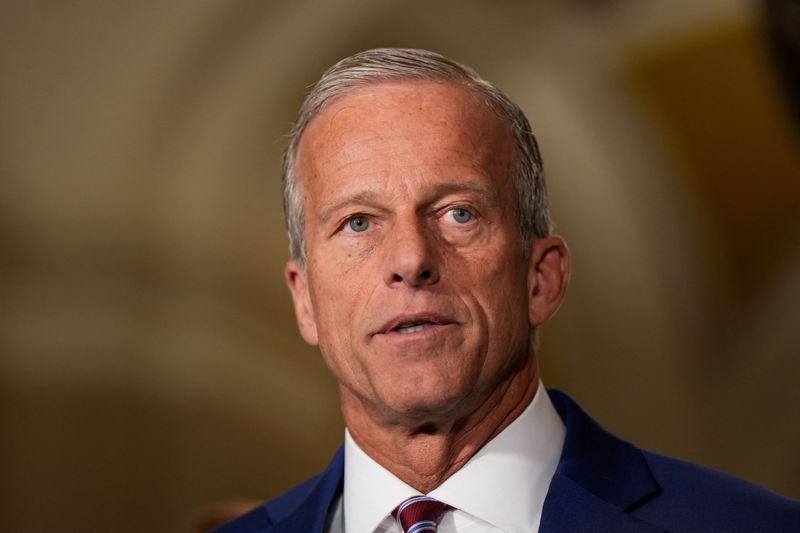
Republican Senate Majority Leader John Thune has initiated procedural steps to advance sweeping cryptocurrency legislation when Congress returns from its August recess in mid-September, marking a crucial juncture for the digital assets industry in Washington. Filed early Saturday morning, Thune's motion establishes the groundwork for a full floor vote on the Clarity Act, signalling that Senate Republican leadership believes passage remains achievable despite persistent Democratic resistance. The timing of the filing suggests party strategists view the intervening weeks as sufficient to negotiate the necessary support before bringing the measure to a vote.
The legislative effort requires 60 votes to clear the Senate's filibuster threshold, a target that necessitates bipartisan cooperation. Currently, Republicans control fewer than 60 seats, meaning the bill cannot advance without attracting at least eight Democratic senators to cross party lines. This mathematical reality underscores why the procedural vote represents a critical test—Republican leaders would not commit to a floor vote unless they possessed reasonable confidence in their ability to achieve that crossover support. The filing demonstrates that despite months of negotiations and demonstrated opposition from much of the Democratic caucus, Senate Republicans believe the political conditions remain favourable for a successful outcome.
The Clarity Act would fundamentally reshape how digital assets are regulated in the United States by establishing the first comprehensive federal framework governing cryptocurrency. The legislation distinguishes between digital tokens classified as securities and those deemed commodities, a clarification that industry advocates argue is essential for legal certainty. Equally important, the bill delineates which federal regulators—whether the Securities and Exchange Commission, the Commodity Futures Trading Commission, or banking authorities—hold jurisdiction over different categories of digital assets. For the cryptocurrency industry, which has long operated in regulatory ambiguity, such clarity represents a foundational achievement that could accelerate mainstream adoption and institutional participation.
President Donald Trump has elevated crypto reform to a priority within his administration's agenda, leveraging considerable political capital to advance the Clarity Act alongside previous stablecoin legislation he signed into law last year. This prioritisation reflects the deep financial connections between Trump and the cryptocurrency sector. In June, Trump disclosed more than US$1.4 billion in income derived from his family's cryptocurrency ventures during the preceding year, a figure that crystallises the stakes of crypto regulation for the presidential family. The scale of this income illuminates why crypto policy holds such prominence in Trump administration deliberations and why the White House has mobilised its resources to push for legislative passage.
The cryptocurrency industry itself has invested substantially in advancing pro-crypto political outcomes. During the 2024 election cycle, crypto-aligned donors channelled more than US$119 million to political candidates broadly sympathetic to deregulation and industry-friendly frameworks. This spending reflected a coordinated strategy to shift the congressional balance toward legislators willing to support comprehensive crypto legislation. The magnitude of this investment underscores how central regulatory reform has become to industry strategy and how far crypto stakeholders are willing to invest in reshaping the political landscape to their advantage.
Democrats have raised ethical objections to advancing crypto regulation while the sitting president and his family maintain substantial financial interests in the sector. Party members have advocated for enhanced restrictions governing the crypto activities of federal officials and their families, viewing such safeguards as necessary to prevent conflicts of interest from distorting regulatory outcomes. These negotiations around governance restrictions remain fluid and contested, suggesting that final legislative language could still be shaped by Democratic demands for transparency and accountability mechanisms. The unresolved nature of these discussions indicates that passage is not certain despite Republican procedural manoeuvres.
The financial services sector, particularly large commercial banks, has actively lobbied against certain provisions within the Clarity Act. Banking institutions have expressed alarm at language that would permit cryptocurrency companies to offer rewards on stablecoin holdings, effectively positioning digital asset firms as competitors for customer deposits. Banks view these provisions as threatening to their deposit base and the regulatory protections that have long safeguarded the traditional banking system. This opposition reflects deeper structural tensions between established financial institutions and emerging crypto-native companies regarding market dominance and regulatory privilege.
For Southeast Asian observers and Malaysian financial regulators, the US legislative trajectory carries important implications. Malaysia's financial authorities have monitored American crypto regulation closely, recognising that frameworks established in Washington often influence regulatory thinking globally. Should the Clarity Act pass, it would establish a federal baseline for crypto regulation that other jurisdictions might eventually emulate or respond to competitively. Bank Negara Malaysia and the Securities Commission have developed their own regulatory approaches to digital assets, but they operate within a global context where American standards carry outsized influence. A comprehensive US federal framework could accelerate the regionalisation of crypto regulation within Southeast Asia.
The procedural motion filed by Senator Thune represents more than mere legislative scheduling—it signals genuine confidence among Republican leadership that a pathway to the 60-vote threshold exists, even if that pathway requires sustained negotiation and compromise. The timing, positioned immediately before a congressional recess, suggests calculated confidence that intervening weeks will yield additional Democratic support or that existing Democratic sympathies can be mobilised. For the cryptocurrency industry, which has long sought regulatory legitimacy, the Clarity Act's progression through the Senate represents a pivotal moment in American financial regulation and potentially global crypto governance architecture.

