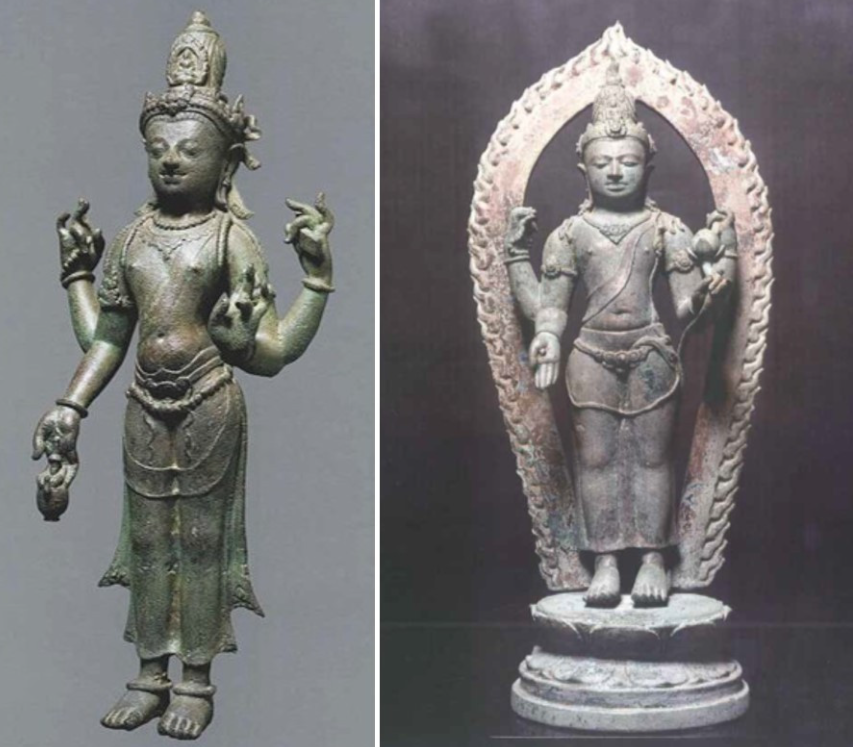
The United States has repatriated two rare eighth-century bronze statues to Indonesia following their recovery from the illicit trafficking operations of Douglas Latchford, a British antiquities dealer whose career became synonymous with the systematic looting of Southeast Asian cultural heritage. The formal handover took place at a ceremonial event held at the Indonesian Consulate in New York, marking another milestone in international efforts to restore plundered artefacts to their countries of origin.
Latchford had orchestrated one of the most extensive antiquities smuggling schemes across the region, trafficking stolen artworks from Cambodia and Indonesia for over four decades. US prosecutors indicted him in 2019 on charges related to allegedly running a comprehensive operation that funnelled looted Cambodian and other Southeast Asian antiquities through the international art market to wealthy collectors and institutions worldwide. Though Latchford died in 2020 before facing trial, his legacy remains a cautionary lesson in how individual dealers can exploit weak enforcement mechanisms and exploit the opacity of global art markets.
The two repatriated pieces are bronze sculptures depicting Avalokiteshvara, a four-armed bodhisattva figure venerated throughout Buddhist traditions for embodying compassion and mercy. These sculptures, which had been removed from archaeological sites in Indonesia decades earlier, exemplify the irreplaceable cultural artefacts that vanish when looters strip heritage sites of their treasures. The exact Indonesian locations from which the statues were excavated remain undetermined, a common complication when tracing antiquities through multiple illicit transactions.
Between 2003 and 2007, Latchford sold these statues along with numerous other Southeast Asian pieces to an American private collector. To facilitate their entry into the international art market and obscure their illegal origins, Latchford deliberately withheld critical information about the objects' actual provenance and provided false documentation. This deception allowed stolen cultural property to circulate among wealthy buyers who might have rejected openly looted items, illustrating how misrepresentation serves as a cornerstone technique in antiquities trafficking networks.
Latchford had maintained a base in Bangkok throughout his career and eventually obtained Thai citizenship in the 1960s, positioning himself at the centre of Southeast Asian antiquities trade. His reputation as a leading Khmer art dealer was built over decades of dealings in Cambodian artefacts and other regional pieces. However, when US authorities moved against him in 2019, the scope of his operations became apparent—revealing connections between looted temples, international dealers, and major museums that had unwittingly become repositories for stolen heritage.
Following Latchford's death, his extensive collection valued at more than US$50 million was voluntarily surrendered by his daughter to Cambodian authorities. Additionally, in 2021, an American collector who had acquired 34 Cambodian and Southeast Asian antiquities from Latchford chose to return them voluntarily, demonstrating a growing awareness among private holders that possessing looted artefacts carries both legal and moral consequences. This voluntary cooperation has become increasingly common as museums and collectors recognise the institutional and ethical costs of retaining disputed items.
US Attorney Jay Clayton emphasized the American government's commitment to disrupting antiquities trafficking networks during the repatriation ceremony, pledging continued cooperation between prosecutorial agencies and Homeland Security Investigations to prevent future smuggling. The statement reflects broader international recognition that cultural property theft requires sustained enforcement efforts and inter-agency coordination. Such declarations carry significance for Southeast Asian nations struggling to recover looted heritage, signalling that major market countries like the United States are willing to invest resources in repatriation.
Indonesia has benefited from multiple repatriation actions in recent years. In 2024, US authorities returned three Indonesian artefacts valued at approximately Rp6.5 billion—including a Majapahit-period stone relief, a bronze Buddha figure, and a standing bronze Vishnu sculpture—that had been trafficked through networks operated by Indian-American dealer Subhash Kapoor and US dealer Nancy Wiener. These individuals sold looted antiquities through the Manhattan-based Art of the Past gallery, revealing that multiple trafficking systems operated simultaneously during overlapping timeframes.
The Kapoor network proved particularly extensive, with investigators recovering more than 2,500 antiquities between 2011 and 2023 with combined estimated value exceeding US$143 million. The case also resulted in recovery of 27 Cambodian artefacts, demonstrating how enforcement operations targeting one trafficking system often uncover stolen property belonging to multiple countries. For Indonesia and other Southeast Asian nations, such large-scale recovery operations represent opportunities to systematically reclaim cultural property that might otherwise remain in foreign collections indefinitely.
These repatriations illustrate the broader challenge of protecting Southeast Asian archaeological heritage from systematic looting. Major dealers operating through international hubs like Bangkok, New York, and London have historically exploited gaps in enforcement and the difficulty of tracking provenance across borders. The increasing visibility of such cases has spurred greater scrutiny of acquisition practices by major museums, though the fundamental problem persists—that looted artefacts continue circulating through networks that exploit demand from wealthy collectors willing to overlook questionable origins.
For Malaysia and the broader Southeast Asian region, these developments carry important implications. The mechanisms demonstrated in Indonesian and Cambodian repatriations—particularly the cooperation between US authorities and source countries—establish precedents that other nations may invoke when seeking return of their own cultural property. Malaysia's own archaeological heritage, including artefacts from the Srivijaya and other ancient kingdoms, faces similar threats from international trafficking networks. The visible enforcement activity in the Latchford and Kapoor cases may serve as deterrent, though experts caution that demand among international collectors remains robust enough to sustain the illicit trade.
Moving forward, the success of these repatriations depends partly on continued momentum in enforcement and museum accountability, but also on source countries strengthening domestic protections at archaeological sites and improving documentation of cultural property. Indonesia's experience demonstrates both the possibilities and limitations of relying on foreign governments to recover looted heritage—action typically occurs only after artefacts surface in major Western markets. For Malaysian policymakers and cultural authorities, the lesson underscores the critical importance of preventive measures and international cooperation to protect Southeast Asian cultural treasures before they enter trafficking networks.

