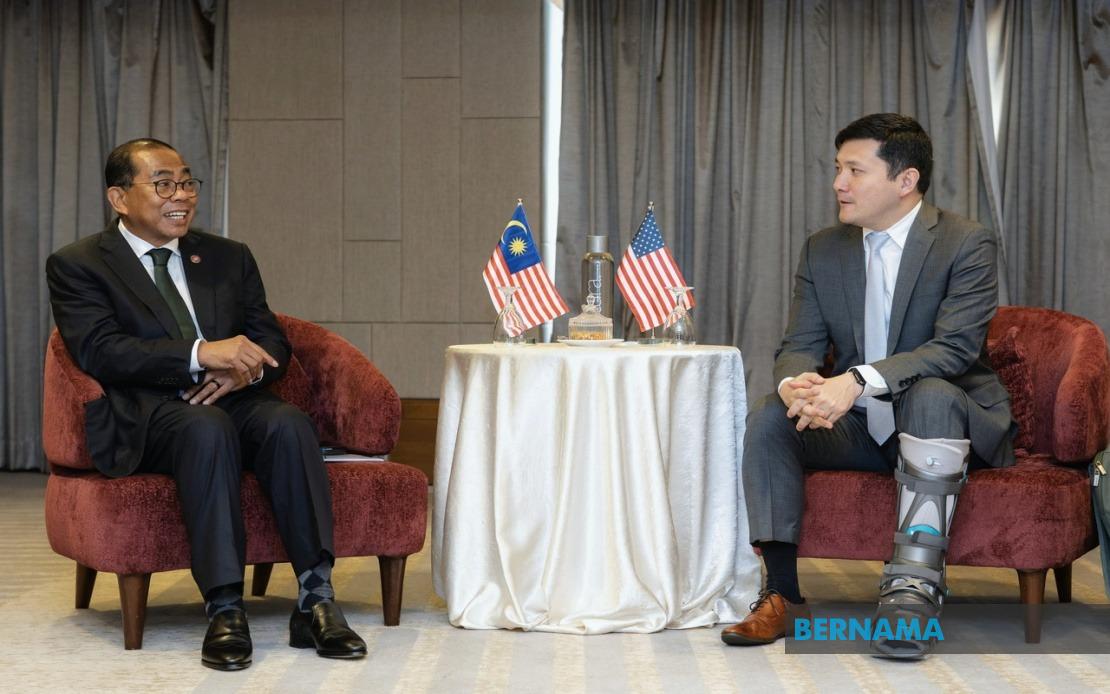
Malaysia's Defence Minister Datuk Seri Mohamed Khaled Nordin has underscored Washington's unwavering dedication to deepening bilateral defence cooperation with the country, signalling the ongoing importance of the US-Malaysia security partnership in an era of shifting regional dynamics. The reassurance came during a courtesy call from US Ambassador to ASEAN Kevin Kim, who visited the Defence Minister on the sidelines of the 37th Annual Military Law and Operations Conference (MILOPS) currently taking place in Kuala Lumpur. The timing of the diplomatic engagement highlights the strategic significance Washington places on maintaining robust defence relationships across Southeast Asia, particularly with a nation as strategically positioned as Malaysia.
The Defence Minister characterised the discussions as centred on reinforcing existing collaborative frameworks rather than deliberating on contentious policy positions. This measured approach reflects the mature nature of the defence relationship between the two countries, where both sides have developed sufficient institutional mechanisms and trust to maintain steady progress without the need for constant policy negotiations. According to Mohamed Khaled, the US communicated through its Ambassador that enhancing defence sector cooperation remains a priority for Washington, underscoring America's broader Indo-Pacific strategy that seeks to maintain security partnerships with key regional players.
Beyond the American engagement, Mohamed Khaled also hosted courtesy calls from ASEAN Secretary-General Dr Kao Kim Hourn and Singapore's newly appointed Permanent Secretary for the Ministry of Defence Joseph Leong, reflecting Malaysia's central role in regional security discussions. The convergence of these high-level visits during MILOPS demonstrates how multilateral defence forums serve as crucial platforms for diplomatic engagement and relationship-building among regional actors. The breadth of these interactions suggests that Malaysia continues to be viewed as a pivotal actor within ASEAN's security architecture, capable of bridging diverse interests and perspectives within the bloc.
During his meeting with ASEAN Secretary-General Kao, Mohamed Khaled noted that discussions encompassed the multifaceted challenges confronting the regional bloc, including transnational threats, maritime security concerns, and the need to preserve stability amid great power competition. Both officials acknowledged that the defence sector occupies a vital position in supporting ASEAN's foundational principles of centrality, non-interference, and the pursuit of peaceful resolution to regional disputes. This emphasis on the defence sector's role in underpinning ASEAN's strategic autonomy reflects growing recognition within the bloc that military preparedness and cooperation are indispensable components of regional resilience.
The discussions also centred on how defence mechanisms can facilitate deeper integration among ASEAN member states, a theme that carries particular resonance given the bloc's ongoing efforts to strengthen institutional capacity and operational coordination. By positioning defence cooperation as a vehicle for advancing ASEAN's collective goals, rather than merely as a mechanism for bilateral advantage, the Defence Minister highlighted a nuanced understanding of how security partnerships can serve broader regional integration objectives. This approach contrasts with more transactional security relationships and reflects Malaysia's commitment to maintaining ASEAN cohesion while deepening partnerships with external actors.
Joseph Leong's courtesy call introduced a new dimension to Malaysia's defence diplomacy, as Singapore's newly installed defence bureaucrat sought to establish working relationships that will shape bilateral and multilateral security cooperation in the coming period. Joseph's stated commitment to maintaining and deepening defence cooperation extends beyond conventional bilateral arrangements to encompass the structured multilateral frameworks through which Malaysia and Singapore operate. Notably, Joseph emphasised the enduring relevance of the Five Power Defence Arrangements (FPDA), the long-established security mechanism involving Malaysia, Singapore, Australia, the United Kingdom, and New Zealand.
The FPDA, often regarded as the quiet backbone of Southeast Asian security architecture, continues to play an outsized role in maintaining stability and deterrence in one of the world's most strategically significant regions. The affirmation of Singapore's commitment to this arrangement, particularly from a newly appointed official, suggests continuity in defence policy despite broader domestic political considerations. For Malaysia, this reaffirmation carries particular weight, as the FPDA provides both a mechanism for coordinating responses to transnational security challenges and a platform through which Malaysian defence interests are articulated within a broader Anglo-Saxon security architecture.
The MILOPS conference itself serves as the substantive backdrop to these bilateral and multilateral diplomatic interactions, bringing together defence officials and military representatives from more than 30 countries to deliberate on contemporary security challenges and operational best practices. Spanning from August 3 to August 6, the conference creates an intensive environment for informal networking and relationship-building among defence establishments that might otherwise struggle to find opportunities for substantive engagement. The legal and operational focus of the conference reflects how modern defence cooperation transcends military-to-military relations to encompass the complex frameworks of international law, rules of engagement, and operational procedures that govern military interactions.
For Malaysia specifically, the positioning of Kuala Lumpur as the host venue for such a significant international defence conference underscores the country's aspirations to maintain a leadership role in regional security discussions. By bringing together diverse participants from North America, Europe, Asia-Pacific, and beyond, the conference affirms Malaysia's commitment to fostering dialogue and understanding on matters of common concern. The location also sends a subtle but important message to the international community regarding Malaysia's political stability and administrative capability to host complex multilateral events.
The cumulative effect of these diplomatic engagements—the American reaffirmation of defence partnership commitments, ASEAN's emphasis on the defence sector's role in maintaining bloc cohesion, Singapore's renewed commitment to multilateral frameworks, and the broader conference environment—portrays Malaysia's defence sector as simultaneously integrated into multiple overlapping security arrangements while maintaining strategic autonomy. This positioning reflects the careful balancing act that Malaysian defence policy has long pursued, seeking to benefit from security partnerships with major powers while preserving ASEAN's own organisational independence and avoiding alignment with any particular bloc. As regional security challenges evolve and great power competition intensifies, such balanced engagement becomes increasingly valuable for a nation seeking to maximise security while minimising strategic vulnerability.

