The United States has taken a formal step toward implementing its vision for post-conflict Gaza by notifying Congress of financial backing for an International Stabilisation Force, a development that underscores Washington's commitment to President Trump's controversial Middle East peace framework. The State Department confirmation, released on Thursday, marks an institutional acknowledgment of a plan that has animated recent diplomatic efforts in the region, though its reception remains deeply fractured among key stakeholders.
The notification, formally conveyed to Congress on July 30, represents what administration officials characterise as an opening phase in a broader stabilisation strategy for the territory. State Department representatives declined to disclose specific funding amounts, instead framing the commitment as preliminary in nature while emphasising that support would continue as the so-called Board of Peace pursues its mandate. This measured language reflects the cautious optimism within the State Department as it charts a path through competing regional pressures and entrenched positions.
The Trump administration's 21-point peace plan, announced on July 31, envisions a coordinated withdrawal of Israeli forces carried out in phases, the complete disarmament of Hamas and allied armed groups, and the deployment of the International Stabilisation Force operating alongside a reconstructed Palestinian police force. State Department spokesman Tommy Pigott characterised the initiative as historic and noted that it has catalysed what he termed a massive global coalition assembled through the Board of Peace framework. The administration has also highlighted the release of hostages as evidence of diplomatic progress, though the conflict's underlying structural issues remain largely unresolved.
However, the peace framework has encountered significant resistance from Israel's government, which views certain provisions as insufficiently protective of Israeli security interests. Prime Minister Benjamin Netanyahu has explicitly rejected the plan's timeline and implementation mechanisms, insisting to his Cabinet this month that Israeli military operations will persist until Hamas undergoes what he characterises as verifiable and complete disarmament. This intransigence reflects deeper Israeli concerns about the credibility of any security arrangements that might follow armed withdrawal, concerns rooted in decades of regional conflict and competing claims over Gaza's future governance.
Hamas, by contrast, has publicly maintained its commitment to the roadmap, signalling a willingness to engage with the stabilisation framework even as its military capacity remains substantially intact. This asymmetry between Hamas's stated endorsement and Israel's conditional rejection has created an impasse that recent high-level diplomatic missions have struggled to overcome. The Board of Peace, operating as the primary multilateral mechanism for advancing negotiations, continues to navigate these contradictory positions while attempting to maintain forward momentum on implementation details.
Senior White House advisor Jared Kushner's recent visit to the region exemplified the intensity of current diplomatic engagement. His meetings with Hamas officials in Egypt and subsequent discussions with Netanyahu in Israel, conducted alongside Board of Peace envoy Nikolay Mladenov, revealed fundamental disagreements over Gaza's immediate trajectory. According to media accounts of these encounters, Netanyahu and Kushner clashed over Israel's continued military operations in Gaza, with the Israeli Prime Minister refusing to curtail strikes and Kushner expressing opposition to their continuation. These divergences underscore how the peace plan remains contested even among parties ostensibly committed to its advancement.
The context of these negotiations is shaped by an October 10, 2025 ceasefire agreement that formally took effect but has been marked by persistent Israeli military activity. According to Gaza's Health Ministry, Israeli violations of the ceasefire have resulted in 1,283 Palestinian deaths and 4,248 wounded, figures that illustrate the agreement's fragility and the ongoing humanitarian toll. These violations suggest that despite the formal ceasefire framework, military operations continue at scales that undermine the stabilisation objectives the International Stabilisation Force would theoretically address.
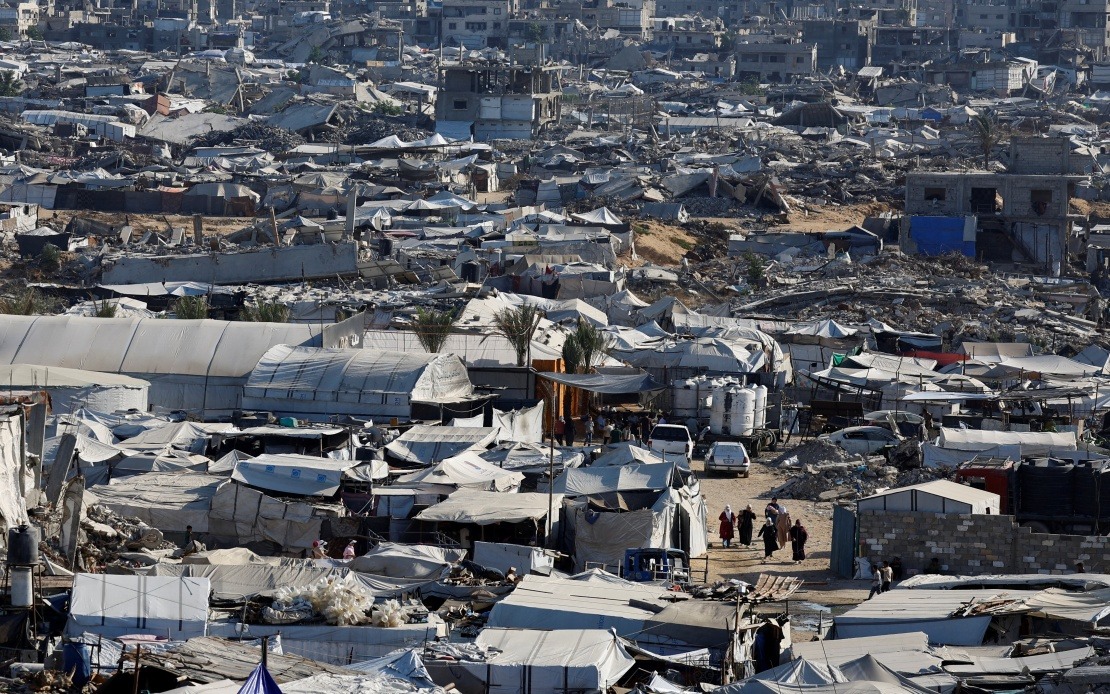
The broader Gaza conflict, which commenced with Israel's military operations on October 8, 2023, has generated casualties and destruction of unprecedented magnitude in the territory's recent history. Official Palestinian health authorities document more than 73,000 deaths and 174,000 wounded across the conflict's duration, while approximately 90 percent of Gaza's infrastructure has been destroyed or rendered non-functional. This scale of devastation creates an environment in which stabilisation efforts confront not merely political obstacles but also the immense practical challenges of reconstruction and institution-building amid widespread trauma and material scarcity.
For Malaysia and other Southeast Asian nations monitoring Middle East developments, the stabilisation force initiative carries several implications. First, the continued centralisation of peace efforts within US-led frameworks raises questions about the role of multilateral institutions and regional actors in resolving intractable conflicts. Second, the divergence between stated commitments and operational implementation—as evidenced by ceasefire violations—illustrates how formal agreements may fail to constrain military actors driven by competing strategic objectives. Third, the humanitarian dimensions of this conflict, reflected in casualty figures and infrastructure destruction, create potential requirements for international aid and reconstruction partnerships in which Southeast Asian countries might participate.
The funding notification to Congress also signals American domestic political engagement with Gaza policy at a moment when election cycles and shifting public opinion shape foreign aid priorities. The decision to characterise initial funding as exploratory rather than comprehensive suggests either budgetary constraints or political uncertainty about the plan's viability. This hedging language may reflect recognition within the State Department that despite high-level diplomatic effort, the fundamental interests of Israeli and Palestinian actors remain substantially misaligned on critical implementation questions.
As the Board of Peace continues its work, the International Stabilisation Force remains a theoretical construct rather than an operational reality. The mechanism's eventual credibility will depend substantially on whether Israel and Hamas can genuinely commit to the disarmament and withdrawal sequences the plan prescribes. The US funding commitment, announced without specified amounts or timelines, appears designed to demonstrate serious intent while maintaining flexibility should regional dynamics shift further. Whether this approach generates sufficient momentum to overcome entrenched opposition remains the central question facing implementation efforts in the coming months.

