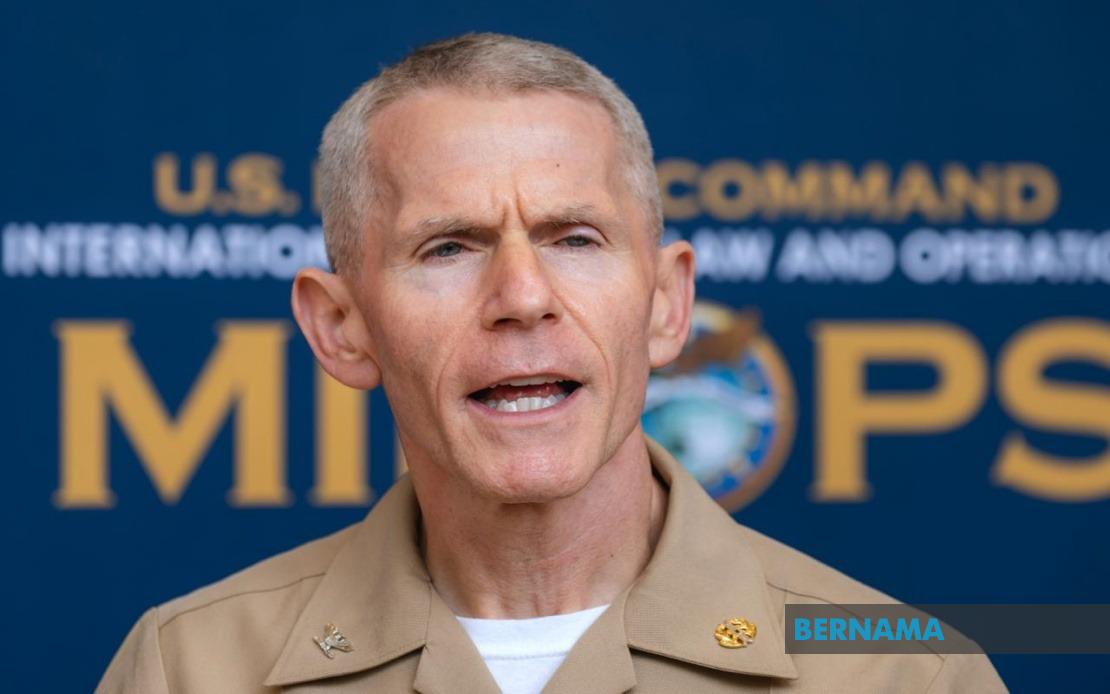
The United States Pacific Command declared its unwavering commitment to maintaining security and stability across the South China Sea during remarks at an international military law conference in Kuala Lumpur, signalling continued American engagement in one of the world's most strategically significant waterways. Navy Captain Dustin Wallace, serving as USPACOM's Staff Judge Advocate, articulated the command's determination to preserve the regional balance through persistent operational presence and deterrence against destabilising activities, underscoring how the contested sea lanes remain integral to broader Indo-Pacific security calculations.
Wallace emphasised that USPACOM's mission extends beyond mere military posturing, framing American involvement around fundamental principles of international law that underpin regional prosperity. The command's strategic approach hinges on protecting freedom of navigation and commerce—principles that benefit not only the United States but also the constellation of Southeast Asian nations whose economies depend critically on unimpeded maritime trade. By anchoring its commitment in legal frameworks rather than raw military power, USPACOM attempts to position American activities as defensive and rules-based rather than hegemonic, a messaging choice relevant given widespread sensitivities about great power competition in the region.
A defining feature of USPACOM's stated approach involves tailored engagement with individual ASEAN members rather than one-size-fits-all policies. Wallace acknowledged that regional nations hold diverse strategic interests and threat perceptions, with some prioritising concerns about Chinese assertiveness while others maintain complex relationships with Beijing and prefer measured approaches. This differentiated strategy reflects recognition that ASEAN's consensus-based decision-making and non-aligned traditions create inherent limitations on collective responses to security challenges, forcing external powers to navigate bilateral relationships carefully to avoid appearing to pressure the grouping into positions that some members find uncomfortable.
The emphasis on ASEAN centrality carries particular weight given longstanding tensions between maintaining American influence and respecting Southeast Asian agency. USPACOM's stated support for ASEAN-led mechanisms, including the ASEAN Regional Forum and the East Asia Summit, represents an attempt to advance American interests through multilateral frameworks that legitimate regional voices. However, the durability of this approach depends partly on whether ASEAN can maintain its diplomatic cohesion when member states face mounting pressure to choose sides in great power competition, a challenge that grows more acute as strategic tensions intensify.
The South China Sea itself remains the flashpoint where American commitment meets concrete reality. The waterway carries approximately one-third of global maritime trade and substantial portions of Japan's energy imports, making freedom of navigation a genuine American interest rather than mere principle. Overlapping territorial claims, competing military buildups, and incidents involving civilian and military vessels have created a precarious equilibrium where miscalculation could escalate tensions rapidly. USPACOM's presence through regular freedom of navigation operations and military deployments serves as a counterweight to Chinese military modernisation and island fortification efforts that have transformed the balance of power in recent years.
Wallace's reaffirmation arrives amid an evolving strategic landscape where the United States confronts dual challenges of maintaining deterrence credibility while avoiding escalation that could trigger wider conflict. The command's deterrent mission requires demonstrating resolve through visible deployments and operational activities, yet these very activities sometimes provoke Chinese protests and military responses that heighten tensions. Navigating this tension demands sophisticated communication strategies and clear delineation of red lines, areas where military-to-military dialogue mechanisms become increasingly valuable despite broader geopolitical friction.
The hosting of the 37th International Military Law and Operations Conference in Kuala Lumpur itself carried symbolic significance, bringing together over 300 military and civilian experts from more than 30 countries to discuss rules governing military conduct and operations. Malaysia's role as conference host reflected its position as a respected ASEAN voice with its own South China Sea interests, including disputed claims in the region. The conference theme of advancing security and prosperity across the Indo-Pacific resonated with multilateral aspirations despite underlying disagreements about how to balance Chinese and American interests.
For Malaysian and broader Southeast Asian audiences, USPACOM's commitment statement addressed fundamental questions about regional security architecture in an era of strategic competition. The region faces genuine dilemmas: embracing greater American security engagement provides counterbalance to Chinese military capabilities, yet deepening defence ties with Washington carries political costs with Beijing and risks drawing countries into superpower competition not of their choosing. The search for hedging strategies that maintain productive economic relationships with China while seeking security reassurance from America and other partners remains a delicate balancing act for most Southeast Asian governments.
Wallace's emphasis on strengthening partnerships while respecting sovereign interests attempted to address these sensitivities by framing American engagement as supportive rather than directive. The assertion that USPACOM seeks to identify and meet individual nations' priorities suggests flexibility and responsiveness absent from more coercive approaches. However, critics might question whether this framework adequately accounts for power imbalances or the constraints smaller nations face when responding to demands from much larger powers with strategic interests at stake.
Looking forward, USPACOM's stated commitment faces practical implementation challenges that extend beyond rhetorical endorsement. Maintaining credible deterrence requires sustained military deployments and modernisation efforts that compete for budget resources, particularly given evolving threats elsewhere globally. The command's emphasis on working with individual ASEAN partners requires investing diplomatic capital and understanding each nation's unique perspectives, constraints, and red lines—an approach more labour-intensive than blanket policies but potentially more effective in a region where consensus-building and face-saving remain paramount.
Ultimately, USPACOM's declaration reflects an American strategy predicated on maintaining the existing rules-based order in Asian waters while acknowledging the legitimate interests of regional players. Whether this approach succeeds depends partly on whether the United States can sustain its commitment credibly over time, whether ASEAN can maintain sufficient cohesion to benefit from American security reassurance without fracturing into polarised camps, and whether Chinese and American military activities can be managed through institutional channels to prevent escalation. The South China Sea thus remains not merely a geographic flashpoint but a test case for whether the Indo-Pacific region can accommodate rising and existing powers within a framework that protects smaller nations' rights and preserves prosperity for all.

