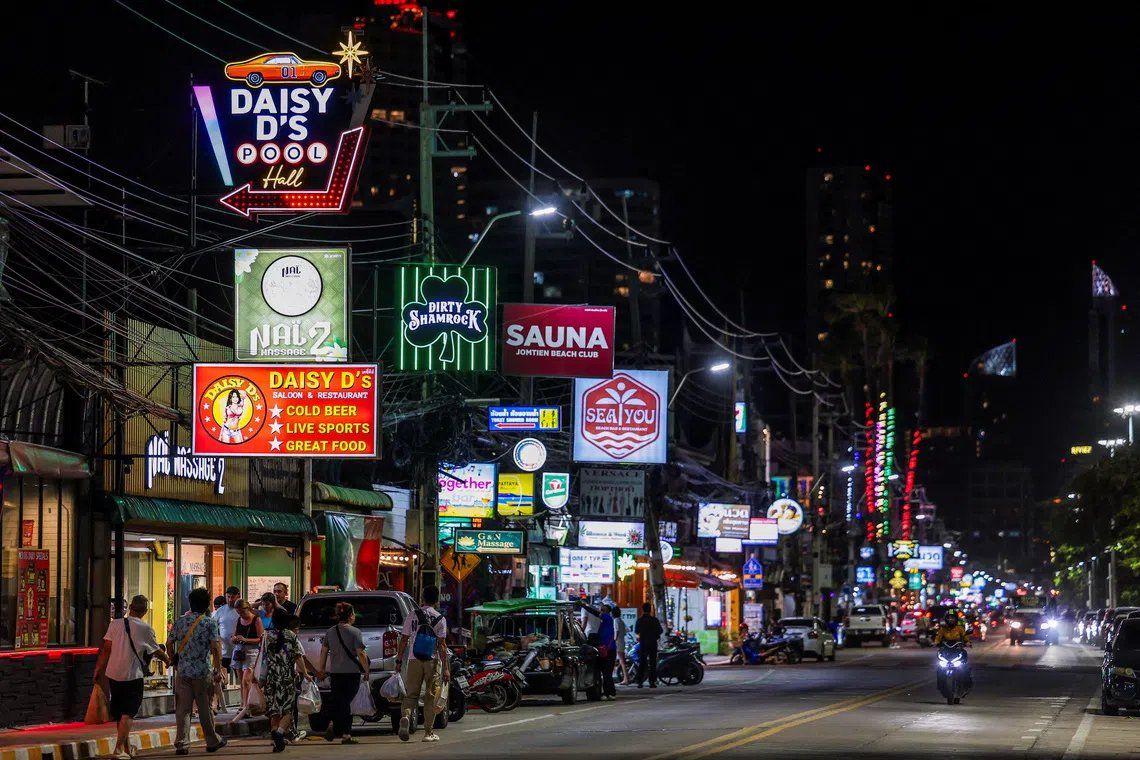
Thailand's popular beach destination of Pattaya is bracing for the arrival of the USS Abraham Lincoln this week, a development that carries both economic promise and troubling social implications for the resort city. The American aircraft carrier, accompanied by two additional naval vessels, will host nearly 5,000 sailors and Marines seeking rest and recuperation following an extended deployment exceeding 200 days. The docking represents a significant moment for a destination that has struggled economically in recent years, yet it simultaneously highlights the persistent tension between tourism revenue and the protection of vulnerable populations that has long characterised Pattaya's complex relationship with foreign military visitors.
The Lincoln's journey to Thai waters reflects shifting geopolitical currents in the Middle East. Having departed its home port of San Diego in November, the carrier was rerouted to support military operations connected to the U.S.-Israeli conflict with Iran, ultimately setting a modern record for consecutive days at sea according to Democratic lawmakers monitoring the deployment. This extended mission has taken a toll on personnel morale and mental wellbeing, with reports emerging this month from military-focused publications documenting suicide attempts and declining conditions aboard the vessel. The rest period in Pattaya therefore carries significance beyond simple shore leave, representing a critical opportunity for crew recovery after months of operational strain.
Local authorities in Pattaya have undertaken preparatory measures ahead of the carrier's arrival, reflecting awareness of potential complications accompanying such a large influx of foreign servicemen. Police have expanded patrol operations around the city's main beachfront and entertainment districts, following weekend enforcement actions that detained between 40 and 50 individuals suspected of involvement in prostitution. Pattaya police chief Anek Srathongyoo acknowledged the inherent difficulties in these efforts, noting that sex workers frequently operate in public spaces with sufficient discretion to evade detection. Despite Thailand's legal prohibition on prostitution, the industry operates openly in major tourism centres, presenting authorities with a persistent enforcement challenge that intensifies when large numbers of foreign military personnel arrive.
Economic considerations dominate the perspective of Pattaya's business community. Mayor Poramase Ngampiches has indicated that each visiting sailor could inject between 1,000 and 3,000 baht—approximately $30 to $91—into the local economy daily, contingent on length of stay and accommodation choices. Since shore leave is typically staggered to prevent all personnel from disembarking simultaneously, expenditures will be distributed across several days, potentially maximising economic distribution throughout the city. Pattaya's tourism sector has experienced remarkable contraction in recent years, creating genuine appreciation among business leaders for any stimulus. Lisa Hamilton, president of the Pattaya Nightlife Business Association, expressed this sentiment plainly, recounting two decades of residence in the city but noting that no previous year had witnessed such marked economic slowdown.
However, financial benefit comes with a darker dimension that cannot be separated from discussions of military port visits to Pattaya. The sex tourism industry remains so extensive and internationally significant that the U.S. Federal Bureau of Investigation characterised the city a decade ago as one of the world's premier destinations for sexual exploitation. Academic experts including Pipatpong Fakfare, an associate professor at Bangkok University's School of Humanities and Tourism Management, warn that increased customer demand correlates directly with heightened risks of human trafficking, sexual exploitation, and communicable disease transmission. The convergence of large numbers of personnel with reported mental health challenges and a readily accessible commercial sex industry creates conditions that stakeholders acknowledge as potentially dangerous.
The historical context of Pattaya's development illuminates current dynamics. What began as a modest fishing village was transformed into a tourism hub during the Vietnam War era, when American military personnel on rest and recuperation leave sought entertainment and companionship. That pattern has persisted across decades, embedding the sex industry into Pattaya's economic and social fabric in ways that prove extraordinarily difficult to disentangle from mainstream tourism development. The city's over 300,000 hotel rooms were constructed to accommodate this market structure, meaning that traditional and problematic tourism streams remain fundamentally intertwined with the destination's economic model.
Thanent Supornsahasrungsi, president of the Association of Chonburi Tourism Federation, has noted that the overall commercial impact will depend significantly on where visiting personnel choose to spend their time. Some sailors may elect to travel to Bangkok or other destinations rather than remaining in Pattaya, which would distribute economic benefits more widely across Thailand's tourism sector. This geographical unpredictability adds complexity to efforts by local authorities to manage the visit's social impacts, as concentrated expenditure patterns could either mitigate or exacerbate problems depending on where sailors congregate.
The situation reflects a broader dilemma confronting Southeast Asian destinations that have developed economic dependency on military tourism. Revenue generation and legitimate business interests must be weighed against documented risks of human trafficking, exploitation, and public health concerns. Thai authorities face pressure to welcome foreign military visitors—relations with the United States remain strategically important—while simultaneously addressing documented harms associated with rapid influxes of shore leave personnel. The conversation around the Abraham Lincoln's visit therefore extends beyond simple economics to encompass fundamental questions about sustainable tourism development and the protection of Thailand's most vulnerable populations from exploitation.
For Malaysian and broader Southeast Asian observers, the Pattaya situation offers instructive lessons about tourism policy priorities and the long-term consequences of economic models built upon military-oriented entertainment sectors. The case demonstrates how short-term financial gains can become entrenched in ways that subordinate social welfare concerns and create persistent vulnerabilities to exploitation. While the visiting sailors deserve rest and recreation after arduous deployment, the mechanisms through which that recreation is provided merit critical examination by policymakers and business leaders across the region.

