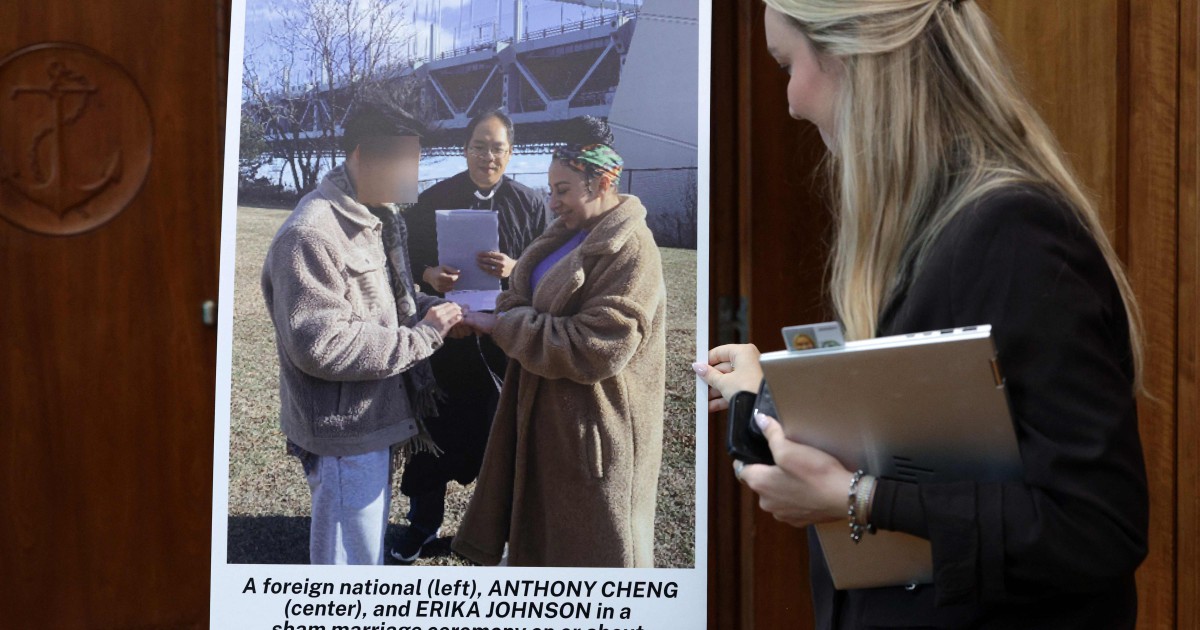
The United States Justice Department has brought criminal charges against 11 individuals for their alleged participation in an extensive matrimonial fraud scheme spanning more than a decade. According to court documents, the operation facilitated roughly 1,000 sham marriages designed to circumvent immigration regulations, with the vast majority of beneficiaries being Chinese nationals seeking to establish legal residency in the United States. The charges represent a significant enforcement action during a period when immigration remains a contentious policy issue in Washington.
The scheme operated by arranging marriages between US citizens and foreign nationals who had no genuine matrimonial intentions, thereby enabling the immigrants to satisfy spousal visa requirements and eventually transition to permanent resident status. Such fraudulent marriage arrangements constitute a serious violation of immigration law, as they undermine the integrity of the legal immigration system by exploiting familial relationship categories that typically receive expedited processing. The scale of this particular operation—involving four figures of fabricated unions—demonstrates the reach and persistence of the criminal enterprise authorities uncovered.
Chinese nationals represented the predominant group of beneficiaries within the scheme, reflecting broader immigration patterns in which applicants from certain countries face considerable barriers to obtaining visas through conventional channels. The spousal visa pathway, which traditionally receives favourable treatment within the immigration hierarchy, became an attractive shortcut for individuals and intermediaries seeking to circumvent the lengthy quotas and employment-based requirements that otherwise govern Chinese immigration to the United States. This illustrates how aspiring immigrants sometimes resort to illegal mechanisms when legitimate pathways prove inaccessible or excessively burdensome.
The timing of these charges coincides with heightened political focus on immigration enforcement in Washington. The indictment emerged following executive directives from the Trump administration targeting what officials characterise as irregular immigration patterns, including the concept of "birth tourism"—wherein expectant mothers travel to the US specifically to give birth and secure citizenship for their children. While the marriage fraud prosecution addresses a distinct category of immigration violation, it reflects the administration's broader enforcement posture toward what it views as circumvention of immigration rules.
For Malaysian and Southeast Asian observers, this development underscores the serious consequences facing those who participate in immigration fraud schemes. The prosecution demonstrates that American authorities maintain substantial investigative capacity to identify and prosecute transnational immigration crimes, even those that operate across extended timescales. The ten-year operational window before enforcement action suggests that such schemes may continue for lengthy periods before detection, yet the eventual reckoning can carry severe legal ramifications for all participants.
The alleged perpetrators faced charges in federal court, where conviction on immigration fraud offences typically results in substantial prison sentences and potential deportation for non-citizens. Beyond criminal penalties, participants in fraudulent marriage arrangements risk permanent bars to future immigration benefits, destroyed financial investments in the scheme, and reputational damage. For the US citizens enlisted in these arrangements, conviction creates collateral consequences affecting employment, professional licensure, and community standing.
The mechanics of the scheme likely involved intermediaries who identified willing US citizens, compensated them for participation in the fraudulent marriages, and coordinated the legal paperwork to establish ostensible spousal relationships. Such operations require coordination across multiple jurisdictions and careful management of documentation to withstand immigration officer scrutiny. The longevity of this particular enterprise suggests considerable operational sophistication, though ultimately unsuccessful in evading federal investigation.
From a regional perspective, this prosecution carries implications for immigration practitioners and consultants across Southeast Asia. Legitimate immigration advisors must maintain heightened vigilance against clients proposing fraudulent marriage arrangements, as complicity in such schemes exposes them to potential criminal liability both in their home jurisdictions and in the United States. The case serves as a cautionary example for both aspiring immigrants and service providers regarding the legal, financial, and personal risks attending immigration fraud.
The Justice Department's action reflects institutional priorities within the current administration regarding immigration enforcement, particularly targeting schemes that circumvent established legal procedures. Resources devoted to prosecuting marriage fraud cases represent prosecutorial choices that might alternatively address other immigration-related offences or criminal matters. The emphasis on this particular category of violation signals official determination to address what authorities characterise as systemic abuse of spousal visa mechanisms.
Looking forward, the prosecution may prompt additional scrutiny of marriage-based visa applications, potentially affecting processing timelines for legitimate spousal immigration cases. Immigration officers may implement enhanced verification procedures to distinguish genuine marriages from fraudulent arrangements, placing additional documentation burdens on applicants. For legitimate couples in binational relationships, such developments create secondary consequences despite their full compliance with immigration law.
The charges also highlight ongoing challenges in preventing immigration fraud when monetary incentives and desperation align. Despite potential criminal penalties, the financial rewards available to intermediaries and the acute demand from hopeful immigrants ensure that fraudulent schemes will likely persist as long as legal immigration pathways remain restrictive or lengthy. This reflects a broader tension between enforcement capacity and the driving forces that motivate immigration violations across diverse jurisdictions.
As the cases proceed through the federal court system, they will likely generate additional details regarding the scheme's operational structure and financial mechanisms. The outcomes of these prosecutions may influence both enforcement priorities and policy considerations regarding spousal visa processing. For governments throughout Southeast Asia, the case underscores the importance of international cooperation in addressing transnational immigration crime and protecting citizens from predatory intermediaries who exploit immigration aspirations.

