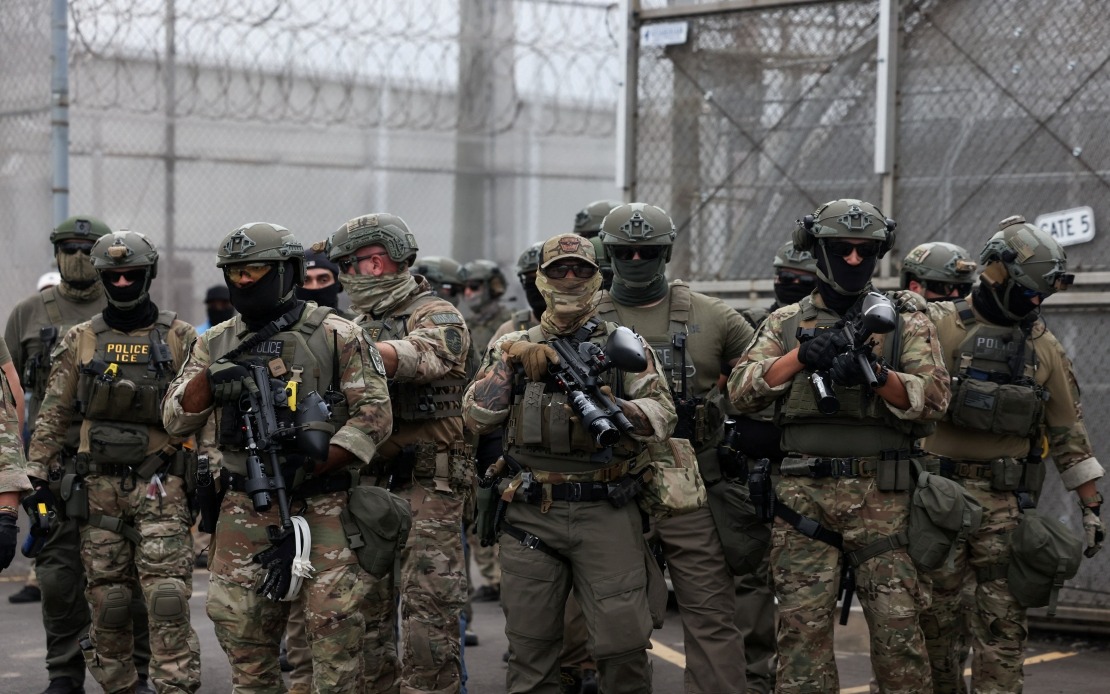
A Mexican national has been fatally shot by a United States Immigration and Customs Enforcement officer following an altercation that unfolded in the early morning hours, according to the US Department of Homeland Security. The individual, identified as Lorenzo Salgado Araujo, was taken to hospital with gunshot wounds but could not be saved, marking another high-profile use of lethal force by American federal immigration authorities.
The circumstances leading to the shooting centre on an alleged sequence of aggressive vehicle manoeuvres. According to the Homeland Security account, Salgado Araujo initially refused to comply with officers' orders while remaining inside his vehicle. The situation escalated when he allegedly drove his car directly into a vehicle occupied by the agents, followed by an apparent attempt to strike an officer with his vehicle. These actions prompted the ICE officer to discharge his firearm, according to the department's statement posted to social media platform X.
The incident has already drawn comparisons to other controversial law enforcement encounters that have raised questions about proportionality and decision-making during high-risk situations. In January of the same year, federal agents opened fire on US citizens Renée Good and Alex Pretti, a shooting that provoked considerable public backlash and accusations of excessive force. These recurring incidents have amplified scrutiny on how federal immigration authorities deploy deadly force when encountering resistance.
Multiple witnesses documented the encounter through photographs and video recordings, according to NBC News reporting. The presence of civilian-captured footage has become increasingly significant in evaluating such incidents, as independent visual evidence frequently contradicts or complicates official narratives provided by law enforcement agencies. This documentation capacity represents a meaningful shift in how accountability mechanisms can function in contemporary policing controversies.
The Homeland Security Department did not provide explanation regarding the alleged immigration status of Salgado Araujo or the circumstances that initially prompted federal agents to engage with him. This absence of context has left significant questions unanswered about what triggered the enforcement action and whether the situation could have been de-escalated through alternative approaches.
Two separate investigations have been initiated to examine the shooting. The Department of Homeland Security has launched an internal review of the officer's actions, while simultaneously the FBI's Houston office has assumed investigative responsibility for the alleged assault on a federal officer. This parallel investigation structure, while intended to provide multiple layers of scrutiny, sometimes creates confusion regarding which agency holds primary accountability and what standards apply to each investigation.
For Malaysian observers and regional readers, this incident illuminates persistent challenges within American law enforcement frameworks regarding immigration enforcement and use-of-force protocols. The incident reflects broader patterns of concern about how immigration authorities in developed nations balance enforcement imperatives against protective obligations toward individuals in their custody or during enforcement operations.
The case also underscores the vulnerability of non-citizens within US jurisdiction, particularly when enforcement actions occur during early morning hours when visibility is limited and witnesses may be absent. Mexican nationals represent a significant portion of individuals subject to ICE enforcement actions, making these incidents particularly relevant to communities throughout Mexico and Central America.
From a governance perspective, the recurring nature of such shootings—despite previous public outcry and investigations—suggests that internal accountability mechanisms and policy adjustments may be insufficient to prevent future incidents. The interval between the January shootings of Good and Pretti and this latest incident, occurring within the same calendar year, raises questions about whether any systemic reforms or retraining occurred in response to earlier incidents.
The availability of witness video documentation may ultimately prove significant in determining whether the official account aligns with observable reality. Historical precedent indicates that civilian-recorded footage frequently reveals details that differ substantially from law enforcement statements, creating opportunities for independent evaluation and potential accountability.
For Malaysian policymakers and security professionals monitoring international law enforcement practices, this case provides important lessons regarding the establishment of clear, transparent protocols governing use-of-force decisions during enforcement operations. The American experience demonstrates both the necessity of written policies and the ongoing challenge of ensuring consistent implementation across diverse operational contexts and individual officer decision-making.
The incident also highlights the importance of comprehensive training programmes that prepare officers to manage high-stress situations involving vehicles and non-compliant individuals without reflexively resorting to lethal force. Many democratic nations have developed alternative approaches to such encounters, including vehicle immobilisation techniques and coordinated multi-officer strategies that reduce risk to all parties involved.

