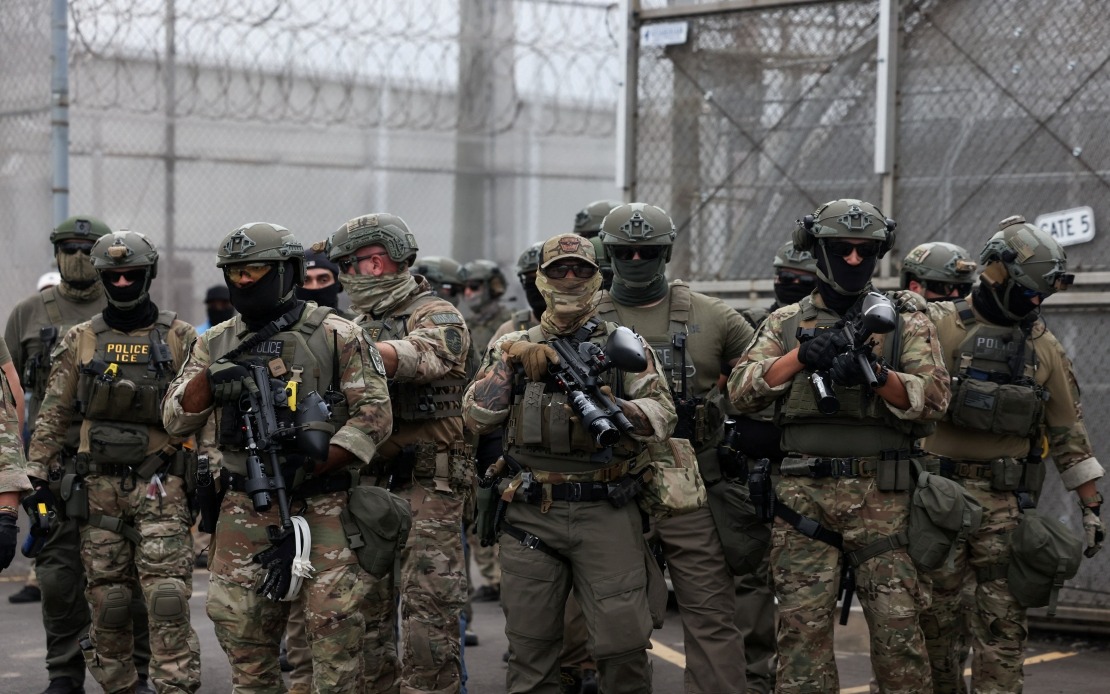
A federal judge in California has issued a sweeping nationwide injunction preventing United States Immigration and Customs Enforcement (ICE) from detaining migrants within and around immigration courthouses, effectively blocking a key enforcement tactic from President Donald Trump's second-term immigration crackdown. The ruling represents a significant judicial check on the administration's escalating deportation operations and addresses longstanding concerns from civil rights advocates and immigration lawyers about the compatibility of such arrests with fundamental legal protections.
Immigration courts across the United States handle the adjudication of removal proceedings, where migrants appear before judges to contest deportation or seek relief through various legal remedies. The arrest operations that ICE has been conducting at these facilities—before, during, and after hearings—generated intense criticism from immigrant advocacy groups who argued the practice chilled attendance at proceedings and compromised individuals' ability to mount effective legal defences. When people fear detention upon entering a courthouse, the argument goes, they may forgo attending hearings entirely, effectively conceding their cases without contesting them.
The Trump administration modified its approach to immigration enforcement at the outset of the president's current term, introducing revised guidelines that explicitly framed courthouse arrests as a valuable tool for immigration law enforcement. Under these new protocols, ICE officers were given clearer authorization to pursue detentions at judicial venues with fewer restrictions than had previously governed such operations. The administration's position reflected a broader hardline stance on immigration, prioritizing enforcement intensity over the procedural concerns raised by judicial oversight advocates.
The federal judge found that ICE had not adequately grappled with the substantial legal and practical objections to its new courthouse enforcement strategy. The court determined that the agency's reasoning for the policy shift—articulated through its revised guidelines—lacked the kind of thorough, reasoned analysis that administrative law requires when government agencies alter long-standing practices. This procedural failing rendered the policy vulnerable to legal challenge, even before the court examined its substantive merits regarding due process protections.
The implications of this ruling extend beyond immigration enforcement mechanics. Immigration advocates across the United States have documented how courthouse arrests create a deterrent effect that keeps vulnerable people away from judicial proceedings, effectively preventing them from presenting legitimate claims for asylum, family unification, or other forms of relief. When migrants must choose between appearing in court and risking detention, the judicial system itself becomes a trap rather than a venue for justice. The California court's decision acknowledges this systemic concern.
For Malaysia and Southeast Asia, the case offers important perspective on how regional governments approached similar debates. While Malaysia's immigration enforcement operates under different constitutional frameworks and legal traditions, the tension between security concerns and due process protections resonates across the region. Several Southeast Asian nations maintain immigration detention practices that have drawn scrutiny from international human rights bodies, and judicial interventions such as this US ruling provide comparative context for regional policy discussions.
The ruling does not prevent ICE from conducting enforcement operations in communities more broadly or from pursuing deportations through other legal mechanisms. Rather, it creates a demarcation—courthouses remain spaces where the judicial process must proceed without the threat of simultaneous enforcement action compromising individuals' ability to access legal proceedings. This distinction reflects a fundamental principle that courthouses serve a different institutional function than streets or workplaces, and that enforcement tactics suitable elsewhere may undermine justice system integrity when deployed in judicial venues.
The Trump administration will likely appeal the decision, setting up potential litigation in higher courts that may ultimately reach the Supreme Court. The outcome could reshape immigration enforcement practices nationwide and influence how federal agencies balance enforcement objectives against procedural safeguards. Should higher courts uphold the injunction, the reversal would represent a considerable constraint on current administration priorities, potentially necessitating revised enforcement strategies that operate through different channels.
This case reflects broader tensions within American democracy regarding immigration policy, executive authority, and judicial oversight. The decision underscores that courts retain power to police administrative agencies even when those agencies pursue objectives aligned with elected officials' stated policy preferences. For international observers, the ruling demonstrates that institutional checks and balances can operate even under administrations pursuing aggressive enforcement agendas.
The nationwide scope of the injunction means that immigration courts in all fifty states and US territories are covered by the restriction. This uniformity prevents ICE from concentrating courthouse arrests in particular jurisdictions or creating patchwork enforcement patterns across the country. Such comprehensive judicial orders reflect the court's assessment that the constitutional and legal concerns at issue transcend regional boundaries.