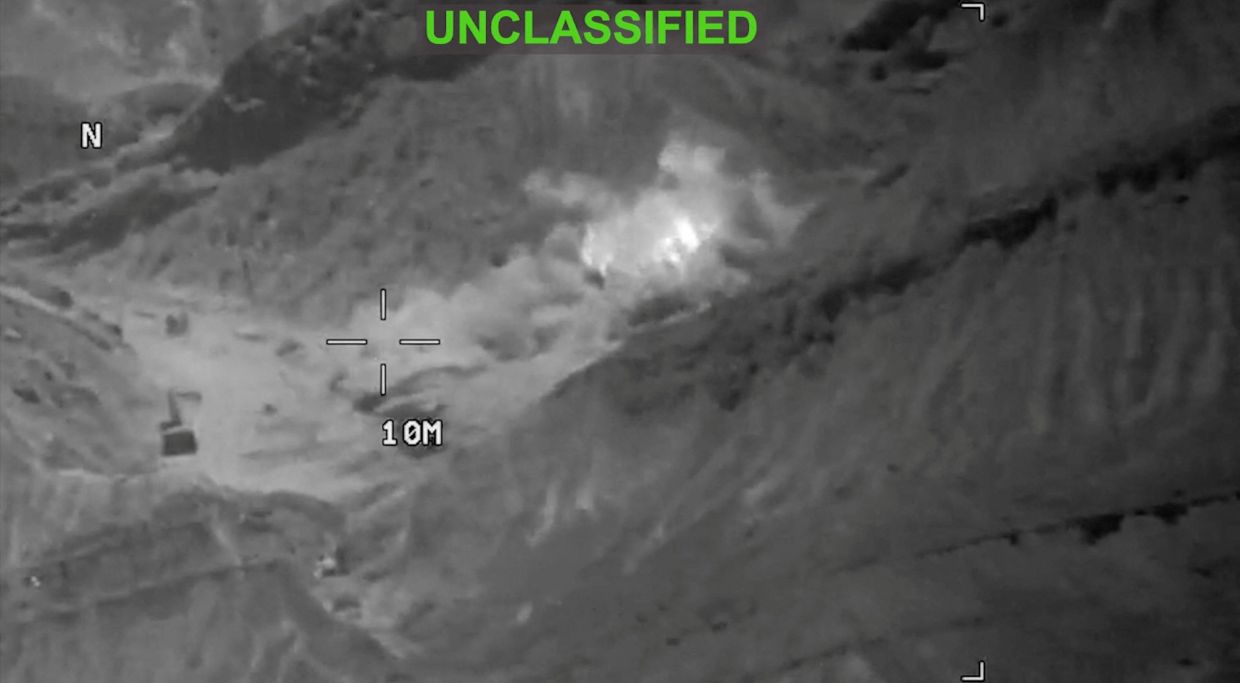
The United States has completed another round of airstrikes targeting Iranian military installations, marking the eighth consecutive night of such operations. The strikes came in response to an Iranian assault that resulted in the deaths of two US military service members stationed in Jordan, with a third reported missing. This escalation represents a sharp deterioration in regional stability following the collapse of a ceasefire arrangement that had been agreed upon merely one week prior.
US Central Command authorized the latest bombing campaign at the direction of President Donald Trump, with operations commencing at 6 p.m. Eastern Time on Saturday. According to official statements, the military action targeted Iranian Revolutionary Guard Corps positions and infrastructure deemed critical to Iran's ability to project power across the Persian Gulf. The stated objectives included degrading surveillance and air defence systems whilst preventing further threats to commercial maritime traffic transiting the economically vital Strait of Hormuz.
Iranian state media reported strikes on multiple locations including areas near Sirik in the southern coastal region and close to Shadegan near the Iraqi border. Of particular international concern, Iran's Atomic Energy Organization condemned what it characterized as an American attack on a nuclear power plant under construction at Darkhovin, though the timing of this alleged strike remained unclear. Such incidents involving nuclear facilities carry serious implications for regional security and international non-proliferation efforts.
In immediate retaliation, Iranian forces launched drone and missile attacks targeting American military facilities in Kuwait, including strikes directed at Al-Adiri camp and Ali Al Salem Air Base. These facilities house critical US military infrastructure serving broader regional operations. Kuwait's air defences activated once again to intercept incoming Iranian ordnance, whilst Bahrain similarly reported intercepting Iranian attacks on Sunday. The absence of reported casualties from these counter-strikes does not diminish the strategic significance of Iran's demonstrated ability to strike allied positions repeatedly.
The intensity of these exchanges reveals a fundamental breakdown in any restraint mechanism. Prior to this latest round of hostilities, Iran had allegedly destroyed at least two American fighter aircraft during Friday's assault on a Jordanian military installation. These claims, if verified, would represent significant material losses for the US military presence in the region. The US embassy in Jordan subsequently ordered the evacuation of Aqaba's international airport and seaport citing specific credible threats, though Jordanian authorities maintained they had detected no imminent danger.
The human toll continues mounting steadily. The deaths announced on Sunday brought the total of American military personnel killed since the conflict's inception to sixteen, with over 420 additional service members wounded. Iran's Health Ministry countered with assertions that fifty Iraqis had been killed and more than five hundred wounded from US strikes over the preceding three weeks alone, though such figures typically require independent verification. Each casualty announcement fuels domestic pressure on both governments to demonstrate military resolve.
The economic and strategic implications for global commerce deserve particular attention from Southeast Asian observers. The Strait of Hormuz, through which approximately one-fifth of the world's oil supply normally transits, has become a contested battleground. The US explicitly describes its current operations as enforcing a naval blockade on Iran, whilst Tehran asserts authority over maritime passage through its territorial waters. Four vessels reportedly attempted to navigate the strait recently via routes the Islamic Revolutionary Guard Corps deemed unsafe, with Iran claiming two abandoned the effort and two experienced accidents. Such disruptions inevitably affect energy prices globally, with ripple effects on economies throughout Asia.
The ceasefire agreement that unraveled last week had provided a brief respite from what many analysts feared could evolve into comprehensive regional warfare. That interim arrangement's failure indicates the absence of diplomatic off-ramps in the current phase. Supreme Leader Ayatollah Mojtaba Khamenei's weekend statement denounced American undertakings as lacking credibility, warning of heavier costs and further humiliation ahead. His public absence since February 28—when his father and predecessor Supreme Leader Ali Khamenei was killed in the opening day of US-Israeli strikes—remains unexplained and adds an additional layer of uncertainty to Iranian decision-making structures.
For Malaysia and other Southeast Asian nations dependent upon stable energy supplies and predictable global shipping lanes, this deterioration carries tangible consequences. Regional economies remain vulnerable to petroleum price shocks emanating from Persian Gulf instability. Insurance premiums for vessels transiting high-risk zones have already escalated substantially. Beyond immediate economic impacts, the precedent of major powers conducting sustained military campaigns in the region sets concerning patterns for smaller nations seeking to maintain neutrality and protect their commercial interests.
The current trajectory suggests neither side has perceived sufficient incentive to pursue genuine de-escalation. American officials interpret Iranian actions as unacceptable provocations demanding punishment, whilst Iranian leadership views itself as defending national sovereignty against foreign aggression. This mutual sense of justification creates conditions where each retaliation becomes the pretext for further escalation. The absence of third-party mediation or credible negotiating channels compounds these dynamics.
The involvement of American allies including Kuwait and Bahrain extends the conflict's geographic footprint and complicates potential resolution pathways. These Gulf states face pressure to demonstrate commitment to their security partnerships with Washington whilst simultaneously managing their own populations and economic concerns. Iraq and Jordan similarly occupy uncomfortable positions as conflict participants whose territories host American forces yet maintain varying degrees of pragmatic engagement with Iran.
As this cycle continues, the possibility of accidental escalation involving commercial shipping, civilian infrastructure, or miscalculated military responses grows increasingly acute. The structural conditions for broader regional conflagration—weakened diplomatic institutions, multiple armed actors, economic vulnerability, and nationalist pressures—all remain present. The international community's limited capacity to influence either principal party constrains available policy options for interested observers seeking to contain the damage.

