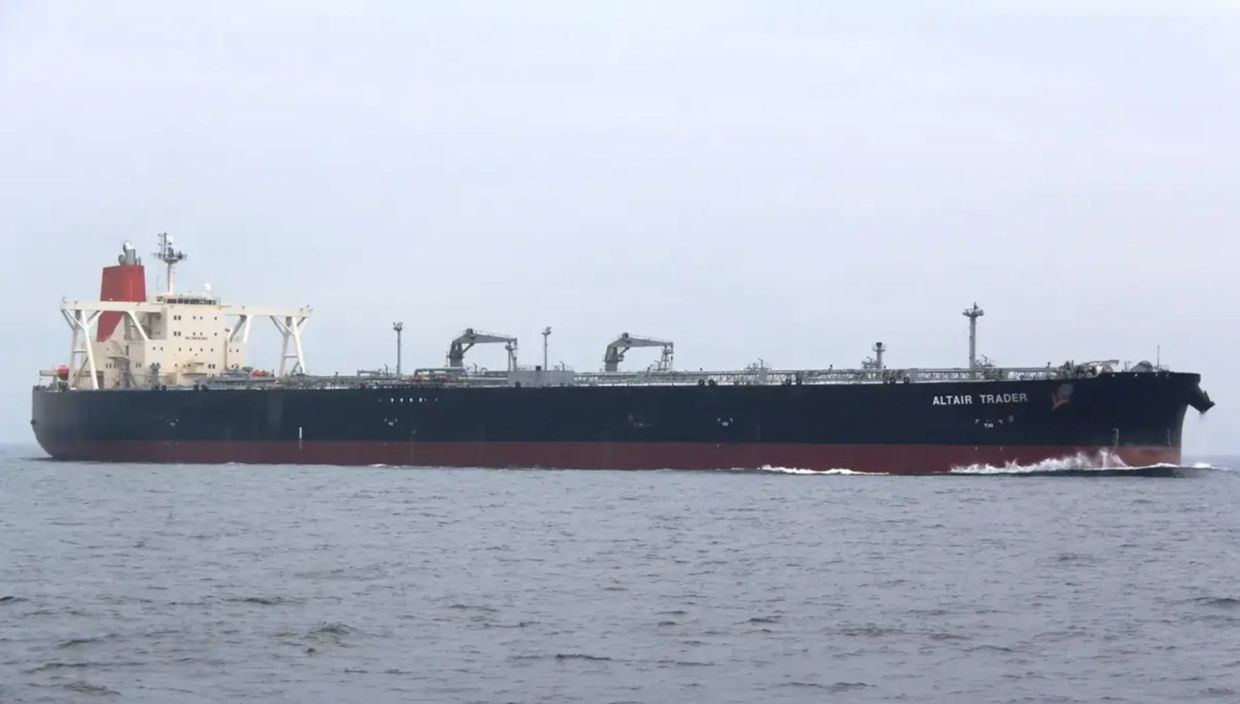
The United States has moved to tighten its financial noose around Iranian oil exports by sanctioning eight shipping companies registered in mainland China and Hong Kong, accusing them of operating tankers that facilitated the transfer of Iranian crude and petrochemical products through what Washington describes as a sanctions-evasion network. The action, announced by the State Department on Wednesday, represents a significant escalation of American economic pressure on Tehran, working in concert with a naval blockade that US officials say is designed to choke off Iran's ability to monetize its hydrocarbon reserves through clandestine global commerce.
At the heart of this enforcement operation lies Washington's concern over what officials term Iran's "shadow fleet"—a dispersed network of vessels operating under murky ownership structures and shifting flags to obscure their true operational control and financing. Six of the eight targeted vessels were specifically identified as having transported Iranian crude to China, with some hauling millions of barrels during 2026 alone. The Treasury Department's designation of these companies operates as a financial cordon, freezing any assets they hold within US jurisdiction and generally prohibiting American individuals and businesses from engaging in transactions with them. The secondary consequences prove equally severe: foreign financial institutions that continue to conduct certain transactions involving these firms face potential sanctions exposure themselves, creating a powerful deterrent against international banks facilitating payments or providing services to the designated entities.
Treasury Secretary Scott Bessent framed the action as a response to Iran's economic desperation, characterizing a regime facing freefall economic conditions and triple-digit inflation as increasingly willing to deploy unconventional methods to generate foreign currency. The rhetoric from US officials emphasizes that blocking these shipping routes prevents the Islamic Revolutionary Guard Corps from financing what Washington characterizes as terrorism, regional aggression, and domestic repression. State Department spokesman Tommy Pigott explicitly linked the economic sanctions to the broader US Navy enforcement operation, stating that today's designations directly support the maritime blockade along Iranian ports and coastlines. This integration of economic and military pressure reflects a coordinated strategy designed to comprehensively restrict Tehran's ability to export its primary revenue source.
The sanctioned vessels present a complex picture of how Iran's oil finds its way to global markets despite international restrictions. Among them, Qi Hang Ship Management Limited, a mainland China-based company, operates the Marshall Islands-flagged Well Sail, which Treasury accused of transporting hundreds of thousands of barrels to the United Arab Emirates. The Hong Kong-based Confident Apex Limited manages the Mozambique-flagged Lily, which has allegedly moved millions of barrels since 2025. However, the most significant concentration of activity flows directly to China itself, underscoring Beijing's pivotal role as a buyer of Iranian oil and the growing friction this commercial relationship creates with Washington.
The Al Salmi, owned and operated by Hong Kong-registered Billion Nexus International, allegedly delivered hundreds of thousands of barrels to China since last year, while the Breeze V, operated by Nevada Spirit Company, also Hong Kong-based, supposedly transported millions of barrels during 2026. The Natsumi, managed by Hong Kong's Marinova Freight, has purportedly carried millions of barrels since 2022, and the Crystal, owned by Vast Mighty Limited with operations spanning Hong Kong and the Marshall Islands, allegedly moved millions of barrels to China this year. Two additional vessels—the Nireta and Yehope—managed by Marshall Islands-registered companies, transported hundreds of thousands of barrels to China during 2026. This concentration of Chinese and Hong Kong involvement reflects both the scale of China's demand for Iranian oil and the willingness of shipping operators registered in these jurisdictions to facilitate these transactions despite US objections.
China's response proved swift and unambiguous, with the Chinese embassy in Washington rejecting what it characterized as baseless accusations and unwarranted targeting of legitimate Chinese business activity. Liu Pengyu, the embassy spokesman, emphasized that Beijing's cooperation with Iran remains "open, transparent, lawful and legitimate," positioning Chinese oil purchases as routine commercial transactions rather than sanctions evasion. China's firm opposition to what it describes as the abuse of unilateral sanctions underscores a fundamental disagreement with Washington over the legality and legitimacy of restricting commerce with Iran. This stance reflects deeper tensions between Beijing and Washington over the scope and application of US extraterritorial sanctions authority, which China views as an illegitimate assertion of American power to control global commerce.
The sanctions package also extended to Iranian entities involved in what the Treasury Department characterized as an extortion scheme targeting commercial vessels transiting the strategically critical Strait of Hormuz. The Persian Gulf Marine Insurance Company and the Hormuz Safe Marine Services Authority were accused of forcing ships passing through this vital energy corridor to purchase maritime insurance policies that ostensibly protect against seizures and other maritime risks. The conceptual audacity of this scheme lies in what Treasury describes as the manufacture of risk: Iran creates the very dangers—seizures, detention, blockade—that the insurance policies then claim to protect against, generating revenue while simultaneously extracting fees from global commerce. Hormuz Safe, developed by Iran's Ministry of Economy, accepts bitcoin and other digital assets for these services, underscoring the technological sophistication of Iran's sanctions-evasion apparatus.
The Strait of Hormuz holds paramount importance to global energy security, with roughly one-third of all seaborne traded crude oil transiting its narrow passages annually. Washington's characterization of the insurance arrangements as coercive schemes that manufacture risk represents an attempt to delegitimize Iran's revenue-generation strategies and frame them as violations of international maritime law. State Department officials explicitly described these arrangements as mechanisms through which Iranian government entities create artificial dangers and then charge for protection against government-created risks—a framing designed to appeal to international maritime law principles and the interests of global trading nations. Treasury officials went further in their accusations, asserting that Hormuz Safe generates revenue specifically directed toward funding the Islamic Revolutionary Guard Corps.
State Department spokesman Pigott articulated the broader strategic vision underlying these designations, emphasizing that protecting navigational rights and freedom of commerce in the Strait of Hormuz constitutes a "global interest" transcending bilateral US-Iran relations. Washington indicated its intention to collaborate with allied nations to isolate Tehran economically until the government ceases what Pigott characterized as destabilizing behavior—language that encompasses not only nuclear program advancement but also regional military activities and support for non-state actors throughout the Middle East. This multinational dimension remains crucial to the effectiveness of sanctions, as unilateral American restrictions can be circumvented through intermediaries in non-aligned nations. The explicit linkage between naval blockade enforcement and sanctions designation signals that Washington views these instruments as complementary components of a comprehensive containment strategy designed to fundamentally alter Iranian decision-making calculus.
For Malaysia and Southeast Asian nations, these developments carry significant implications. The shipping industry represents a crucial component of regional economies, and increasing US sanctions enforcement threatens to ensnare Southeast Asian operators and financial institutions in sanctions violations if they continue serving Iranian clients. Malaysian shipping companies and financial institutions must navigate an increasingly treacherous regulatory landscape where transactions involving Iranian entities face heightened scrutiny. Furthermore, the broader geopolitical confrontation between Washington and Beijing over sanctions authority and China's Iran policy creates pressure for regional nations to choose sides, potentially disrupting traditional commercial relationships and complicating regional economic integration efforts.
The fundamental tension underlying these sanctions reflects irreconcilable differences between Washington's maximalist interpretation of its authority to restrict global commerce and Beijing's insistence on its sovereign right to pursue independent foreign and commercial policies. China's consistent defense of its Iran trade relationship—buttressed by arguments about legitimacy, transparency, and legal commerce—contrasts sharply with American assertions of overriding security interests that justify extraterritorial sanctions authority. This ongoing dispute over the boundaries of legitimate statecraft will likely persist, particularly as China continues to deepen its strategic partnership with Iran and Washington escalates enforcement mechanisms to disrupt these relationships. The designation of shipping companies and insurance entities represents merely the latest iteration of this intensifying competition for economic influence and geopolitical alignment in a multipolar world.

