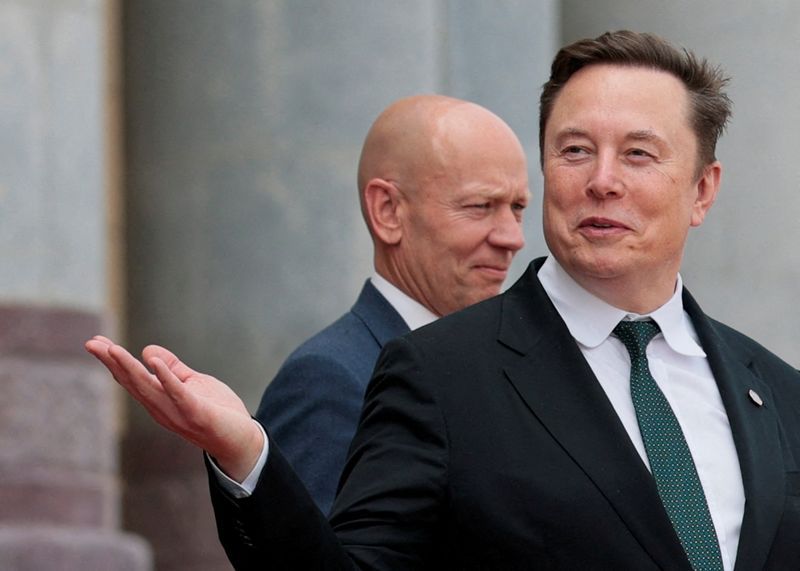
A federal judge in San Francisco has dealt a significant blow to Elon Musk's legal strategy by rejecting his efforts to overturn a jury verdict that found him liable for defrauding Twitter investors during the contentious $44 billion acquisition of the social media platform. U.S. District Judge Charles Breyer's decision on Monday marks another setback for Musk, who has mounted multiple legal challenges to the March verdict that accused the world's richest entrepreneur of deliberately manipulating Twitter's stock price to renegotiate or escape his purchase commitment in 2022.
While Breyer provided Musk with a minor concession by finding him not liable for one of the tweets that jurors had initially flagged, the judge's sweeping rejection of Musk's broader dismissal motion effectively preserves the core fraud findings. The ruling also upheld the class certification of investor plaintiffs and granted their request for prejudgment interest, substantially increasing the potential financial exposure stemming from the case. The combination of these decisions suggests the legal foundation supporting the verdict remains intact despite Musk's aggressive legal maneuvering.
The March jury verdict centred on Musk's public statements made during May 2022, a critical period when negotiations between Musk and Twitter were deteriorating. The billionaire had begun casting doubt on Twitter's operational integrity by questioning whether the platform was overrun by fake accounts and bots—a claim that triggered significant market reaction and contributed to falling stock prices. Jurors found substantial evidence that Musk's May 13 tweet in particular contained material falsehoods designed to undermine investor confidence and provide him with leverage in renegotiating the purchase terms.
Breyer's more nuanced analysis of the individual tweets reveals the legal complexities underlying the case. While the judge acknowledged that the May 13 tweet demonstrated what he termed "substantial evidence of falsity," he determined that Musk's May 17 statement did not warrant liability, citing a lack of measurable market response to that particular communication. This distinction suggests that while Breyer found merit in some of Musk's argumentative points regarding specific tweets, the broader pattern of conduct and the cumulative impact of his statements still supported the jury's original findings.
The monetary stakes remain extraordinarily high. Plaintiffs' counsel estimated in March that total damages could reach approximately $2.5 billion, making this case one of the most consequential securities fraud verdicts in recent memory. The grant of prejudgment interest further increases Musk's potential obligations, as such interest typically compounds from the date of the alleged wrong rather than from the judgment date, significantly raising the overall financial burden.
For Malaysian and Southeast Asian investors who hold stakes in technology companies or index funds with significant US market exposure, this verdict carries broader implications about executive accountability and investor protection mechanisms in major markets. The case demonstrates that even the world's wealthiest individuals face legal exposure when they make public statements that demonstrably influence securities prices, a principle that extends across jurisdictions and regulatory frameworks.
Musk's legal team has not yet indicated whether they plan to appeal Breyer's decision to higher courts, though such appeals are typical in cases of this magnitude and financial consequence. An appeal would further extend the litigation timeline and keep the uncertainty alive for both Musk and the investor plaintiffs seeking recovery for their losses. The case has already consumed nearly two years since the initial acquisition dispute began, and resolution may remain several years away depending on appellate proceedings.
The Twitter acquisition itself became a watershed moment in tech industry M&A activity, signalling the reputational and financial risks that can materialise when executives attempt to exit major commitments through public pressure campaigns. The legal process has validated investors' claims that Musk's statements were calculated to manipulate market conditions rather than reflect genuine operational concerns, establishing a cautionary precedent for how corporate leaders communicate about significant transactions.
This verdict also reflects evolving judicial attitudes toward holding billionaire entrepreneurs accountable through traditional securities law mechanisms. Despite Musk's considerable wealth, influence, and track record of successfully navigating regulatory challenges, the courts have determined that he remains subject to the same fraud statutes applicable to all market participants. The decision sends a powerful signal that wealth and prominence do not insulate executives from liability when they make false or misleading statements that affect securities prices.
The broader context of this case underscores tensions between corporate autonomy and investor protection in contemporary capital markets. While executives possess substantial freedom to engage in acquisitions and strategic manoeuvres, they cannot apparently do so through systematic public misrepresentations designed to depress valuations or escape commitments. Breyer's ruling reinforces the notion that clear, truthful communication with markets remains a fundamental expectation regardless of transaction complexity or personal circumstances.
For technology sector participants and institutional investors across the Asia-Pacific region, the case illustrates the importance of scrutinising executive statements during major corporate transactions and understanding the legal recourse available through US securities litigation. The decision also demonstrates that substantial jury verdicts and judicial rulings can withstand subsequent challenges, creating a more predictable liability landscape for those engaging in securities fraud claims.
As the case progresses through potential appeals, stakeholders will continue monitoring whether Musk pursues further legal challenges or pivots toward settlement negotiations. Either path would influence how this unprecedented case ultimately shapes corporate governance practices and market communication standards in the technology industry going forward.

