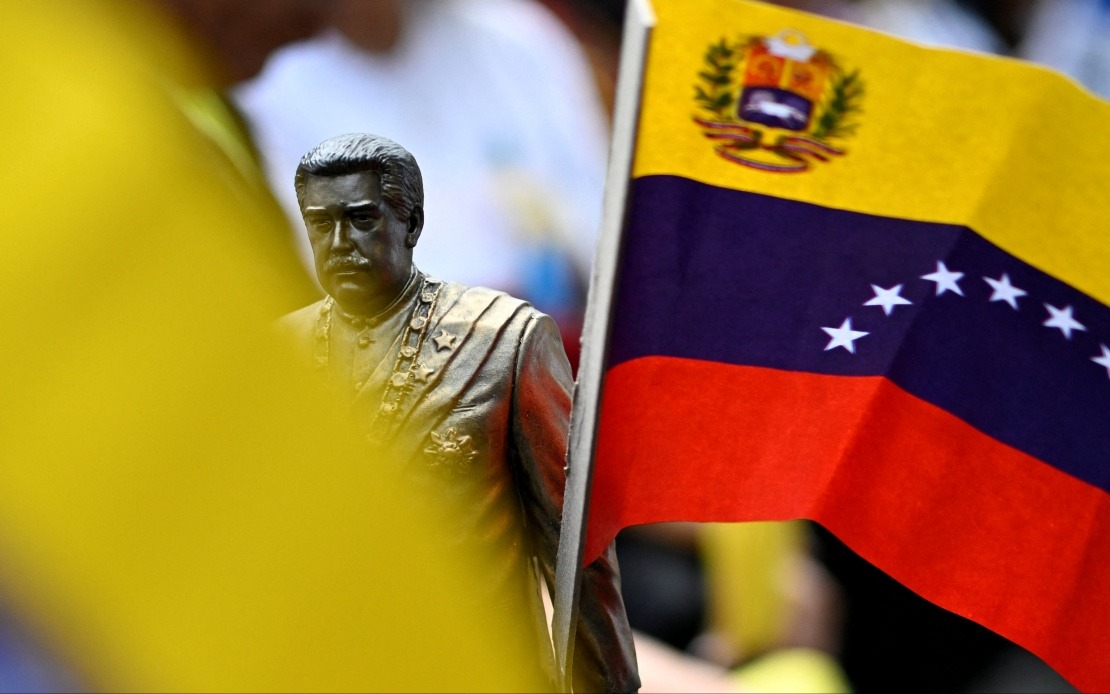
A United States federal judge has formally scheduled a June 1, 2027 trial date for Venezuelan President Nicolas Maduro and his wife Cilia Flores, who face charges of drug trafficking and firearms violations. Judge Alvin Hellerstein announced the decision during a brief 15-minute hearing in Manhattan on Wednesday, acting on a request submitted jointly by legal representatives from both the prosecution and defence. This marks the third judicial appearance for the Venezuelan couple since their controversial seizure by American military personnel in early January, an operation that has fundamentally altered regional diplomatic dynamics and provoked sustained international backlash.
The couple entered formal pleas of not guilty to all charges against them during their initial arraignment on January 5, immediately establishing their legal position on the grave allegations. Since their forced transfer to New York following the military raid in Caracas, Maduro and Flores have remained detained at the Metropolitan Detention Centre in Brooklyn, where they are held under heavy security measures. Their extended pre-trial detention, now spanning months, reflects the gravity with which American authorities view the case while simultaneously fuelling ongoing protests and diplomatic tensions throughout the region.
Maduro's defence strategy, led by attorney Barry Pollack, centres on challenging the fundamental basis of American jurisdiction itself. Pollack has signalled his intention to pursue a motion asserting sovereign immunity—a legal doctrine that traditionally shields sitting heads of state from prosecution in foreign courts. Should this challenge succeed, the entire case would collapse without requiring Maduro to engage further with the trial process. This technical legal manoeuvre represents a critical juncture that could potentially resolve the matter long before the scheduled 2027 proceedings commence, though observers note that such defences face considerable headwinds in contemporary international law jurisprudence.
The January 3 military operation that precipitated these charges represents an extraordinary and unprecedented intervention. American forces launched what officials characterised as a large-scale military strike specifically targeting Venezuela, during which they forcibly apprehended the country's elected president and his spouse. The operation stands as a remarkable assertion of extraterritorial authority and has fundamentally challenged established international legal norms regarding state sovereignty and the treatment of sitting governments. For Southeast Asian observers, the operation carries particular resonance given the region's historical sensitivities regarding foreign military intervention and its implications for the autonomy of smaller nations navigating great power competition.
The international response has been notably swift and comprehensive in its condemnation. Governments, international organisations, and civil society groups worldwide have expressed serious concerns about the legality and precedent-setting nature of the American military action. Many nations view the seizure as a violation of fundamental principles enshrined in the United Nations Charter, specifically those protecting territorial integrity and national sovereignty. This diplomatic fallout extends beyond Venezuela itself, raising broader questions about the limits of military action and the stability of international relations in an era of heightened geopolitical tensions.
Outside the Manhattan courthouse, demonstrators gathered to voice their opposition to what they characterise as an illegal kidnapping and subsequent unlawful detention. Allison Gunderson, a protester from Minneapolis, articulated the core argument animating the opposition movement: that the United States has essentially kidnapped and now prosecutes the legitimately elected president of a sovereign nation in violation of international law. Tom Burke, representing the Anti-War Action Network, employed sharper language, comparing the operation to armed robbery and warning that the global community increasingly distrusts American governmental motives. These voices, while representing a particular political perspective, reflect genuine concerns that resonate across many countries regarding American foreign policy trajectories.
The symbolic significance of the protest movement has grown throughout Maduro's detention. Sara Flounders, a political analyst and activist, marked Wednesday as the two-hundredth day since the Venezuelan president's seizure, emphasising that supporters maintain meticulous records of what they view as American crimes. The extended timeline of detention and the projected trial date stretching into 2027 create an indefinite legal limbo that critics argue constitutes a form of punishment prior to conviction. For regional observers in Southeast Asia, such scenarios raise uncomfortable questions about how comparable geopolitical disputes might be handled should global power dynamics continue shifting.
The case also intersects with broader American foreign policy concerning Latin America, particularly regarding countries such as Iran and Cuba that have historically experienced American military or coercive interventions. Flounders and other activists explicitly link the Maduro case to what they characterise as a pattern of American attempts to reshape governments deemed hostile to US interests. This contextualisation, whether one agrees with it politically, reflects a real phenomenon that shapes how many developing nations perceive American intentions toward their own sovereignty and governance autonomy. The messaging around the Maduro case therefore carries implications extending far beyond Venezuela itself.
The legal proceedings scheduled for 2027 remain subject to preliminary motions that could significantly alter their trajectory. The sovereign immunity challenge, in particular, represents a fundamental constitutional question that could occupy American courts for several years. Should international pressure mount substantially or diplomatic negotiations eventually occur, plea bargaining or other dispute resolution mechanisms might circumvent the trial entirely. However, the current legal posture suggests that unless dramatic developments intervene, the case will proceed toward trial in the timeframe Judge Hellerstein has established, making this one of the most significant international law disputes of the coming years.
For Malaysia and Southeast Asia more broadly, the Maduro case serves as a cautionary scenario regarding how powerful nations might treat elected leaders deemed problematic to their interests. The region's own experiences with foreign intervention and pressure underscore why many developing nations view the Venezuela precedent with apprehension. The trial date of June 2027 thus represents not merely a scheduling decision in a single criminal case, but rather a defining moment that will test whether international law can meaningfully constrain the actions of militarily dominant powers or whether such constraints have become essentially vestigial in contemporary geopolitical practice.

