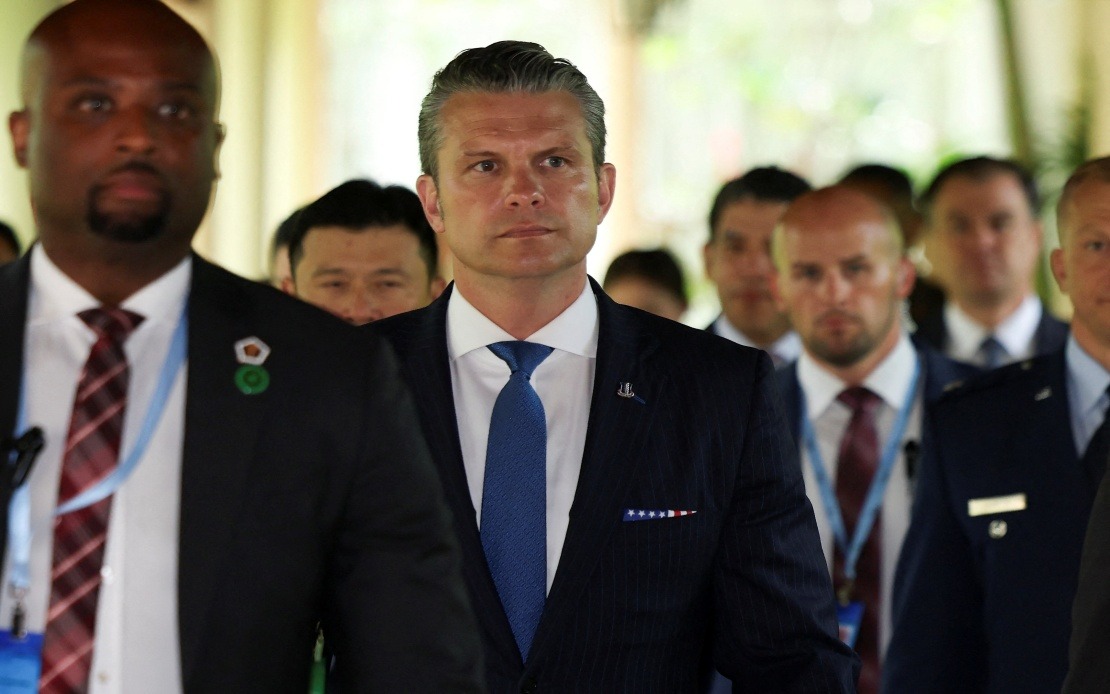
The United States and Jamaica have formalized a landmark military cooperation agreement aimed at strengthening their joint efforts to combat narco-terrorism across the Western Hemisphere. The accord, announced through US Southern Command (SOUTHCOM), represents a significant deepening of security ties between Washington and Kingston as both nations face mounting pressure from transnational criminal organizations trafficking drugs through maritime routes in the Caribbean and Pacific regions.
Southern Command, the Pentagon division responsible for military operations and engagement across Central America, South America, and the Caribbean, emphasized the strategic importance of the partnership. In a statement, SOUTHCOM highlighted that the agreement capitalizes on decades of established security cooperation between the two nations, providing a solid foundation upon which to expand joint operational capabilities. The command stressed that this renewed commitment signals Washington's determination to confront cartel operations that destabilize the entire hemisphere and threaten regional security architecture.
The newly signed accord builds directly upon foundational discussions held in August at the A3C anti-cartel forum in Panama, where US Defense Secretary Pete Hegseth met with Jamaica's Deputy Prime Minister and Minister of National Security Horace Chang. That meeting established the parameters for deeper military engagement, creating the diplomatic groundwork necessary for the formal agreement now in place. The progression from those initial talks to this comprehensive cooperation framework demonstrates both nations' commitment to translating political will into concrete operational partnerships.
This bilateral agreement arrives amid broader American efforts to combat drug trafficking throughout the region. In November 2025, Defense Secretary Hegseth unveiled Operation Southern Spear, an expansive military campaign designed to directly target drug cartel operations and infrastructure throughout Latin America. The initiative represents an escalation in American anti-narcotics strategy, moving beyond traditional law enforcement cooperation toward more direct military intervention against suspected trafficking networks operating across the hemisphere.
The scale of American military operations in response to the narco-terrorism threat has been substantial. Since September 2025, SOUTHCOM forces have conducted at least 67 separate strikes against vessels suspected of involvement in drug smuggling operations across the Caribbean and Pacific waters. These naval and aerial operations have resulted in significant casualties, with 221 people killed during the campaign. The intensity of these operations underscores the Pentagon's assessment that traditional interdiction methods have proven insufficient against increasingly sophisticated cartel networks utilizing advanced vessels and weapons systems.
For Malaysia and other Southeast Asian nations, this US-Jamaica agreement carries important implications within the broader context of regional security cooperation. The pattern of American military engagement in the Western Hemisphere mirrors contemporary concerns about transnational crime in Southeast Asia. Both regions face challenges from organized crime syndicates employing similar tactics: utilizing international maritime routes, exploiting governance gaps, and maintaining complex supply chains that span multiple jurisdictions. Jamaica's experience with cartel pressure and its security partnership with Washington offer potential lessons for other nations grappling with analogous threats.
The agreement also reflects evolving American security strategy that increasingly views narco-terrorism as a national security threat rather than merely a law enforcement matter. This reframing has enabled Pentagon involvement in anti-cartel operations alongside traditional drug enforcement agencies. The militarization of America's drug war response carries implications for how other nations conceptualize and respond to organized crime challenges. Regional military establishments may look to SOUTHCOM's operational approaches as models for addressing their own criminal trafficking networks.
Jamaica's role in this partnership is particularly significant given the island nation's geographic position as a crucial transshipment point for drugs moving toward North America and international markets. The country has long struggled with gang violence, criminal organizations, and the destabilizing effects of the drug trade on its institutions and communities. By formalizing cooperation with the United States military, Jamaica gains access to surveillance capabilities, intelligence resources, and operational expertise that its domestic security forces alone cannot provide.
The timing of this agreement also reflects American geopolitical concerns extending beyond simple drug interdiction. As great power competition with China and Russia intensifies globally, the Western Hemisphere remains a strategic priority for Washington. Strengthening military relationships with Caribbean nations like Jamaica serves multiple objectives simultaneously: disrupting cartel operations, reinforcing American influence in the region, and preventing adversary powers from filling security vacuums or establishing footholds in nations destabilized by criminal violence.
The article's reference to SOUTHCOM Commander General Francis L. Donovan underscores the senior-level commitment to this partnership. Senior military leadership engagement signals that the agreement represents genuine operational priority rather than symbolic diplomacy. Military commanders typically reserve public advocacy for initiatives they consider strategically significant, suggesting that Pentagon planners view the US-Jamaica cooperation framework as integral to broader hemispheric stability objectives.
For regional stability across Southeast Asia and the wider Indo-Pacific, the US-Jamaica security model demonstrates how military cooperation can be structured to address transnational criminal threats. As Southeast Asian nations increasingly confront narcotics trafficking, weapons smuggling, and related security challenges, frameworks similar to what Washington and Kingston have established may prove instructive. The emphasis on intelligence sharing, joint operations planning, and coordinated maritime security operations represents an operational approach that could be adapted to regional circumstances and institutional capacities.

