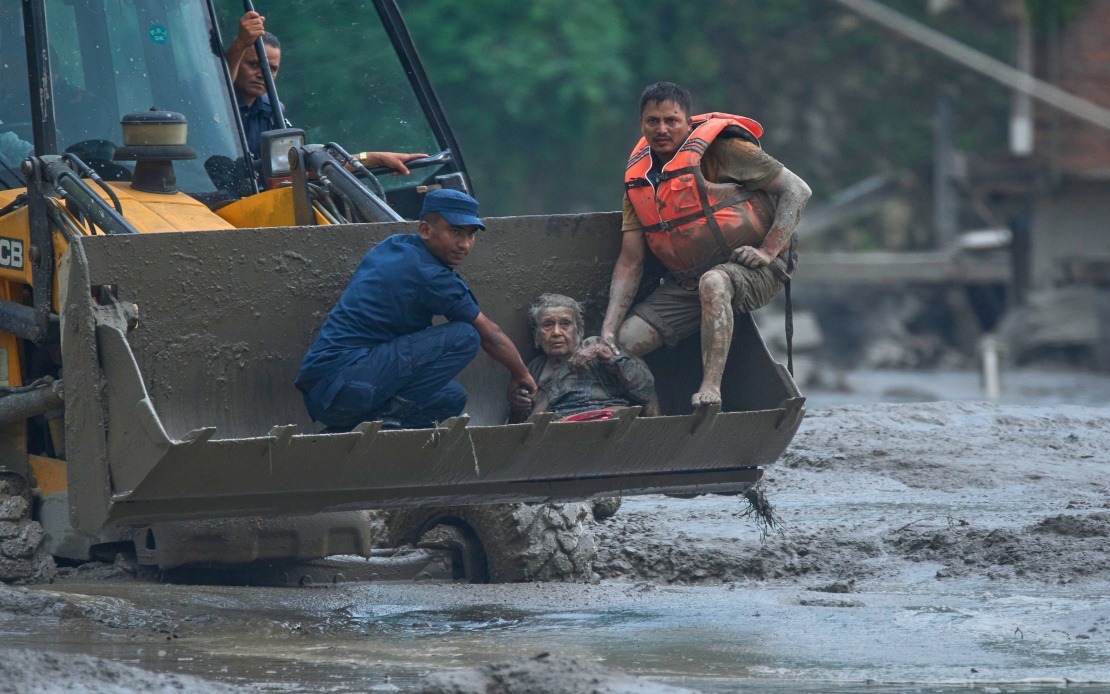
In the aftermath of catastrophic flooding that has devastated parts of Nepal bordering China, the United States and Canada have announced their commitment to providing emergency humanitarian assistance to the affected nation. The commitment reflects the urgent international response mobilising to support Nepal as rescue and recovery operations continue across the stricken region, where communities face mounting challenges from infrastructure damage and ongoing search efforts for missing persons.
Secretary of State Marco Rubio issued a statement of solidarity through X, indicating that the State Department stands prepared to coordinate with the Government of Nepal on deploying necessary humanitarian resources. His message extended sympathies to the Nepali people, framing the American response within a broader context of international support for a nation grappling with one of its most severe natural disasters in recent years. The diplomatic language underscores the significance Washington places on its relationship with Nepal and the regional implications of the crisis.
Canada's position was similarly emphatic, with Prime Minister Mark Carney characterising the disaster as "absolutely devastating" and articulating the emotional weight of the catastrophe. Carney's statement on X acknowledged the compounded trauma facing those affected, distinguishing between those who have lost family members and those still awaiting news of missing loved ones. His explicit offer of governmental support signals Ottawa's readiness to engage in reconstruction and relief efforts alongside bilateral partners and multilateral organisations.
The scale of the humanitarian challenge is staggering. Nepalese authorities have reported that at least 47 United States citizens and 24 Canadians remain unaccounted for in the aftermath of the flooding. Neither Washington nor Ottawa has independently verified these figures, a common situation in the immediate aftermath of large-scale disasters when communication infrastructure is compromised and comprehensive documentation remains incomplete. The uncertainty surrounding the precise number of missing foreign nationals complicates diplomatic and humanitarian coordination.
The overall death toll stands at a minimum of 160 people, with more than 680 individuals reported missing across the broader affected population. These figures underscore the magnitude of destruction wrought by the flash floods and associated mudslides that swept through Nepal's mountainous terrain. The combination of heavy precipitation and steep topography created conditions for rapid, destructive water movement that overwhelmed communities with little warning.
The economic and infrastructural toll reflects the violence of the natural disaster. Thirteen hydropower projects—critical infrastructure for Nepal's energy security and export revenues—have been damaged or destroyed. The floods obliterated approximately 40 kilometres of road networks, fragmenting transport connections essential for commerce, medical services, and emergency response. The loss of around 200 trucks and 19 bridges represents the destruction of logistics capacity needed for economic activity and disaster relief operations, compounding the immediate humanitarian crisis with longer-term development challenges.
For Southeast Asian nations including Malaysia, the Nepal floods carry sobering implications. The region shares similar geographical vulnerabilities to monsoon systems, mountainous terrain, and infrastructure constraints that amplify disaster risks. The regional community has long recognised that transnational disasters demand coordinated response mechanisms, though capacity limitations in developing nations often restrict the speed and scale of assistance deployment. Nepal's situation serves as a reminder of how climate patterns and geographic realities can rapidly overwhelm national response capabilities, even with international support mobilising quickly.
The involvement of the United States and Canada in relief efforts reflects established patterns of Western engagement in South Asian crises, though their contribution capacity remains dependent on Nepal's specific needs assessment and coordination with the Government of Nepal. Both nations maintain diplomatic presence in Kathmandu and have previous experience managing disaster response operations in the region, positioning them to translate pledged support into tangible assistance. However, the logistical complexities of reaching damaged areas and the international coordination required to avoid duplication of efforts remain substantial obstacles.
Nepal's position as a transit nation along major Asian trade and tourism routes adds another dimension to international concern. The flooding disrupts regional connectivity and potentially affects third-country interests beyond the immediate humanitarian crisis. This broader geopolitical context may accelerate coordinated response from multiple nations, particularly those with commercial or strategic interests in maintaining regional stability and connectivity.
The coming weeks will test the efficiency of international relief mechanisms and Nepal's capacity to absorb and deploy assistance effectively. Early pledges of support must translate into concrete resource flows, technical expertise, and coordination with local authorities who understand ground realities. For Malaysian policymakers and humanitarian organisations, the Nepal disaster reinforces the importance of maintaining rapid-response capacities and maintaining cooperative frameworks with regional partners for natural disaster management.

