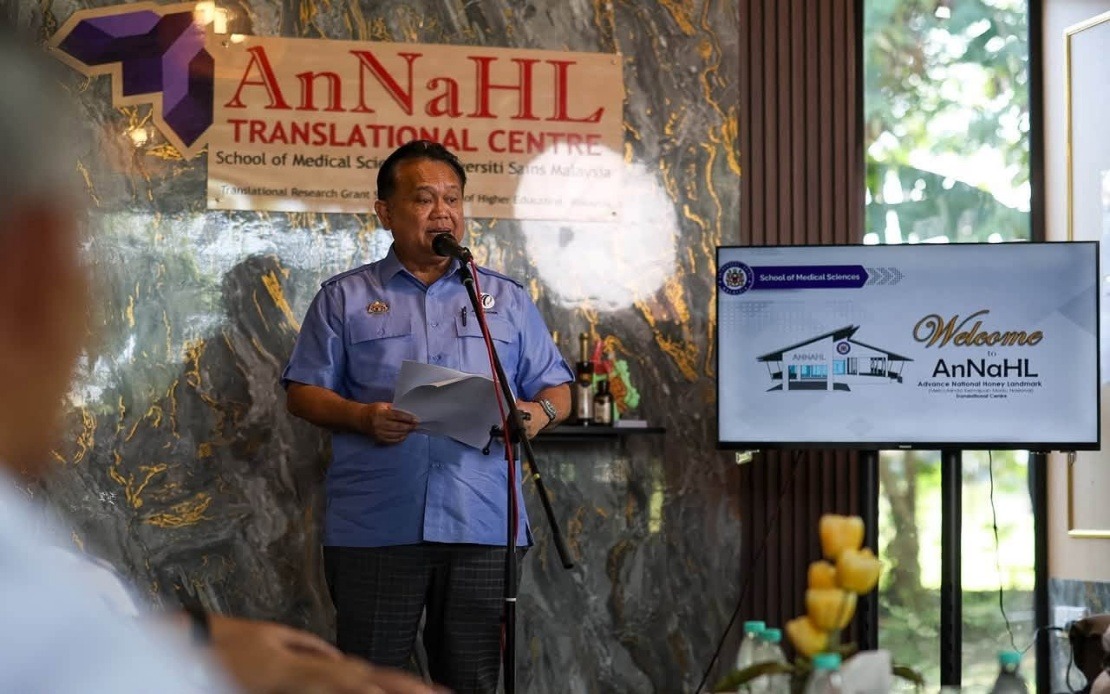
The Upper Rajang Development Agency (URDA) is charting an ambitious course to reshape economic development across Malaysia's interior by forging closer ties with academic institutions, government agencies, and grassroots communities. The initiative marks a deliberate shift in how rural development is conceptualised in the region, moving beyond traditional extractive models toward knowledge-intensive, innovation-centred approaches that can sustainably improve incomes and livelihoods.
Datuk Seri Alexander Nanta Linggi, URDA's chairman and Kapit Member of Parliament, has articulated a vision in which rural prosperity no longer rests primarily on the production and export of raw materials. Instead, communities must develop integrated value chains that allow them to harness contemporary technology, capture higher margins through processing and differentiation, and reach markets that reward quality and innovation over volume. This reframing reflects a growing recognition that commodity-dependent rural economies remain vulnerable to price volatility and face structural disadvantages in global supply chains.
Central to URDA's strategy is evidence from its High Impact Community Projects (HICP), which have achieved a demonstrable 25 per cent increase in average participant income. These results suggest that when rural communities receive targeted investment in research application, skills development, and knowledge transfer—backed by coordinated government support—the outcomes extend beyond academic publications to create genuine economic opportunities. The success metric is not theoretical innovation but measurable improvements in household earnings and economic resilience.
The collaborative model being pursued positions universities as more than research institutions generating abstract knowledge. Instead, they function as active partners in translating research into community economic assets. When academic expertise is deliberately aligned with local needs and amplified through implementation by development agencies and government support, the gap between laboratory discovery and real-world application narrows significantly. This alignment reduces the risk that promising research remains confined to academia without benefiting the communities whose circumstances inspired the research in the first place.
A recent joint visit by URDA and the Regional Corridor Development Authority (RECODA) to the Advanced National Honey Landmark (AnNaHL) Translational Centre at Universiti Sains Malaysia's Health Campus in Kubang Kerian, Kelantan, underscores this collaborative approach in action. The facility exemplifies how universities can establish infrastructure and expertise specifically oriented toward translating research into market-ready products and services. The centre's focus on honey processing, training, and product development creates a practical bridge between scientific knowledge and entrepreneurial activity.
Within the Kapit parliamentary constituency, several communities have been identified as priority sites for high-impact projects, with stingless bee farming emerging as a particular focus. This selection reflects strategic thinking about comparative advantages—the Upper Rajang region possesses environmental conditions and traditional knowledge that make certain value-added agricultural activities viable and potentially distinctive in national and regional markets. Stingless bee products, increasingly recognised for therapeutic and nutritional qualities, represent the type of specialised, higher-margin commodity that can reward innovation in production and marketing.
Rural development policy in Malaysia has historically emphasised basic infrastructure and access to markets, which remain necessary but insufficient conditions for prosperity. Nanta's emphasis on building community capacity through knowledge, technical skills, and technology adoption acknowledges that sustainable income generation requires multifaceted development. Communities equipped with skills, connected to research institutions, and supported by government agencies possess agency to identify and pursue opportunities aligned with their circumstances rather than simply implementing top-down schemes.
Market access represents another critical element. Innovation and superior products mean little if producers cannot reach buyers. URDA's partnerships with development agencies and institutions provide pathways to market intelligence, branding assistance, and distribution networks that individual farmers or small enterprises could not develop independently. This ecosystem approach reduces the isolation that often constrains rural entrepreneurship.
The emphasis on sustainable income generation carries particular weight across Southeast Asia, where rural regions continue to experience outmigration to urban centres despite decades of development investment. When rural communities can generate competitive incomes through activities anchored in local resources and knowledge, the calculus of migration shifts. Youth retention in rural areas becomes economically rational rather than dependent on cultural preference or government incentives alone.
For Malaysia's development trajectory, the URDA model also carries implications beyond the Upper Rajang region. As the nation seeks to diversify its economy and reduce dependency on commodity exports and urban manufacturing, rural areas represent underutilised repositories of resources, knowledge, and entrepreneurial potential. Frameworks that activate this potential through strategic partnerships and innovation investment could be adapted and scaled across other regions, from Sabah and Sarawak to peninsular Malaysia.
The stingless bee initiative and similar projects also reflect evolving global market dynamics. International demand for natural, sustainably produced, health-oriented products continues to expand, and products from Southeast Asia carry cultural authenticity and environmental credentials that appeal to increasingly conscious consumers. Rural communities positioned to serve these markets can capture value that commodity producers cannot.
Ultimately, URDA's partnership strategy represents an implicit acknowledgment that rural development cannot be engineered solely through infrastructure projects or commodity support schemes. Transformation requires that communities themselves become innovation actors, supported by knowledge institutions, enabled by government coordination, and connected to markets. The quantifiable success of existing high-impact projects suggests this model yields results, providing a compelling foundation for scaling the approach across Malaysia's rural landscape.

