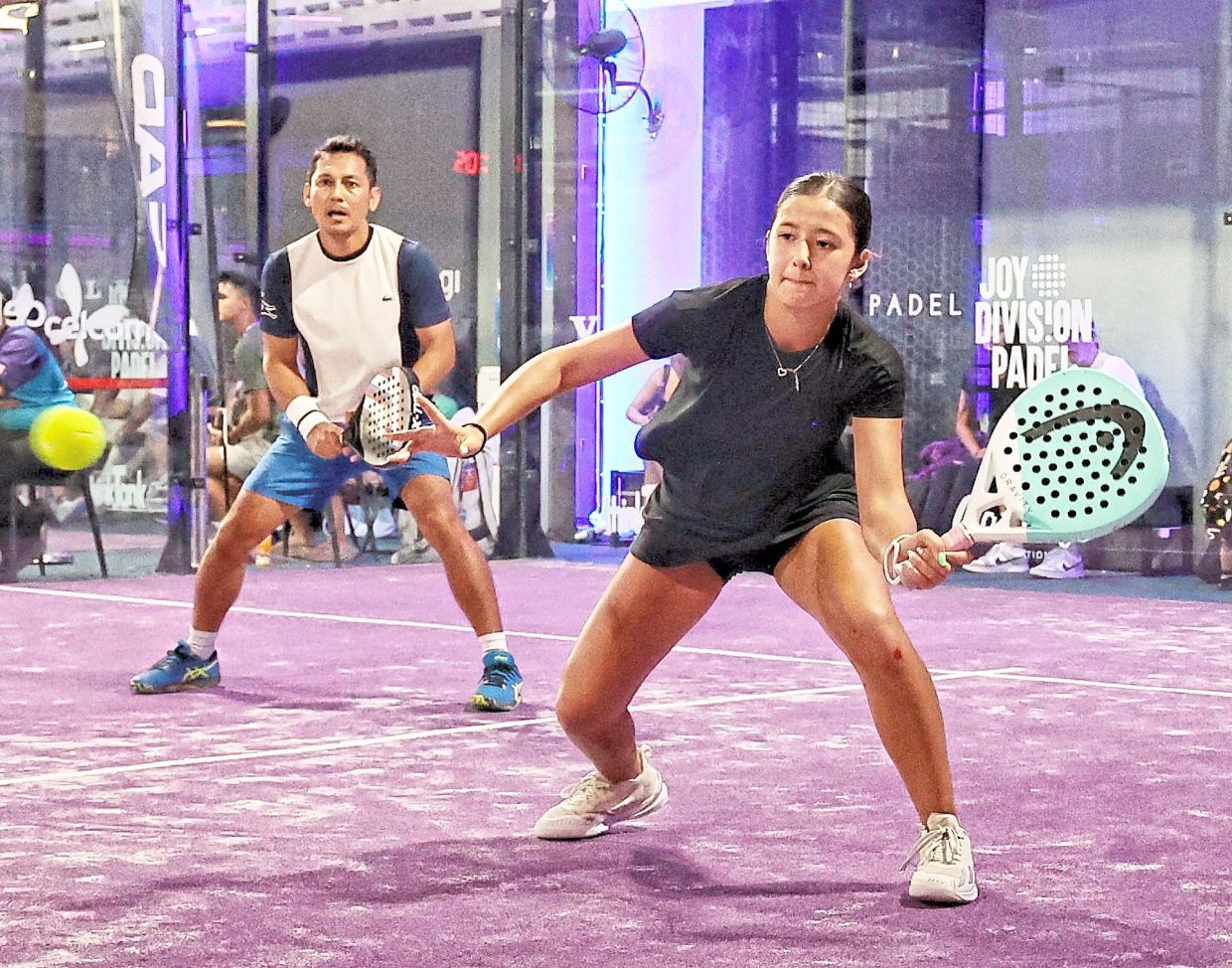
The landscape of Malaysian leisure has undergone a remarkable transformation in recent years, with professionals and urban dwellers fundamentally reshaping how they allocate their free time. What was once an era of sedentary evenings has given way to a flourishing culture of recreational athletics that is reshaping city skylines and changing social habits across the Klang Valley and beyond.
The physical infrastructure tells this story clearly. Padel courts have sprouted inside repurposed warehouses and mounted atop shopping malls, with prime-time bookings reserved weeks ahead of play. Pickleball—a sport long stereotyped as the preserve of retirees—now attracts players barely into their third decade, congregating at community facilities and recycled badminton venues. The phenomenon extends to boutique fitness centres, where Reformer Pilates studios have proliferated with lengthy membership queues and structured monthly commitment plans. Running collectives that could barely maintain active communication channels five years ago now enforce session caps due to overwhelming participation. The emergence of Hyrox, a hybrid endurance spectacle combining eight one-kilometre running intervals with functional fitness challenges including sled propulsion, rowing and medicine ball throws, epitomises this shift. Malaysia's inaugural Hyrox tournament will unfold December 12 and 13 at the Malaysia International Trade and Exhibition Centre, with precedent suggesting ferocious ticket demand if the frenzy surrounding Singapore's sold-out edition proves any indicator.
Capital markets have recognised this grassroots shift as genuine economic momentum. Oura, the Finnish manufacturer of the wearable smart ring that monitors sleep architecture, cardiac rhythms and physical recovery, submitted confidential documentation for United States public listing at an estimated valuation of approximately US$11 billion (RM45.6 billion) in recent weeks. The company has already distributed upwards of 5.5 million units globally and anticipates annual revenues approaching US$2 billion (RM8.3 billion) in the current fiscal year. Its direct competitor, Whoop—which produces a minimalist fitness monitoring band without integrated display technology—secured US$575 million (RM2.39 billion) in funding during March at a corresponding valuation of US$10.1 billion (RM41.9 billion). Financial analysts are evaluating these enterprises not primarily as consumer electronics manufacturers but rather as emerging health intelligence platforms, predicated on consumers willingly committing to recurring subscription expenses in exchange for detailed physiological self-knowledge.
Multiple interconnected cultural currents fuel this movement. Foremost is a growing societal recoil from digital saturation—a belated recognition that prolonged smartphone engagement compounds psychological deterioration whilst physical exertion elevates wellbeing. Concurrent is the cultivation of structured community experiences; padel and pickleball inherently demand paired participation, feature accessible learning curves and resist competitive intensity. These recreational spaces have increasingly functioned as contemporary gathering venues for a demographic cohort consuming less alcohol and conducting professional responsibilities remotely. The accompanying wearable ecosystem reinforces behavioural change: once quantifiable metrics illuminate sleep quality and training stress, exercise transforms from abstract aspiration into concrete, measurable routine.
From a public health perspective, this recreational renaissance represents genuinely encouraging developments. Malaysian epidemiological data reveals that more than half of the adult population carries excess body weight, whilst metabolic and cardiovascular diseases exact catastrophic personal and systemic expenses. Regular structured physical activity remains unmatched as both the most economical and demonstrably effective therapeutic intervention available, reducing systemic blood pressure, heightening insulin responsiveness, ameliorating mood disorders, preserving cognitive function and extending years of functional independence.
Yet this expanding wellness narrative harbours a significant medical complication increasingly visible in orthopaedic and sports injury consultations. The archetypal casualty follows a consistent demographic profile: typically a sedentary professional aged between 40 and 55 who, having spent two decades in office environments, either discovers padel through social networks or enrolls in the forthcoming Hyrox championship with peers. Within a single month, recreational participation escalates from complete inactivity to four weekly sessions. Whilst cardiovascular and respiratory systems possess physiological plasticity enabling relatively rapid adaptive response to enhanced demand, the body's connective tissues—tendons, ligaments and articular cartilage—require substantially protracted developmental periods spanning many weeks rather than days. These structures prove unforgiving when subjected to abrupt volumetric increases; they deteriorate predictably under such mechanical overload.
The biomechanical demands of padel and pickleball environments engineer specifically identifiable injury trajectories. Both sports necessitate explosive, rapidly executed directional changes coupled with overhead striking motions that concentrate stress upon posterior calf musculature, the Achilles insertion point, knee stabiliser ligaments and rotator cuff architecture. Wherever these recreational pursuits have expanded, medical facilities document corresponding upticks in these injury classifications. American financial analysis from investment institution UBS calculated that United States pickleball-related injuries alone would generate between US$250 million (RM1.04 billion) and US$500 million (RM2.07 billion) in annual medical expenditure, disproportionately concentrated among participants exceeding 60 years of age.
This injury epidemic represents a preventable tragedy, distinguished from unavoidable athletic misfortune by its clear causal mechanism: excessively rapid training progression without corresponding tissue adaptation periods. The solution requires neither prohibition of these beneficial recreational pursuits nor a return to sedentary patterns, but rather a more measured engagement philosophy. Individuals transitioning from prolonged inactivity should adhere to established periodisation principles, incrementally elevating session frequency and intensity across progressions spanning multiple weeks. Professional coaching, particularly in technically demanding activities like padel, provides essential biomechanical refinement that simultaneously enhances performance and minimises injury likelihood. Perhaps most critically, recognition that enthusiasm alone cannot compress the biological timeline of connective tissue adaptation remains essential knowledge for the urban weekend athlete population now defining Malaysian recreational culture.

