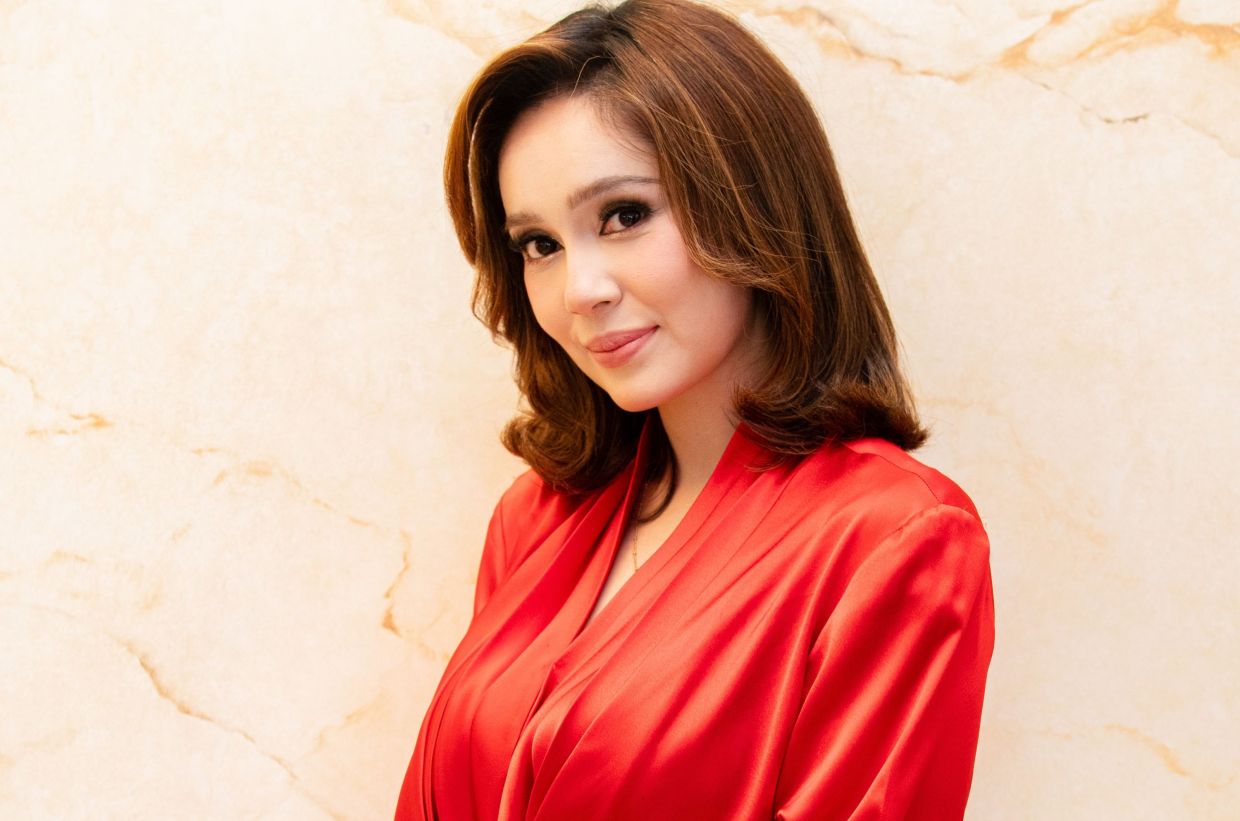
Malaysian actress Uqasha Senrose has opened up about her experience collaborating with co-star Aliff Aziz on an upcoming television series, choosing to focus on professionalism and workplace conduct rather than his highly publicised personal controversies. The actress maintained a pragmatic stance on separating an individual's private circumstances from their professional responsibilities, offering insight into how established industry figures navigate working relationships in the face of public scrutiny.
Aliff Aziz found himself at the centre of a significant marriage scandal in March 2024 when he was implicated in a khalwat incident, an Islamic legal term referring to close physical proximity between unmarried individuals. The controversy precipitated his very public separation from Malaysian singer-actress Bella Astillah, with whom he shares two children. The situation dominated entertainment and social media discourse for an extended period, raising questions about how colleagues and industry professionals would respond to future project involvement.
When addressing questions about her decision to proceed with the collaboration, Uqasha articulated a philosophy grounded in personal humility and non-judgment. She acknowledged that everyone carries imperfections and has navigated difficult periods, suggesting that condemning another person's private struggles would be neither fair nor consistent with her own lived experience. Her measured response reflected a broader perspective on accountability and redemption within the entertainment sector.
Throughout the filming process, Uqasha reported that no interpersonal friction emerged between herself and Aliff Aziz. She emphasised that he approached his responsibilities with consistent professionalism, attending to his duties on set without incident. From her perspective, the working environment remained comfortable and cordial, with both performers focused on their craft rather than external commentary or personal circumstances. This straightforward professional dynamic ultimately determined her assessment of the collaboration.
The actress framed her acceptance of the project in terms of supporting livelihoods and employment opportunities. She articulated a belief that individuals deserve the chance to pursue their careers and sustain themselves through their work, regardless of personal challenges they may be navigating. By declining to participate in what she viewed as needless rejection of opportunities, Uqasha took a principled stance on professional inclusion and the separation of personal conduct from economic participation.
Interestingly, Uqasha's own life has been marked by significant personal upheaval during a roughly concurrent timeframe. She initiated divorce proceedings against her then-husband, actor Kamal Adli, in October 2025, with the marriage officially dissolved by January 2026. The couple shares a daughter together. During those proceedings, Uqasha levelled serious allegations of domestic abuse against Kamal, claims that he subsequently denied. This experience positioned her in a uniquely empathetic position regarding navigating professional obligations whilst managing personal crises.
The twelve-episode series itself explores complex themes centring on polygamous marriage arrangements. Aliff Aziz assumes the role of Adli, whilst Uqasha portrays Azura, and actress Elisya Sandha takes on the character of Nikita. The narrative structure examines relationships characterised by multiple layers of emotional complexity and moral ambiguity. Rather than presenting straightforward characterisations of virtue or wrongdoing, the series apparently constructs multidimensional figures whose motivations and actions resist simplistic categorisation.
Uqasha was deliberate in her approach to character development, determining that she would not draw upon her own traumatic experiences to inform her portrayal of Azura. She recognised that importing her personal pain into the role risked compromising the authenticity and independence of the character's narrative arc. By maintaining psychological distance between her lived reality and her character's fictional circumstances, she sought to honour Azura as a distinct individual with her own trajectory and emotional landscape.
Despite this professional boundary-setting, Uqasha acknowledged that filming the series nonetheless exacted an emotional toll. Her character navigates intense psychological terrain, including numerous sequences where she experiences profound grief and vulnerability. In one particularly challenging scene, her character endures physical violence, being struck and forcibly moved. The cumulative weight of portraying someone confronting repeated adversity created moments where the line between performance and genuine emotion blurred, allowing authentic empathy for Azura's predicament to surface.
The character's narrative arc itself contains thematic resonance with broader human experience. Azura confronts the aftermath of prior missteps, cautiously accepting what appears to be an opportunity for renewal, only to encounter fresh trials and setbacks. This cyclical pattern of hope and disappointment reflects universal struggles with recovery and resilience. Uqasha recognised the emotional realism embedded in this characterisation, finding meaning in portraying a woman whose capacity for endurance and growth is repeatedly tested.
Uqasha voiced appreciation for the series' refusal to traffic in moral certainty or character stereotypes. The narrative resists the temptation to designate individuals as inherently virtuous or corrupt, instead exploring how outward appearances frequently mask underlying complexity. Characters perceived as benevolent may harbour concealed motivations, whilst those appearing harsh frequently possess legitimate contextual explanations for their behaviour. This sophisticated approach to characterisation elevates the storytelling beyond conventional melodrama.
Contemporarily, Uqasha has consciously prioritised her own wellbeing and professional development. She emphasises that accumulated hardship has functioned as an education, fostering personal maturation and resilience. Motherhood has sharpened her awareness of obligations transcending individual gratification, creating a framework through which she evaluates her choices and commitments. This evolved perspective now anchors her priorities toward sustainable happiness and responsible stewardship of her responsibilities as a parent.
Uqasha's public statements regarding her collaboration with Aliff Aziz ultimately reflect a mature engagement with professional ethics and human complexity. By refusing to weaponise personal judgment against a colleague and instead maintaining focus on work conduct and character development, she models an approach to the entertainment industry that acknowledges human fallibility whilst preserving space for professional dignity and economic opportunity.

