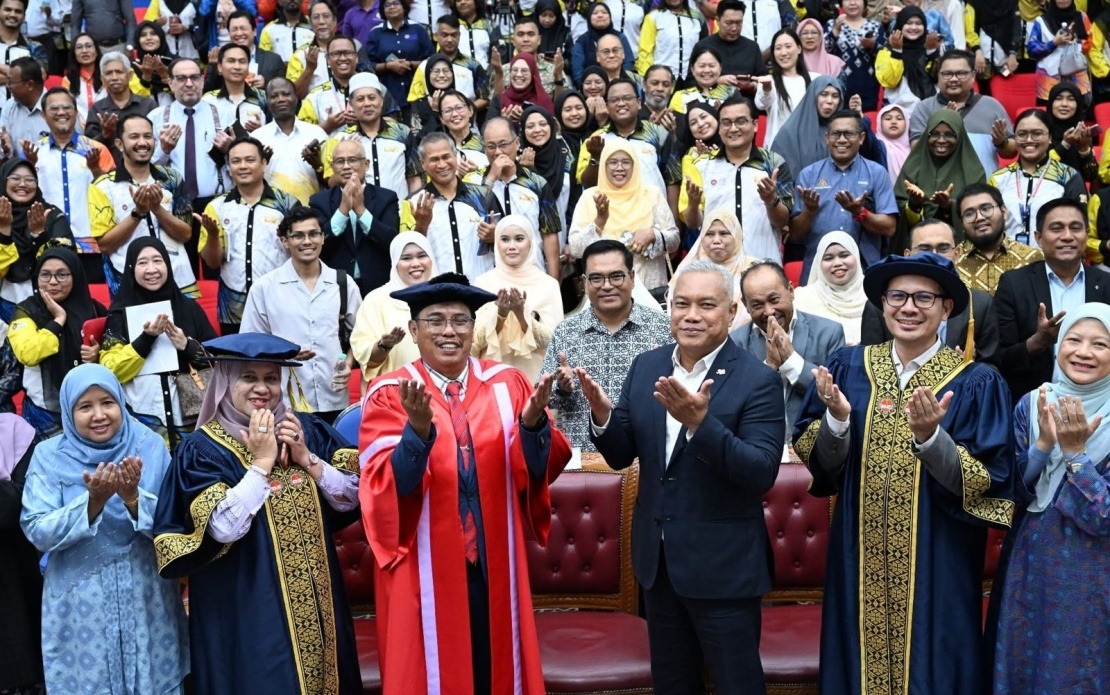
Universiti Pendidikan Sultan Idris (UPSI) is actively investigating the establishment of a private specialist hospital in Tanjong Malim, marking an ambitious expansion into healthcare infrastructure that reflects the institution's broader vision for developing the region as a comprehensive knowledge ecosystem. The initiative, announced by vice-chancellor Prof Datuk Dr Md Amin Md Taff, represents a strategic response to the mounting healthcare demands generated by UPSI's expanding international student and staff cohorts, who currently lack adequate specialist medical facilities within the immediate campus vicinity.
The exploration of this venture encompasses more than mere site identification. UPSI is actively engaged in evaluating various operational and financial models that would enable private healthcare providers to establish and manage a specialist hospital either within Tanjong Malim proper or potentially on university land itself. This deliberative approach signals the institution's commitment to finding sustainable arrangements that balance fiscal responsibility with healthcare accessibility, rather than rushing into ill-conceived partnerships that could burden the university's finances.
For Malaysia's higher education sector, this development carries significance beyond Tanjong Malim's boundaries. As universities increasingly compete for international student enrolment, the quality of support infrastructure—including healthcare—has become a material differentiator. UPSI's initiative acknowledges that foreign students and expatriate academics represent valuable stakeholders whose welfare directly impacts institutional reputation and recruitment success. The specialist hospital would directly address a gap that has long characterised many Malaysian university towns, where international populations often struggle to access medical services tailored to their needs.
The hospital initiative sits within a broader masterplan for Tanjong Malim's development as an integrated educational and residential hub. UPSI's vision extends beyond acute healthcare provision. The university is simultaneously pursuing plans to develop retirement facilities and a dedicated retirees' community within the area, seeking to foster lasting connections between retired staff members and the campus they served. This multi-generational approach—catering to current students and staff while providing security and community for former employees—demonstrates sophisticated long-term thinking about campus sustainability and social responsibility.
The timing of this announcement reflects demographic and epidemiological realities facing Malaysian campuses. As UPSI's international student population grows, so does diversity in healthcare needs and expectations. Students from various countries arrive with different medical profiles, vaccination histories, and healthcare-seeking behaviours. A dedicated specialist hospital could standardise care quality while accommodating these variations more effectively than relying on distant Kuala Lumpur facilities or overburdened public hospitals in Perak.
From an economic perspective, a private specialist hospital in Tanjong Malim could catalyse broader regional development. Beyond serving the campus community, such a facility would inevitably attract paying patients from surrounding areas, generating employment and economic activity in a region that continues to develop its service sector. This spillover benefit aligns with government objectives to distribute healthcare infrastructure more equitably across Malaysia, reducing the concentration of specialist services in major metropolitan centres.
The partnership model UPSI is exploring deserves particular attention. Rather than establishing and operating a hospital directly—an undertaking requiring capital investment, operational expertise, and regulatory navigation that exceeds most universities' core competencies—UPSI is positioning itself as a facilitator and anchor tenant. This approach protects the institution's finances while leveraging private sector efficiency and healthcare expertise. Malaysian universities have increasingly adopted such collaborative models with success, recognising that their comparative advantage lies in education and research rather than healthcare management.
However, the realisation of this vision faces practical obstacles worth considering. Regulatory approval from the Ministry of Health and relevant state authorities remains essential. Competition from existing private healthcare providers in the Klang Valley and beyond may present commercial challenges. Moreover, recruitment of specialist medical staff to a relatively remote location, even with competitive remuneration, could prove difficult in Malaysia's competitive healthcare labour market.
The announcement also reflects UPSI's confidence in Tanjong Malim's trajectory as a growth centre. This institutional confidence, backed by concrete investment planning, sends positive signals to other potential stakeholders considering development in the area. When a research university commits substantial resources to campus infrastructure expansion, it typically indicates stable enrolment projections, government support, and confidence in the institution's financial stability.
For Southeast Asian higher education more broadly, UPSI's initiative exemplifies evolving university models that extend beyond traditional academic functions. As competition for international students intensifies across the region, institutions increasingly recognise that comprehensive campus ecosystems—integrating quality healthcare, accommodation, recreation, and retirement facilities—provide competitive advantage. Universities in Thailand, Vietnam, and Indonesia are observing similar trends, gradually transforming campuses into self-contained communities rather than purely academic institutions.
The initiative also intersects with Malaysia's broader healthcare policy objectives. Government strategies for developing healthcare infrastructure in secondary cities depend partly on private investment and public-private partnerships. UPSI's exploration contributes to this ecosystem, potentially reducing pressure on Perak's public healthcare system while extending specialist services to populations previously lacking access.
Moving forward, UPSI's success in implementing these plans will depend on securing appropriate partners and navigating regulatory frameworks efficiently. The university has indicated active engagement with potential private hospital operators, suggesting serious commitment rather than exploratory thinking. If realised within a reasonable timeframe—typically three to five years for hospital establishment—this development could position UPSI as a model for how Malaysian universities can proactively address community healthcare gaps while strengthening their own institutional appeal.
The retirement facility component deserves equal recognition. Providing secure housing and community connection for retired academics represents an innovative employee benefit that few Malaysian universities have systematically addressed. This could emerge as a distinctive recruitment and retention advantage, particularly when attracting accomplished scholars in advanced career stages who value post-retirement lifestyle security.

