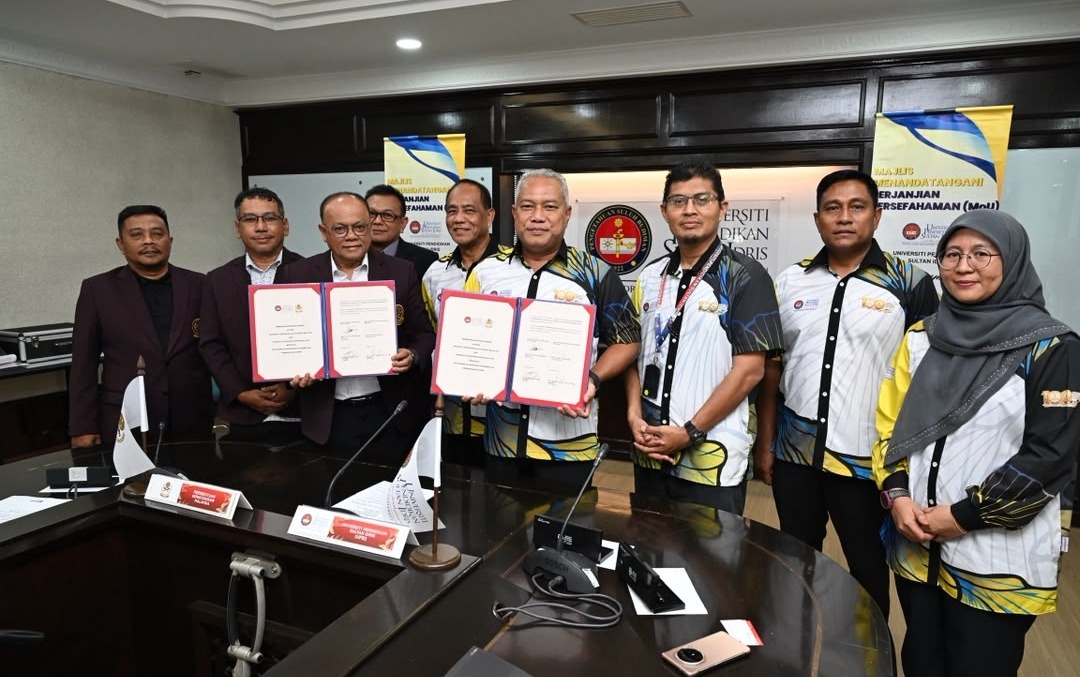
Universiti Pendidikan Sultan Idris (UPSI) has formalized a strategic partnership with the Malaysian Sepaktakraw Federation (PSM) through a memorandum of understanding designed to integrate elite sports development with academic pathways. The agreement, inked at the Chancellery Building in Tanjong Malim on July 15, represents a significant institutional commitment to nurturing Malaysia's traditional sport while addressing the longstanding challenge of balancing competitive ambitions with educational advancement.
The three-year accord underscores growing recognition among Malaysia's educational and sporting establishments that athletes require comprehensive support structures extending beyond the training ground. UPSI Vice-Chancellor Prof Datuk Dr Md Amin Md Taff emphasized that the collaboration transcends ceremonial gestures, embedding concrete mechanisms to translate institutional resources into tangible outcomes for sepak takraw development. This philosophical stance distinguishes the agreement from numerous memoranda signed across Southeast Asia that often languish without meaningful implementation.
Under the MoU's framework, UPSI commits to enrolling PSM-affiliated athletes across all educational levels while accommodating their demanding training schedules and competition calendars. This dual-track approach acknowledges a persistent tension in sports development: elite athletes frequently sacrifice educational opportunities to pursue competitive excellence, creating vulnerability should injury or changing circumstances end their sporting careers prematurely. By formalizing flexible pathways, UPSI addresses this vulnerability while expanding the talent pool available to the federation.
The partnership extends beyond enrolling athletes into broader knowledge-sharing arrangements. UPSI brings established expertise in sports science, technical coaching methodology, officiating standards, and sports technology infrastructure. These institutional capacities, refined through years of educator training and sports program development, position the university as more than merely a venue for athlete education. Instead, UPSI functions as a developmental hub capable of elevating coaching quality and official standards across the sepak takraw ecosystem.
A particularly significant component involves establishing a dedicated national training centre for sepak takraw. This facility represents recognition that Malaysia's most promising athletes require concentrated, purpose-built environments to achieve competitive parity with regional rivals. Thailand's dominance in Southeast Asian sepak takraw competitions has historically stemmed partly from superior training infrastructure and systematic talent identification. A dedicated Malaysian centre, supported by university resources and expertise, directly challenges this competitive disadvantage.
PSM Vice-President Tengku Zaihan Che Ku Abdul Rahman articulated how the collaboration particularly benefits athletes from Malaysian Sports Schools and State Sports Schools, institutions that often struggle to bridge competitive participation with credible educational credentials. Young athletes in these schools frequently face pressure to choose between academic progression and sports commitment. The UPSI partnership creates genuine third pathways, allowing simultaneous development without sacrificing long-term prospects.
The synergy between UPSI's sports science capabilities and PSM's technical expertise represents intelligent institutional design. Sports science encompasses biomechanics, nutritional optimization, injury prevention, and performance analytics—domains where universities typically excel. Conversely, PSM maintains accumulated technical knowledge about sepak takraw-specific skills, tactical systems, and player development progressions. Their combination theoretically produces athlete development superior to either institution operating independently.
Tengku Zaihan identified the MoU's potential to establish precedent for similar collaborations between national sports bodies and Malaysian universities. This aspiration reflects broader institutional learning within Malaysian sports governance. As nations like Japan and South Korea demonstrate, integrating university sports programs with national federation structures produces more efficient athlete development pipelines than fragmented systems where universities and sports bodies operate independently. The UPSI-PSM model, if successfully implemented and replicated, could fundamentally reshape Malaysian sports development architecture.
The agreement's three-year duration with renewal provisions balances ambition against realistic implementation timelines. Establishing effective collaboration between education and sports institutions requires cultural adjustment, operational coordination, and demonstrated outcomes. A fixed initial period allows stakeholders to identify friction points and refine processes before committing indefinitely. The provision for detailed Memorandum of Agreement subsequently suggests both parties recognize that initial understanding requires elaboration into specific protocols and resource allocations.
For Malaysian readers following sports development, this partnership merits attention beyond sepak takraw enthusiasm. The agreement exemplifies how institutional cooperation can address structural limitations in athlete development. Malaysia's regional sports competitiveness increasingly depends not merely on individual talent but on systematic frameworks supporting talent identification, technical development, educational continuity, and scientific optimization. UPSI's engagement signals that university leadership recognizes sports development as legitimate institutional responsibility rather than peripheral activity.
The agreement also carries implications for sports equity and accessibility. By formally integrating athletes into university structures, UPSI implicitly commits to supporting athletes regardless of family financial capacity. This democratizes elite sports participation, enabling talented individuals from economically disadvantaged backgrounds to access high-quality training and education simultaneously. Such structural inclusion strengthens national competitiveness by expanding the talent pool from which elite athletes emerge.
Regional context amplifies the partnership's significance. Southeast Asian nations increasingly invest in sports development as soft power instruments and national pride symbols. Thailand's sepak takraw dominance has generated regional prestige and tourism benefits. Malaysia's partnership between premier sports federation and a respected education institution demonstrates strategic thinking about long-term competitive positioning. The success or failure of this collaboration will inevitably influence how other Malaysian sports bodies approach university partnerships, making this more than a sepak takraw initiative but rather a test case for integrated sports development governance.

