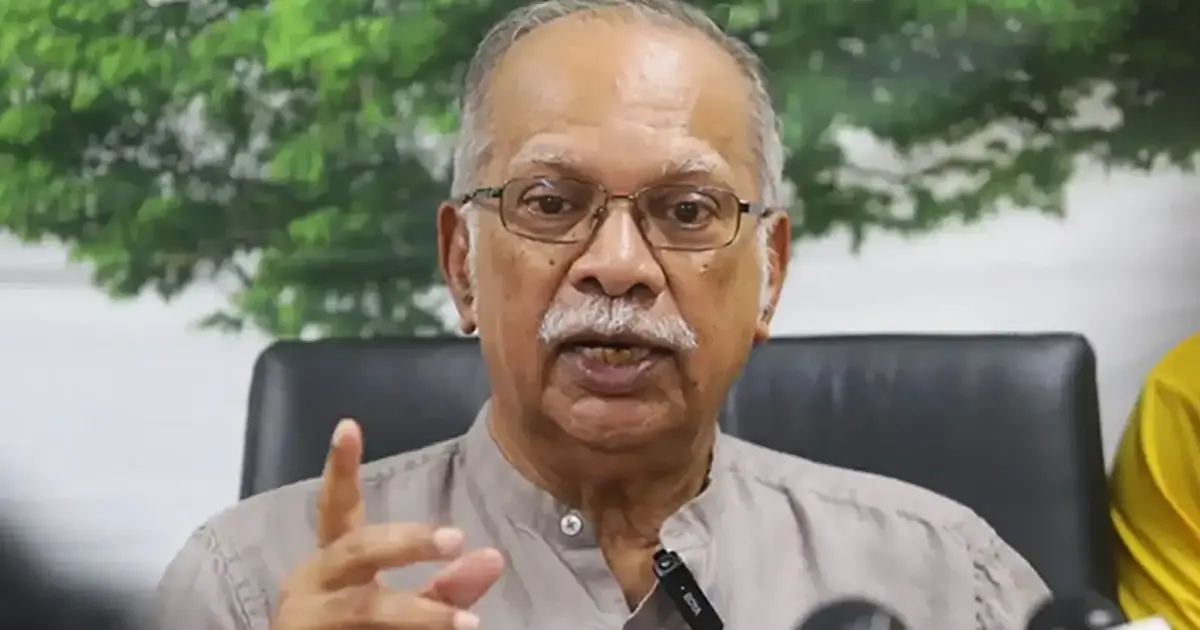
The Perikatan Nasional coalition faces mounting pressure to confront its fundamental structural problems, with the Urimai chairman suggesting that continued avoidance of key decisions risks deeper fragmentation. Ramasamy's criticism, levelled in the aftermath of an emergency gathering, highlights how unresolved personnel and organisational disputes can undermine opposition bloc coherence at a critical juncture in Malaysia's political landscape.
Ramasamy's central argument rests on a straightforward premise: the coalition's emergency meeting represented a rare opportunity to tackle substantive questions about Bersatu Negara's continued involvement in the PN framework. Instead of engaging directly with the party's precarious standing, coalition leadership apparently sidestepped the issue, allowing tensions to fester. This approach mirrors a broader pattern in Malaysian opposition politics where tactical manoeuvring frequently displaces strategic planning, leaving underlying tensions unresolved and members increasingly frustrated.
The widening rift between Bersatu Negara and PAS forms the structural fault line threatening PN's unity. These two parties, once foundational pillars of the coalition, have grown increasingly estranged on matters ranging from policy direction to resource allocation and leadership hierarchy. Rather than treating this deterioration as an urgent matter demanding immediate, decisive action, PN's leadership apparently preferred circumlocution and postponement, according to Ramasamy's assessment.
For Malaysian observers, the PN situation carries broader implications about coalition stability and opposition credibility. A fractious opposition bloc weakened by internal disputes sends signals to voters about organisational capacity and political maturity. When rival factions within a coalition prove unable to manage their differences constructively, public confidence erodes. The upcoming electoral cycle makes this deterioration especially consequential, as voters typically reward coherent, well-organised alternatives to incumbent governments.
Bersatu's position within PN has grown increasingly anomalous, particularly following various leadership transitions and policy shifts over recent years. The party occupies an uncomfortable middle ground, neither fully aligned with PAS's religious-focused agenda nor entirely comfortable with other coalition partners' positioning. This structural ambiguity creates constant friction points, from resource distribution to candidate selection for electoral contests. Addressing Bersatu's role directly—whether through restructured participation, leadership changes, or explicit policy alignment—would have required difficult conversations that the emergency meeting apparently avoided.
PAS, meanwhile, has pursued an increasingly assertive strategy within the coalition framework, seeking to position itself as the dominant force and setting the ideological compass for PN's direction. This assertiveness naturally conflicts with other coalition members' interests and visions. The tension between PAS's expansionist ambitions and other parties' desire for greater autonomy creates an impossible equilibrium, destined eventually for rupture unless managed through explicit negotiation and compromise.
Ramasamy's intervention carries weight given his position within Urimai, an organisation that bridges diverse constituencies and maintains a stake in opposition coalition viability. His public criticism signals that concerns about PN's direction extend beyond the immediately quarrelling parties to encompass broader coalition observer-members who worry about deteriorating functionality. When respected observers begin articulating frustrations publicly, it typically indicates that behind-the-scenes concerns have reached critical levels.
The timing of the emergency meeting itself suggests that some crisis prompted the gathering—likely a specific incident or threatened action by one of the quarrelling factions. Yet treating the symptom while ignoring the underlying disease represents political shortsightedness. The emergency meeting's failure to address root causes means another crisis is virtually inevitable, requiring further emergency sessions and perpetuating a cycle of reactive rather than proactive governance of coalition affairs.
For PN to stabilise and present itself as a credible alternative government, leadership must demonstrate capacity for difficult decision-making. This might involve establishing clear frameworks governing inter-party disputes, creating binding mechanisms for policy alignment, or honestly assessing whether all current members share sufficient common ground to justify continued joint operation. Avoiding these conversations only delays inevitable reckoning while damaging coalition reputation among potential supporters.
The broader Malaysian political environment complicates PN's internal tensions. With the federal government navigating its own challenges and various state governments pursuing independent agendas, opposition coherence becomes increasingly valuable. An opposition divided against itself loses leverage in parliamentary proceedings and struggles to maintain media focus on government shortcomings. Instead, coalition infighting dominates coverage, drowning out substantive policy critiques.
Ramasamy's call for direct engagement with Bersatu's status represents a fundamentally sensible approach to conflict management. Addressing questions explicitly, acknowledging legitimate grievances, and negotiating workable compromises typically produces better outcomes than evasion and postponement. Malaysian politics requires more of this kind of mature engagement within coalitions and competing blocs, demonstrating that diverse political forces can manage disagreement constructively while maintaining strategic unity.
As PN contemplates its path forward, the choice between continued avoidance and direct engagement becomes ever more consequential. The coalition's capacity to resolve internal disputes transparently will determine whether it eventually emerges as a credible governing alternative or gradually fragments into competing factions pursuing separate agendas.