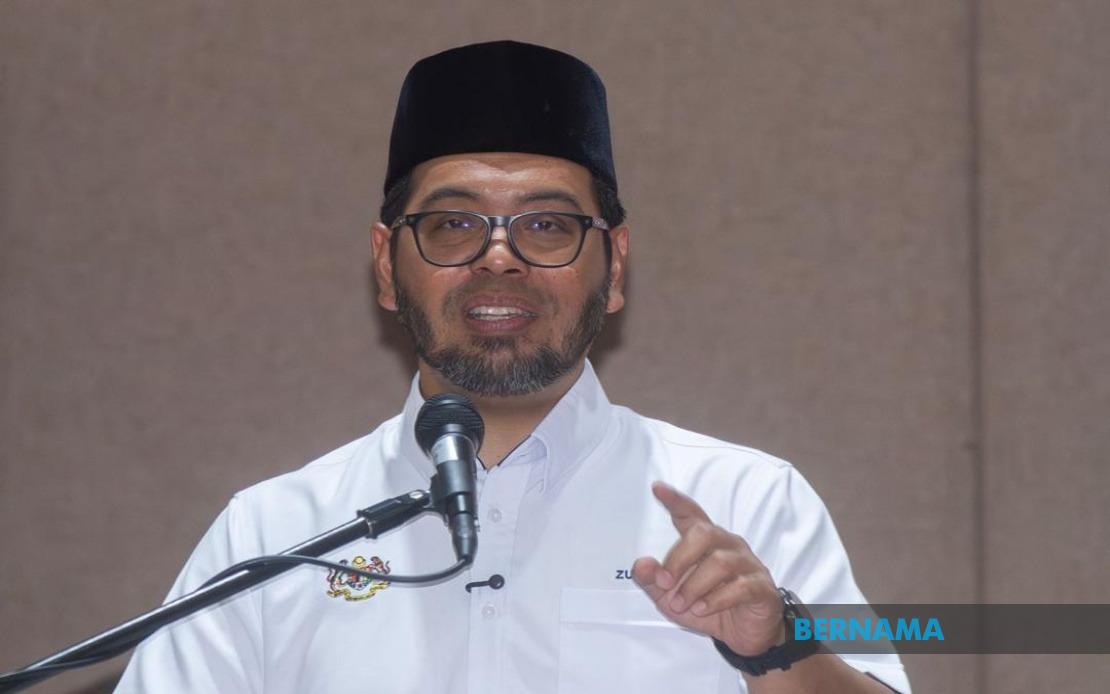
Minister in the Prime Minister's Department (Religious Affairs) Dr Zulkifli Hasan has cautioned that marriages conducted without official registration carry profound consequences for the rights and security of children and families, extending far beyond what many couples realise. Speaking at the launch of the 2026 Federal Territories Syariah Law Literacy Programme in Labuan, he outlined how the absence of proper marriage documentation creates cascading legal and administrative obstacles that can affect children throughout their lives.
The minister identified a persistent problem within Malaysian Muslim communities where some couples have maintained marital relationships spanning decades without completing formal registration requirements, whilst others have conducted ceremonies outside their residential jurisdictions or through unauthorised registrars who do not comply with the Islamic Family Law (Federal Territories) Act 1984. This widespread practice, though often rooted in cultural tradition or administrative oversight, creates a legal vacuum that leaves families vulnerable to multiple complications.
Children born to unregistered unions face the most immediate and damaging consequences. Without recognised marriage documentation, obtaining birth certificates becomes problematic, which subsequently creates barriers to school enrolment, healthcare provision, and accessing government services that require proof of identity and parentage. The ripple effects continue into adulthood, as individuals may struggle to establish citizenship status or access social safety nets that depend on verified legal identity.
Beyond identity documentation, unregistered marriages create ambiguity regarding a child's legal lineage and inheritance rights. Islamic inheritance law, or faraid, allocates specific portions to direct heirs, but disputes frequently arise when death occurs without clear marital documentation, leading to protracted family conflicts that can span years. Wives similarly face vulnerabilities, lacking legal recourse to claim maintenance obligations (nafkah) or separation compensation (mutaah) should the relationship dissolve, leaving them financially exposed.
Dr Zulkifli emphasised that the government's approach centres on remediation rather than punishment. Working alongside religious authorities and community partners, the department has adopted a proactive stance to regularise outstanding registration cases and verify marital status across the Federal Territories. The initiative reflects a recognition that many couples remain unaware of the legal framework or face genuine obstacles to compliance rather than deliberate defiance.
The Federal Territories Syariah Prosecution Department has established interactive consultation counters as part of the literacy programme, staffed to guide residents through registration procedures, clarify legal obligations, and resolve documentation discrepancies. This accessibility-focused approach aims to lower barriers that previously discouraged families from formalising their marital status, whilst simultaneously educating the community about why registration protects rather than burdens families.
For Malaysian policymakers and those considering marriage, the minister's remarks underline a critical distinction: compliance with Islamic family law should be reframed from a perceived regulatory imposition into a protective mechanism that preserves family stability and safeguards children's futures. In an increasingly complex society where access to education, healthcare, and financial services depends on verified documentation, informal arrangements carry costs that extend across generations.
The collaborative nature of the programme, involving the Federal Territories Islamic Religious Department (JAWI), the Federal Territories Islamic Religious Council (MAIWP), the Legal Aid Department, and community organisations including Tabung Haji and Yayasan Pembangunan Ekonomi Islam Malaysia, demonstrates institutional commitment to tackling the issue comprehensively. Such coordination is essential, as marriage registration problems often intersect with broader challenges in legal literacy, administrative access, and support for vulnerable populations.
Regionally, Malaysia's experience with unregistered marriages reflects patterns seen across Southeast Asia's Muslim-majority communities, where traditional practices sometimes diverge from modern legal requirements. The Federal Territories initiative offers a model for other jurisdictions confronting similar challenges: combining education campaigns with accessible administrative support and removing punitive barriers to encourage voluntary compliance. This approach recognises that solutions depend on understanding why couples fail to register rather than assuming deliberate non-compliance.
The long-term implications extend to social policy and family stability. When marriages remain unregistered and disputes arise, courts face difficulty in resolving custody, maintenance, and property disputes according to established legal frameworks, often leaving vulnerable dependents without adequate protection. Normalising registration through community awareness and streamlined procedures therefore serves broader national interests in social cohesion and child welfare beyond purely religious considerations.
Looking forward, the success of the Federal Territories programme will likely influence approaches across other states managing comparable issues. As Malaysian society becomes increasingly urbanised and mobile, with families spanning multiple jurisdictions, the legal gaps created by unregistered marriages are unlikely to resolve without sustained institutional effort. The minister's candid assessment that these are "significant and far-reaching" implications rather than technical bureaucratic matters signals recognition that addressing this issue ranks among important family welfare concerns deserving government priority.

