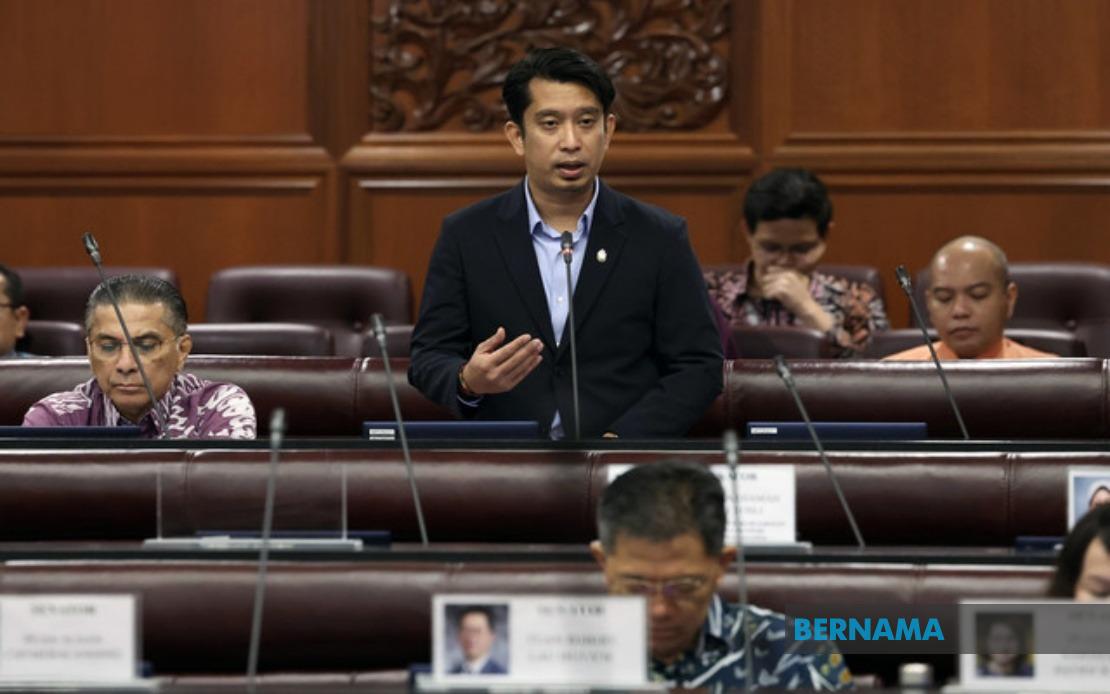
Institutions across Malaysia will have greater authority to protect student interns, with the Deputy Higher Education Minister Adam Adli Abd Halim clarifying that universities can immediately cancel placements and recall trainees whenever safety hazards become apparent. Speaking during parliamentary proceedings at the Dewan Negara, Adam Adli outlined a framework giving educational institutions discretion to act on safety assessments they conduct independently or on concerns raised directly by students requiring urgent intervention. This clarification comes against a backdrop of rising anxiety within Malaysia's tertiary education sector regarding the safeguarding of young people engaged in mandatory industrial training programmes.
The policy shift reflects institutional acknowledgment of a tragedy that intensified scrutiny of workplace safety oversight. On June 16, a Universiti Putra Malaysia student lost his life while performing maintenance activities at the Saujana 1 water tower facility in Kuala Selangor, prompting Senator Che Alias Hamid to question how the government monitors compliance with safety protocols among companies hosting student trainees. The incident exposed gaps in how Malaysia's university sector and its corporate training partners collaborate on worker protection, particularly for young people entering industrial environments for the first time. Adam Adli's parliamentary response signalled that the ministry recognises these vulnerabilities and is instituting corrective measures to prevent similar casualties.
The government's revised approach emphasises rigorous pre-placement evaluation. Universities must now conduct substantially more comprehensive assessments of any organisation before approving it as a training site, examining the company's documented safety history, previous incident reports, and overall reputation within relevant industries. This represents a departure from potentially more perfunctory approval processes that may have operated previously, establishing due diligence as a formal requirement rather than optional practice. By demanding universities examine institutional safety records rather than simply accepting corporate assurances, the policy introduces accountability into the initial gatekeeping stage where many preventable risks could be identified and eliminated.
For industrial sectors classified as high-risk, the regulatory threshold has been substantially elevated. Students can now only undertake training with organisations that actively demonstrate compliance with established safety requirements and maintain functional safety management systems meeting official benchmarks. This categorical restriction prevents universities from placing trainees with organisations that, while legally operating, have not invested in comprehensive safety infrastructure. The designation of certain sectors as inherently higher-risk acknowledges that particular industries—such as water utility maintenance, construction, manufacturing, and resource extraction—carry elevated accident potential requiring correspondingly heightened precautions.
Pre-placement preparation has been mandated as a non-negotiable component of the industrial training pathway. Students assigned to high-risk workplace environments must successfully complete safety-focused coursework or obtain formal certifications demonstrating competency before commencing their placements. Beyond this, all industrial trainees must participate in comprehensive briefings and preparatory sessions addressing workplace safety fundamentals, health risk identification, personal protective equipment protocols, emergency response procedures, and the proper channels for reporting incidents. This structured preparation recognises that many student interns may lack professional workplace experience and require foundational knowledge to navigate industrial environments safely.
During the actual training period, oversight remains continuous and multifaceted. Students benefit from monitoring conducted by both academic supervisors appointed by their universities and industry supervisors employed at the placement organisation, operating through scheduled physical site visits, virtual check-ins where appropriate, verification of submitted progress reports, and consistent communication maintaining awareness of the trainee's experience. This dual supervision model creates cross-institutional accountability, ensuring that neither the university nor the employer can exclusively control information about student welfare or conditions. The emphasis on regular communication and progress monitoring provides multiple opportunities to detect emerging problems before they escalate into critical safety incidents.
Financial protection through insurance schemes provides another layer of safeguarding. All students participating in industrial training programmes are automatically enrolled in the University Group Insurance Scheme, ensuring that should accidents or adverse incidents occur during their training assignments, the affected students and their families have access to compensation mechanisms. This insurance arrangement transfers some financial risk away from families who might otherwise bear catastrophic costs from workplace injuries, while simultaneously creating incentive structures encouraging institutions and employers to prioritise prevention since insurance claims represent documented evidence of safety failures.
The accumulated measures reflect a comprehensive shift in how Malaysia's higher education sector approaches the duty of care owed to student interns. Rather than treating internship placements as primarily an educational opportunity with safety as a secondary consideration, the revised framework positions safety as a foundational requirement influencing every stage from initial company assessment through ongoing supervision. The earlier fatal incident at the water tower demonstrates that good intentions and standard procedures remain insufficient; the enhanced protocols now require universities to exercise active judgment about organisational capacity for safe practices rather than passively accepting whatever arrangements industry proposes.
For Malaysia's diverse student population—many undertaking mandatory internships as degree requirements—these protections carry immediate significance. Engineering, architecture, technology, and applied science students particularly benefit, as their programmes typically involve placements in industrial and construction settings carrying demonstrable hazards. The frameworks also safeguard students in emerging sectors including renewable energy, advanced manufacturing, and digital infrastructure development, where safety standards may still be evolving and best practices remain inconsistently applied across the industry.
The policy demonstrates government receptiveness to the legitimate concerns raised by tertiary institutions about balancing educational objectives with occupational safety. Universities now possess clearer authority and responsibility frameworks enabling them to prioritise student protection without fear of undermining employer relationships or appearing to obstruct industrial partnerships. This clarity should reduce institutional hesitation when safety concerns genuinely warrant intervention, potentially preventing future tragedies through decisive action rather than bureaucratic delay or deference to corporate preferences.

