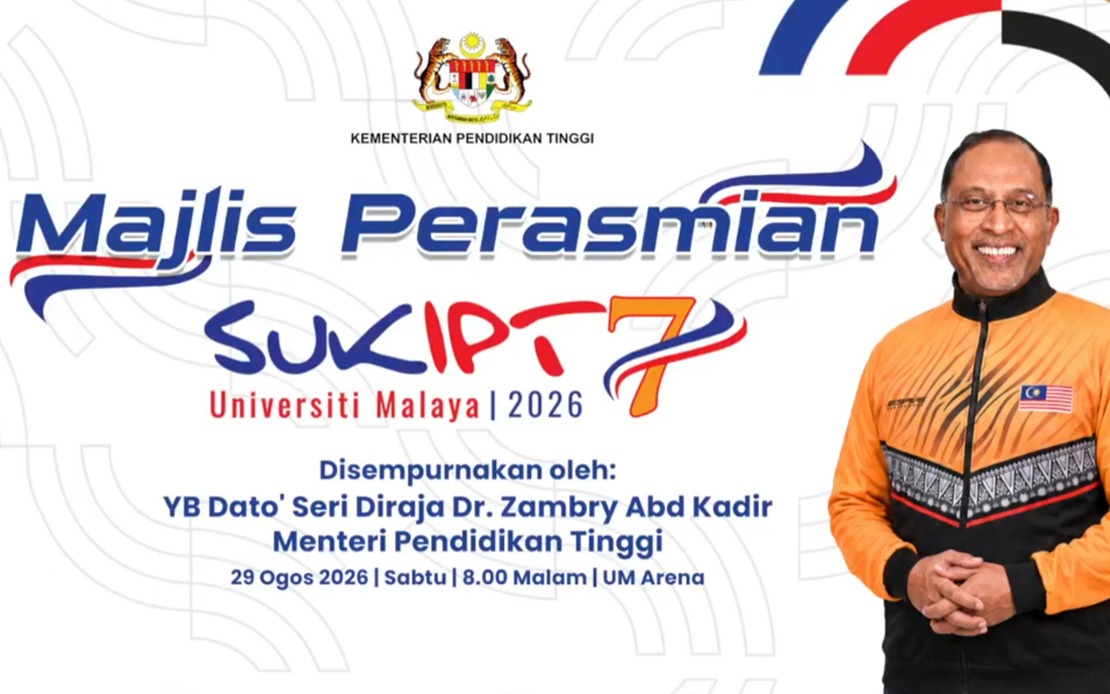
Malaysia's universities are emerging as crucial development pathways for elite athletes who can compete and triumph on the global stage, according to Higher Education Minister Datuk Seri Dr Zambry Abdul Kadir. Speaking at the opening ceremony of the Higher Education Institution Games (SUKIPT) 2026 at Universiti Malaya Arena in Kuala Lumpur, Zambry underscored how achievements by higher education institution (IPT) athletes at prestigious international competitions demonstrate the untapped potential residing within the country's student-athlete population. The minister's remarks reflect a strategic recognition that structured university sports programmes can serve as incubators for developing competitive talent that ultimately strengthens Malaysia's performance on the world sporting circuit.
Recent performances by Malaysian university athletes provide concrete validation of this institutional approach. Muhammad Erry Hidayat from Universiti Putra Malaysia secured the gold medal in men's 79-kilogramme weightlifting, whilst his colleague Muhammad Aniq Kasdan from Universiti Teknologi MARA claimed gold in the men's 60kg category. These weightlifting triumphs illustrate how disciplined training environments within tertiary institutions can produce medal-winning performances. The achievement extends beyond traditional powerhouse sports, evidenced by Amir Daniel Abdul Majid from Universiti Sains Malaysia, who made history as Malaysia's first Commonwealth Games gold medallist in judo, a significant breakthrough in a discipline where the country has struggled historically. Amirul Daniel Abdul Rahim from Universiti Malaya rounded out recent successes with a bronze medal in lawn bowls, demonstrating the breadth of IPT sporting excellence.
Domestic competition records have also fallen to university athletes, signalling the quality of grassroots development occurring within these institutions. Omar Osman, a 400-metre runner from Politeknik Sultan Ibrahim, joined sprinters Muhammad Fadwah from UiTM and Danish Iftikhar Muhammad Rosli from Universiti Pendidikan Sultan Idris in breaking Malaysia Games records. Notably, Rosli's performances in the 200-metre and 4x100-metre relay events at SUKMA demonstrated that university-based athletes can establish new benchmarks for domestic competition, creating aspirational standards for younger athletes and establishing a cycle of continuous improvement within institutional sports programmes.
The SUKIPT 2026 Games, running from 28 August to 6 September, represents the scale and ambition of university sports in Malaysia. Hosted at Universiti Malaya, the seventh edition of the competition draws 64 contingents encompassing 20 public universities, 42 private higher education institutions, one polytechnic, and one community college. This broad participation structure reflects how tertiary education sports have become systematically integrated across Malaysia's diverse higher learning sector. The event mobilises over 8,244 athletes and officials competing across 30 sports disciplines, making it a substantial national sporting undertaking that rivals or exceeds many open national championships in scale and competitive intensity.
Financial incentives embedded within SUKIPT 2026's structure underscore institutional commitment to athletic excellence. The games offer 227 gold medals alongside cash rewards designed to motivate peak performance and recognise exceptional achievements. Individual athletes winning Sportsman or Sportswoman of the Games honours receive RM3,000, whilst winning teams earn RM7,000 per category. Most significantly, athletes who break national records receive RM20,000, a substantial incentive that directly encourages record-breaking performances and signals that institutional sports development warrants serious financial investment. These monetary structures help explain why university athletes increasingly view competitive sport as a viable pathway rather than merely recreational activity, creating psychological and material conditions supporting sustained athletic dedication.
The thematic framing of SUKIPT 2026 as 'Creating a Legacy of Champions' reveals how university sports administrators conceptualise their role within Malaysia's broader sporting ecosystem. Rather than viewing university athletics as isolated from national sporting ambitions, this messaging positions tertiary institutions as explicit contributors to sustained competitive advantage. The legacy concept suggests thinking extends beyond immediate tournament outcomes toward establishing institutional cultures, coaching structures, and training methodologies that outlast individual athletes. This generational perspective contrasts with ad-hoc national team selection approaches, instead advocating for systematic talent cultivation beginning during undergraduate years.
Zambry's characterisation of the desired 'face of IPT sports' as one that 'dares to challenge records and elevates Malaysia's name on the world stage' articulates a specific vision distinguishing excellence-oriented university athletics from participation-focused recreational programmes. This distinction matters significantly for policy development, as it suggests government support should prioritise institutions demonstrating capacity to produce internationally competitive athletes rather than dispersing resources equally across all tertiary providers. The minister's language reflects emerging recognition that Malaysia's limited population and sporting budget necessitate concentrated investment in demonstrably productive talent pipelines, making university sports an efficient mechanism for generating world-class performers.
The Glasgow 2026 Commonwealth Games achievements mentioned by Zambry acquire particular significance within Southeast Asia's regional sporting hierarchy. Commonwealth competitions remain among the most accessible international platforms for Malaysian athletes, offering pathways to global recognition and qualification opportunities for Olympic Games. That university athletes are generating competitive performances in these venues suggests IPT sports programmes have achieved sufficient sophistication and resource allocation to produce athletes meeting international performance standards. For regional competitors in Southeast Asia, observing Malaysian universities producing Commonwealth medallists creates competitive pressure to develop parallel institutional sports development systems, potentially elevating sporting standards across the region.
Institutional differentiation within Malaysia's higher education landscape increasingly reflects sporting capabilities alongside academic credentials. When universities successfully nurture international medallists, their reputational enhancement attracts prospective athletes seeking quality training environments, creating self-reinforcing cycles of excellence. This dynamic particularly benefits well-resourced public universities and established private institutions capable of providing world-class sports facilities, international coaching expertise, and integrated athlete support services encompassing nutrition, sports science, and academic flexibility. Conversely, newer or under-resourced institutions struggle to compete for athletic talent, potentially widening performance disparities across the tertiary education sector.
The broader policy implications of Zambry's statements extend beyond immediate sports performance toward questions of national competitiveness and human capital development. Positioning universities as talent development mechanisms for international sport aligns with broader governmental strategies emphasising Malaysia's positioning as a competitive Asian economy requiring skilled, disciplined individuals. Athletes developed through rigorous university sports programmes theoretically develop transferable qualities—resilience, strategic thinking, team coordination, goal management—applicable to professional and entrepreneurial pursuits. This framing potentially justifies increased public investment in university sports as contributing to broader national development objectives rather than constituting discretionary recreational spending.
The recognition of university sports excellence also reflects Malaysia's maturing sporting infrastructure and international competitiveness. Decades of national sports development investments have gradually established systems capable of producing internationally competitive athletes across diverse disciplines. Universities, already positioned as institutional anchors within their communities with existing facilities and administrative structures, naturally evolved into hosting sites for advanced athletic development. As these institutions increasingly produce international medallists and record-breakers, they validate strategic choices to concentrate elite sports development within tertiary education settings rather than exclusively through dedicated national training centres or club-based systems. This institutional consolidation represents Malaysia's sporting system reaching developmental maturity comparable to established international competitors.

