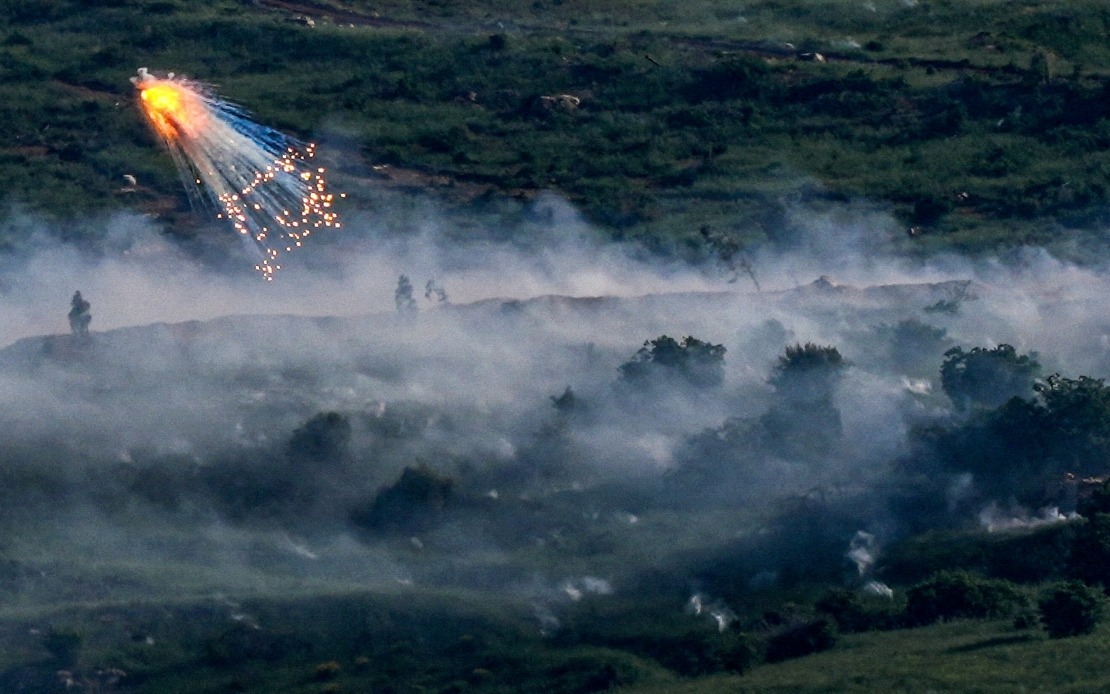
Reflecting mounting concerns over security conditions in the Middle East, the United States has formally instructed its citizens to refrain from visiting Lebanon and the northern regions of Israel. The warnings were issued through official channels this past Saturday, with both the US Embassy in Beirut and the US Embassy in Jerusalem releasing coordinated statements that underscored the unpredictable nature of the current geopolitical environment across West Asia.
The embassy in the Lebanese capital characterised the situation as one where "high tensions" have created a "complex" security landscape with genuine risks of unforeseen escalation. This phrasing reflects the gravity with which American officials view the deteriorating conditions on the ground, moving beyond routine caution to suggest that civilian safety cannot be reliably guaranteed in these areas. The specific focus on Lebanon indicates concern not merely about Israeli-Palestinian conflict zones but also about the broader instability that extends into neighbouring countries, where proxy actors and regional powers maintain significant influence.
Simultaneously, the Jerusalem embassy issued an expanded travel advisory that encompasses not only northern Israel but also the Gaza Strip and areas along the Egyptian border, with the exception of the Taba crossing point. This geographic specificity reveals the depth of analysis undergone by US intelligence and diplomatic personnel. The advisory effectively divides the region into zones of varying risk, permitting limited movement at designated checkpoints while recommending wholesale reconsideration of travel throughout West Asia. Such blanket guidance suggests that even seemingly safer areas carry unpredictable risks given the potential for rapid developments.
For Malaysian readers and businesses with operations or personnel in these regions, such advisories carry significant implications. Malaysia maintains substantial economic and diplomatic ties across the Middle East, with many Malaysians working or studying in countries across West Asia. These travel warnings typically precede or accompany actual deterioration in security conditions, making them important signals for Malaysian nationals to monitor their own safety situations and consider whether their presence in affected areas remains justified.
The broader context driving these warnings centres on escalating US-Iran tensions that have punctuated Middle Eastern politics for months. Despite a Pakistan-brokered memorandum of understanding concluded in June that was intended to establish a framework for ending hostilities and achieving a durable peace agreement, the two powers have continued engaging in direct attacks against one another. This fundamental contradiction—between a nominal ceasefire framework and continued military operations—highlights the fragility of diplomatic arrangements in the region and the ease with which miscalculation or deliberate escalation can occur.
The involvement of Pakistan as a mediator in June underscores the region's interconnectedness and the role played by powers beyond the immediate Israeli-Palestinian and US-Iran dyads. Pakistan's diplomatic efforts, however well-intentioned, have evidently proven insufficient to create the conditions necessary for sustained de-escalation. This failure suggests that the underlying disputes involve incompatible objectives that cannot be readily bridged through traditional mediation, leaving external observers in a state of constant vigilance regarding potential flashpoints.
From a Southeast Asian perspective, these warnings carry several important considerations. The region depends significantly on stability across key shipping routes and global supply chains that traverse the Middle East. Military escalation in Lebanon and Israel could disrupt not only civilian commerce but also trigger broader regional responses that further destabilise critical economic corridors. Additionally, any significant conflict expansion might prompt refugee movements or humanitarian crises that could create pressure on neighbouring countries, potentially affecting regional stability more broadly.
The specific mention of reconsideration of travel "through West Asia" rather than merely "to" West Asia suggests that even transit or stopover arrangements in regional hubs may carry elevated risk. This expanded warning potentially affects business travel and logistics operations that might not directly involve visits to conflict zones but rather pass through the region en route to other destinations. Malaysian companies and citizens should take note of this distinction when planning travel itineraries.
US travel advisories, while based on intelligence assessments, often serve as leading indicators of deteriorating conditions that may prompt responses from other governments. Other Western nations and advanced economies frequently align their travel guidance with American assessments, meaning that Malaysian decision-makers observing such warnings might anticipate similar directives from other allied governments. This creates a cascading effect where economic activity begins to contract as multiple countries simultaneously restrict their citizens' movements.
The timing of these warnings also warrants consideration. Issued during the summer months when travel volumes typically increase, the advisories may catch many travellers and expatriates already in transition. Organisations with personnel in the region should have contingency plans in place for potential evacuation or shelter-in-place scenarios. Insurance coverage and medical evacuation capabilities become critical considerations for any Malaysian enterprise maintaining a presence in affected areas.
Historically, such warnings have preceded significant security incidents or military operations by days or weeks, though the relationship is not deterministic. The current advisory should therefore be interpreted as reflecting genuine concern among intelligence professionals rather than alarmism. Malaysian government agencies, private sector representatives, and citizens should remain alert to developments and maintain active monitoring of official statements from both the US and Malaysian authorities.
Looking forward, the trajectory of these warnings will depend heavily on whether US-Iran tensions stabilise or continue their recent pattern of tit-for-tat escalation. Any dramatic security incident, major attack, or uncontrolled military response could rapidly transform the current advisory environment into active evacuation directives. The international community remains in a holding pattern, hoping that the June ceasefire framework ultimately takes root despite present evidence suggesting otherwise.

