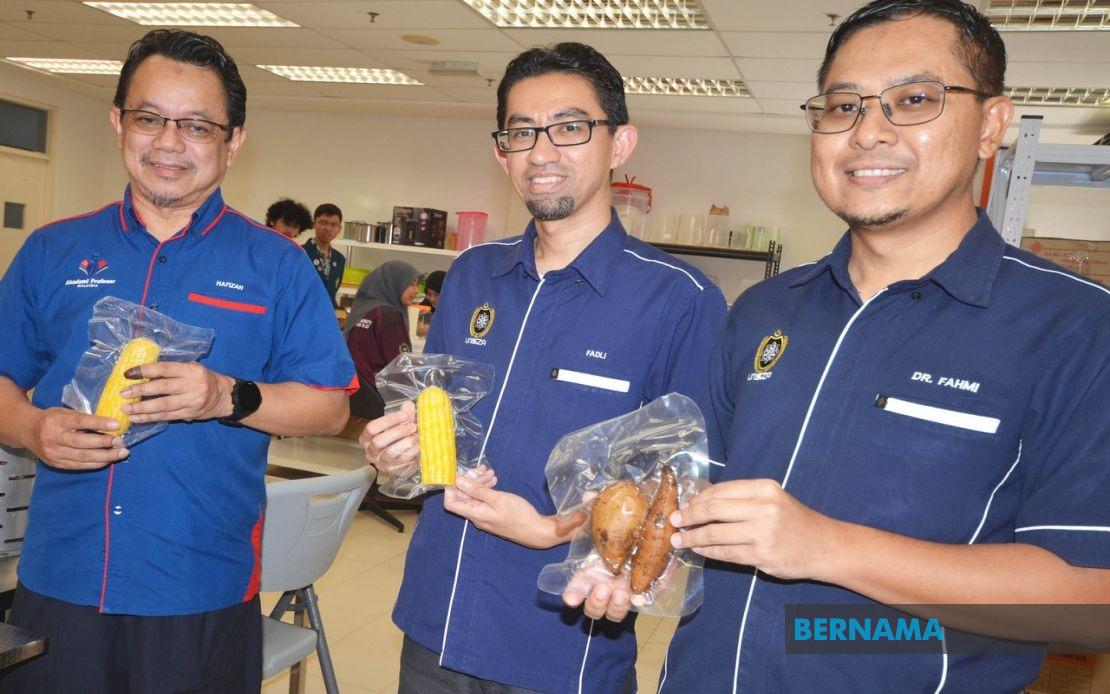
Universiti Sultan Zainal Abidin (UniSZA) has launched a novel community-centred initiative designed to alleviate the persistent problem of agricultural oversupply plaguing farmers in rural Terengganu, particularly those operating within the Besut district. The Dapur Komuniti (Community Kitchen) facility operates as a dual-purpose hub that simultaneously addresses food wastage and rural income inequality by converting unmarketable produce into commercially viable, shelf-stable products. According to Prof Dr Hafizan Juahir, dean of the faculty overseeing the project, this intervention directly responds to documented market failures that have systematically disadvantaged smallholder farmers in the region.
The underlying problem that prompted the initiative stems from a structural disconnect between farm-gate economics and consumer market pricing. Farmers cultivating sweet potatoes in Besut have historically received less than RM2 per kilogramme for their crops, yet identical produce commands significantly higher prices when it reaches urban markets such as Kuantan in Pahang or major metropolitan centres. This substantial price differential—often exceeding 100 percent—reflects not farmer incompetence but rather systemic barriers embedded within Malaysia's agricultural supply chain. Logistical constraints, limited digital marketing capabilities among rural producers, and the exploitative role played by agricultural middlemen collectively conspire to erode farm profitability while leaving consumers to pay premium prices.
The Community Kitchen addresses these challenges through value-addition processing, a strategy that fundamentally transforms the economics of agricultural production. Rather than accepting that unmarketable or surplus production must be discarded as waste, the facility processes these inputs into preserved goods capable of remaining commercially viable for extended periods exceeding twelve months. This approach generates multiple simultaneous benefits: it reduces the volume of agricultural waste reaching landfills, it creates additional revenue streams for farming communities, and it stabilises income fluctuations that characterise smallholder agriculture. Prof Hafizan illustrated the concept through the development of pickled Terengganu Sweet Melon, a product manufactured from lower-grade melons that would otherwise constitute total loss to farmers.
The integration of the Community Kitchen with UniSZA's Sustainable Community Farm at the Besut campus reflects a holistic institutional commitment to transforming rural agricultural systems. Rather than treating food production and processing as separate economic activities, the university has consciously designed an ecosystem wherein on-campus production feeds directly into value-addition facilities, minimising transportation losses and creating efficient vertical integration. This arrangement simultaneously serves research and development functions, allowing academics to experiment with novel processing techniques and product formulations while generating practical data applicable to regional agricultural challenges. The facility thus operates as a living laboratory where theoretical innovation translates directly into tangible community benefit.
Training and skills development constitute equally critical dimensions of the initiative. The Community Kitchen provides hands-on food processing instruction to local residents, farmers, and other community members, equipping them with technical competencies necessary for small-scale food manufacturing. This educational component addresses a critical capacity gap affecting rural communities, wherein traditional farming knowledge does not naturally extend to modern food safety standards, commercial processing methodologies, or regulatory compliance requirements. By embedding training directly within functional production facilities, learners gain experience that immediately translates to employment or entrepreneurial opportunity.
UniSZA is actively pursuing accreditation of the Community Kitchen as a Malaysian Skills Certificate (SKM) training centre specialising in food processing. This institutional validation would fundamentally enhance the initiative's reach and credibility, transforming it from a localised university project into a nationally recognised skills development pathway. Students graduating from UniSZA would gain access to dual qualifications—both bachelor-level academic credentials and industry-recognised SKM Level 3 certification—substantially enhancing their employability within Malaysia's expanding food manufacturing and agribusiness sectors. This credential stacking approach reflects contemporary understanding that future economic opportunities increasingly demand combinations of theoretical knowledge and demonstrable technical competency.
The potential beneficiary population extends well beyond conventional agricultural producers. Prof Hafizan identified Malaysian Armed Forces veterans as a significant demographic that could derive meaningful economic benefit from food processing skills and capabilities developed through the Community Kitchen programme. Military service often concludes at relatively early career stages, leaving former personnel confronting extended working lives requiring alternative income sources. Food processing represents a viable and dignified economic activity suited to individuals lacking specialised technical backgrounds, potentially enabling veterans to establish small enterprises or secure stable employment within the growing processed food sector.
The Community Kitchen initiative exemplifies a growing recognition within Malaysian higher education that universities possess obligations extending beyond traditional teaching and research mandates. By deliberately positioning institutional resources toward addressing specific, localised community challenges, UniSZA has modelled an engaged scholarship approach that generates mutual benefits. Rural communities gain access to institutional knowledge, facilities, and credentials previously beyond their reach, whilst universities access authentic research challenges and acquire deeper understanding of regional economic dynamics. This mutually reinforcing relationship strengthens both institutional relevance and community capacity simultaneously.
Within the broader context of Southeast Asian agricultural development, the Community Kitchen concept offers transferable insights applicable across the region. Rural communities throughout Malaysia, Thailand, Vietnam, and Indonesia confront comparable market failures stemming from inadequate infrastructure, limited digital connectivity, and exploitative intermediaries. Solutions emphasising local value-addition, skills development, and direct institutional engagement could be adapted to diverse geographical and cultural contexts. As Southeast Asian economies increasingly prioritise rural development and agricultural modernisation, initiatives demonstrating practical pathways from subsistence farming toward commercial food production merit careful attention and potential replication.
The sustainability trajectory of the Community Kitchen programme ultimately hinges upon its capacity to generate reliable revenue streams ensuring financial independence from temporary university funding. Prof Hafizan's discussions with the Department of Skills Development represent strategic moves toward embedding the initiative within national skills development infrastructure, potentially securing ongoing governmental support. As the facility achieves SKM accreditation and expands its product portfolio, opportunities for social enterprises or cooperative structures could emerge, enabling community members to assume greater ownership and operational control. Such evolution would transform the initiative from university-managed intervention toward community-driven economic institution, fundamentally enhancing its long-term sustainability and impact.

