The landscape of women's professional tennis at Flushing Meadows has shifted dramatically as the US Open women's singles draw prepares to commence on Sunday, with the traditional hierarchy of seeded players thrown into considerable flux by injury concerns and inconsistent form at precisely the moment when these competitors need peak performance most. The uncertainty surrounding the top two favourites has created genuine opportunity for established champions to reassert themselves, fundamentally altering the dynamics of what many observers had anticipated would be a straightforward path for the higher-ranked players.
Aryna Sabalenka, the world's top-ranked player and defending champion, finds herself in an unexpectedly vulnerable position heading into what was supposed to be her bid for an unprecedented third consecutive US Open crown. The Belarusian's form has deteriorated noticeably during the latter stages of the season, with particularly weak performances accumulating since she completed her sweep of the Australian Open and Miami's Sunshine Double earlier in the year. Having failed to reach a single final since that early-season success, Sabalenka has grown accustomed to surrendering leads and faltering during pivotal moments in tournaments, a concerning pattern that undermines confidence just as the biggest stage awaits. Commentary from veteran observers underscores the severity of this decline, with former world number four Mary Joe Fernandez noting that while Sabalenka's ranking reflects her previous dominance, her recent execution and mental resilience have become questionable factors that opponents can exploit.
Second seed Elena Rybakina's campaign carries different but equally troubling complications, stemming from a leg injury she sustained during last week's Cincinnati tournament that forced her withdrawal and now casts genuine doubt over her fitness level for the demanding fortnight ahead. The injury raises legitimate questions about whether the Kazakhstani can compete at full capacity or whether pain management issues might become a deciding factor in tight matches, particularly as she progresses through the rounds and physical demands intensify. This dual vulnerability at the seeding summit represents an unusual opening that rarely materialises when both top contenders enter a major in compromised condition.
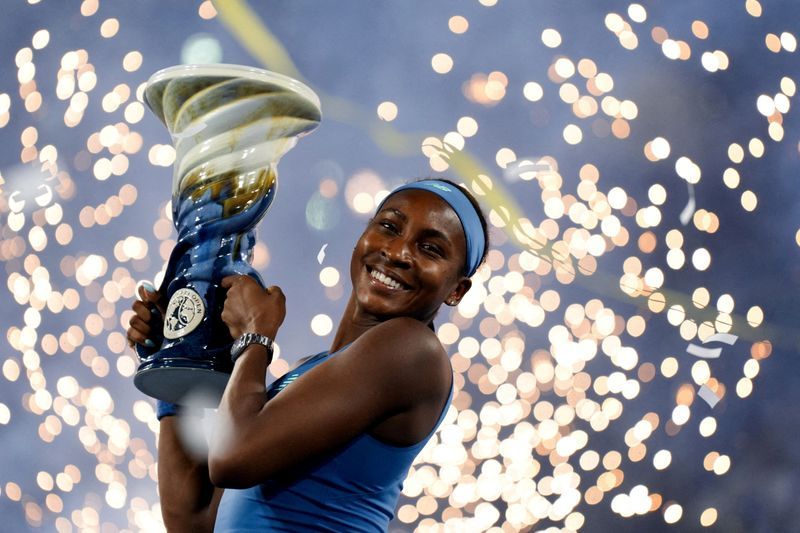
Coco Gauff, the 2023 US Open champion, has positioned herself as arguably the most compelling alternative to the troubled top seeds through her recent performances across North America's hard court circuit. Following notably inconsistent earlier portions of the season during which her serve—historically her most unreliable weapon—contributed to disappointing results, Gauff has engineered a dramatic turnaround that culminated in reaching the Toronto semi-finals and subsequently capturing her first title of the year in Cincinnati with commanding tennis that suggested she has rediscovered the elements that made her a major winner. The American's resurgence carries particular significance given that the boisterous New York crowd at Arthur Ashe Stadium has consistently provided her with considerable energy and support throughout her career, a homecourt advantage that can prove decisive in closely contested matches against international competitors.
Polish sixth-time major champion Iga Swiatek arrives in New York with compelling momentum of her own, having navigated through a deeply frustrating 2024 campaign marked by public criticism within her home country and inconsistent results across the major tournaments. Swiatek's victory in Toronto represented her breakthrough moment of the season, shaking off months of accumulated frustration and demonstrating that her competitive fire had not been permanently dampened by earlier disappointments. Significantly, this Canadian triumph arrived after Swiatek had failed to advance beyond the quarter-final stage at any of this year's first three major championships, suggesting she required time to rebuild her confidence and reconnect with the aggressive tennis that had previously earned her significant success on the professional circuit.
The contrast between Sabalenka's downward trajectory and Swiatek's upward momentum creates an intriguing narrative thread heading into the tournament, with the Polish player essentially warming into peak form at precisely the moment the season's most significant competitions arrive. Swiatek's own words after defeating Rybakina in Toronto to claim the title capture her mindset perfectly—she acknowledged that her season had followed a bumpy trajectory marked occasionally by impatience and unrealistic expectations about what her tennis could deliver, factors that had contributed to earlier major tournament disappointments. Now, with a title under her belt and her ranking among the tournament's elite seeds at number eight, Swiatek enters with the psychological advantage of having recently demonstrated she can still defeat top-ranked players.
Beyond the narratives surrounding the top-ranked American and Polish representatives lie numerous other serious contenders who could capitalise on the confusion at the seeding ladder and make unexpected runs toward the trophy. Russia's teenage sensation Mirra Andreeva has already captured a grand slam title at Roland Garros during this campaign, positioning herself as a remarkable prospect despite her age and relative inexperience on the sport's biggest stages. Czech player Linda Noskova similarly announced her arrival as a legitimate major competitor through her stunning Wimbledon title victory just weeks ago, proving that breakthrough success at one major can translate into sustained competitiveness at subsequent tournaments when momentum and confidence remain high.
The emergence of Alexandra Eala as a genuine WTA-level competitor represents a particularly striking development for regional tennis enthusiasts throughout Southeast Asia, as the Philippines-born player secured a prestigious Washington DC title this month by defeating Naomi Osaka and Jessica Pegula in succession, demonstrating that she possesses the capacity to outplay even the most decorated players when conditions and psychology align favourably. This unexpected result challenged widespread assumptions about which players could realistically compete at elite levels, suggesting that the traditional hierarchy of seeding and ranking may not perfectly reflect current competitive realities across the women's tour.
Naomi Osaka, the two-time US Open champion who claimed victories at this venue in 2018 and 2020, enters the tournament with rehabilitated form following her return from maternity leave and a somewhat disappointing 2023. Though she has not captured a major title since winning the 2021 Australian Open, Osaka has demonstrated renewed consistency in recent weeks including a finals appearance at Bad Homburg this summer, inspiring considerable optimism among her supporters and observers who believe she retains the capacity to recapture previous glories. The Japanese star can reasonably expect enthusiastic support from the cosmopolitan New York crowd, though historical precedent suggests that crowd energy alone, while helpful, remains insufficient to overcome the consistent high-level play necessary to win a major championship.
The competitive landscape has become sufficiently wide-open that ESPN analyst Patrick McEnroe acknowledged the uncommonly broad range of potential winners, suggesting that somewhere between six and eight different players could genuinely claim serious ambitions about capturing the title when the tournament concludes. This assessment reflects not merely the weakness of any particular individual player, but rather the unusual confluence of factors—injuries, inconsistent form, and breakthrough performances by emerging talents—that have conspired to flatten the traditional steep hierarchy that characterises major championship fields. For Malaysian and Southeast Asian tennis enthusiasts, this unpredictability adds considerable intrigue to the forthcoming fortnight, as the absence of a clear favourite creates space for multiple different narratives to unfold and for relative underdogs to engineer unexpected victories.

