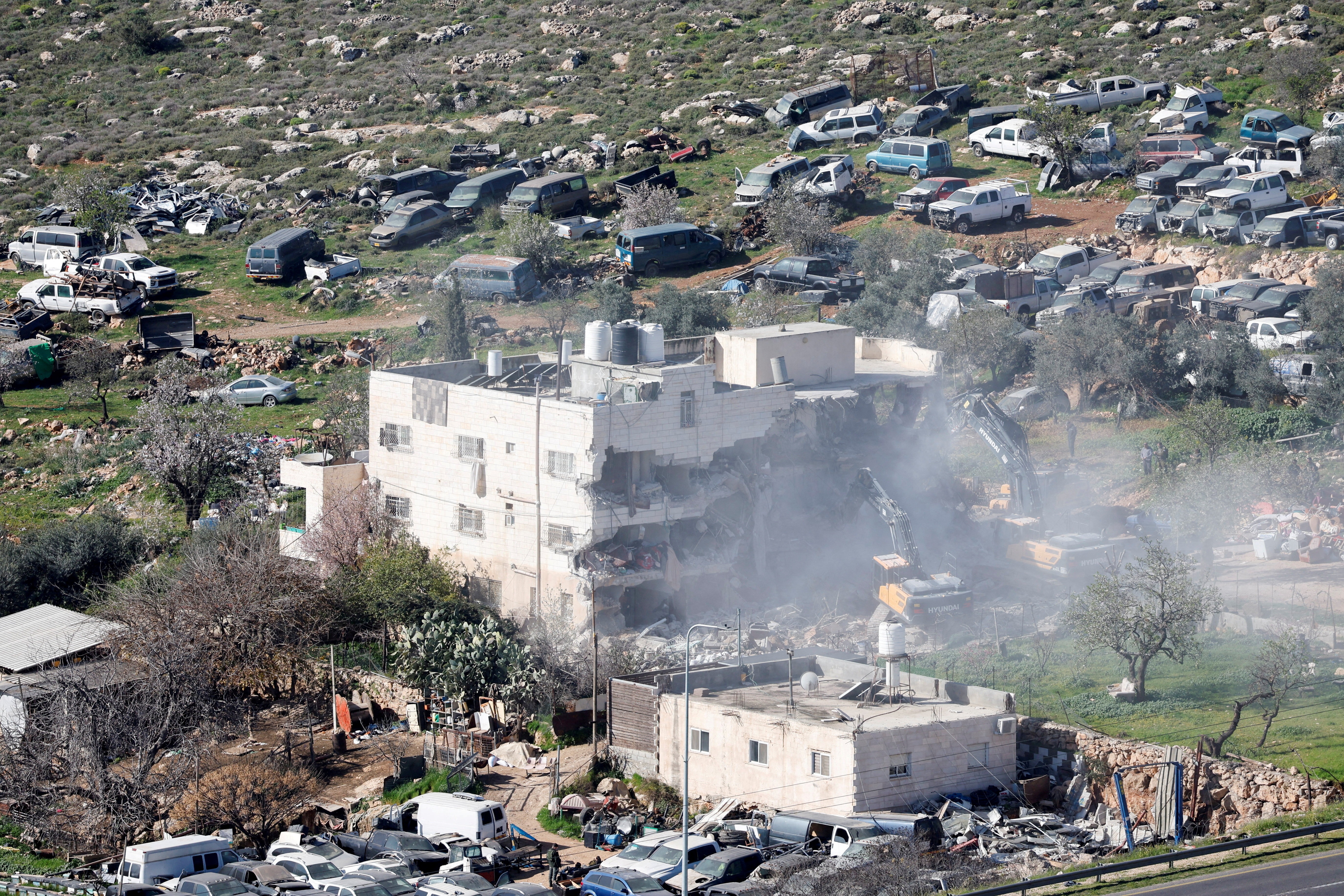
United Nations Secretary-General Antonio Guterres has expressed deep concern over the proliferation of new illegal Israeli settlement outposts across the occupied West Bank, urging Israel to halt all further construction activity in the disputed territory. Speaking through his official spokesperson Stephane Dujarric at a New York press conference on Wednesday, the UN chief drew particular attention to settlement developments in the E1 area, characterising the expansion as strategically significant and deeply troubling from a humanitarian and political standpoint.
The E1 settlement represents more than a routine territorial dispute. According to Dujarric's statement, the expansion project would effectively rupture the geographic continuity between the northern and southern portions of the West Bank, fragmenting what Palestinians regard as their emerging state territory. This geographical division carries profound implications for Palestinian self-determination and governance, as it would sever crucial land corridors necessary for economic activity, population movement, and the functioning of basic state institutions across Palestinian-administered areas.
Guterres has grounded his concerns in concrete international legal frameworks and recent judicial determinations. The UN chief's intervention directly references the International Court of Justice advisory opinion released on July 19, 2024, which examined the legality of Israeli settlement activities and military occupation. The court's findings were unequivocal: it determined that Israel's continued presence in the occupied Palestinian territory constitutes an unlawful occupation under international law, establishing a clear legal basis for the UN chief's objections.
Beyond identifying the illegality of occupation, the ICJ opinion imposed specific obligations on Israel regarding its conduct in Palestinian territories. The court declared that Israel must terminate its occupation "as rapidly as possible" and immediately discontinue all new settlement construction. Additionally, the judgment mandated the complete evacuation of Israeli settlers from Palestinian lands and required Israel to provide comprehensive reparations for damage inflicted through its occupation and settlement policies. These judicial determinations carry significant weight in international law and establish benchmarks against which subsequent Israeli actions are measured.
Guterres has explicitly called upon the Israeli government to cease any further steps toward settlement expansion and to align its conduct with relevant United Nations resolutions. The UN chief's intervention reflects mounting frustration within the international community at what many regard as the continuous erosion of prospects for a negotiated two-state settlement. The expansion of settlements has long been viewed by Palestinian authorities and international observers as fundamentally incompatible with the establishment of a viable Palestinian state, as it reduces available Palestinian territory and complicates the demarcation of international borders.
For Southeast Asian observers and policymakers, the situation underscores broader questions about the relationship between military occupation, settlement policies, and the viability of international dispute resolution mechanisms. Malaysia, as a significant voice within the Non-Aligned Movement and a consistent advocate for Palestinian self-determination, has regularly expressed solidarity with Palestinian aspirations. The development also reflects the persistence of territorial disputes in Asia-Pacific contexts and the limited enforcement mechanisms available when powerful states resist international court decisions or UN resolutions.
The E1 settlement carries particular symbolic and strategic weight within Palestinian political discourse. Control of the E1 corridor would grant Israel dominion over territory that Palestinians view as essential for future state infrastructure and economic development. The area serves as a potential future location for major Palestinian institutions and transportation networks that would connect Palestinian population centres. Its isolation through Israeli settlement effectively partitions Palestinian territory and undermines the contiguity principle that underpins viable state formation in international legal theory.
Guterres' statement reflects the UN's institutional concern that ongoing settlement expansion and territorial control moves are systematically foreclosing the possibility of negotiated peace through a two-state framework. Each new settlement or outpost is viewed as an incremental consolidation of Israeli control that makes future territorial compromise increasingly difficult to achieve. The accumulation of such actions over decades has produced a situation where significant portions of Palestinian territory now contain substantial Israeli settler populations backed by military infrastructure, complicating any eventual territorial division.
The timing of Guterres' statement is significant, arriving in the context of heightened international scrutiny of Israeli actions following the ICJ's advisory opinion. The court's determinations have energised Palestinian advocates and sympathetic international observers to invoke legal arguments against settlement expansion and occupation policies. The UN secretary-general's public invocation of the court's ruling signals an intent by the world body to anchor its position in internationally recognised legal frameworks rather than political rhetoric alone, potentially strengthening the normative weight of such statements.
The broader challenge for international governance lies in implementing such statements and advisory opinions when the states targeted resist compliance. Israel has historically rejected ICJ advisory opinions and numerous UN resolutions regarding Palestinian territories, citing security concerns and historical claims to the land. The gap between international legal determination and state practice remains vast, suggesting that resolution of the Israeli-Palestinian dispute will ultimately depend on political negotiation rather than judicial pronouncement, despite the clarity of international law on these matters.

