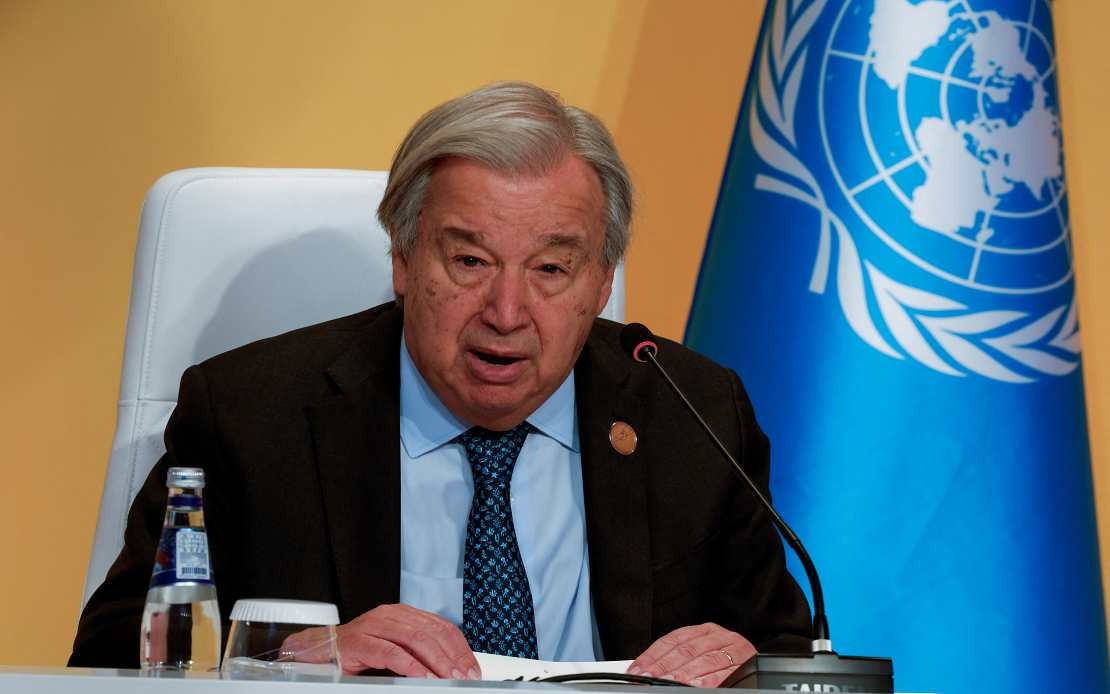
The United Nations leadership is sounding alarms over what it describes as a dangerous spiral of military confrontation unfolding across the Persian Gulf region. Secretary-General Antonio Guterres, responding to a string of recent military incidents involving Iranian vessels, American forces, and regional targets, has made an urgent appeal for all parties to step back from the brink of wider conflict. Speaking through his official spokesperson Stephane Dujarric on Sunday, the UN chief emphasized that the current trajectory threatens not only the immediate safety of regional populations but also carries consequences for global stability and economic prosperity.
The immediate trigger for the UN's heightened concern stems from a series of military incidents that have punctuated recent weeks. Iranian attacks on commercial shipping in the strategically vital Strait of Hormuz have drawn retaliatory American military responses, while Iranian operations have also targeted facilities in neighboring countries. These tit-for-tat exchanges represent a dangerous escalation from earlier tensions and demonstrate how quickly military posturing can transform into direct military action. The Strait of Hormuz serves as one of the world's most critical energy chokepoints, with roughly a fifth of global oil supplies passing through its waters annually, making any disruption to navigation or security in the waterway a matter of international concern.
Guterres has explicitly cautioned that a return to full-scale military hostilities would prove catastrophic on multiple fronts. The humanitarian toll on civilians across the region would be severe, given the densely populated nature of Gulf states and the presence of civilian infrastructure near military targets. Beyond the immediate human cost, such a conflict would destabilize the broader international system already fragile from other geopolitical tensions. The secretary-general's warning carries particular weight given the UN's mandate to prevent such escalations, and his tone reflects the gravity with which the organization views the current situation.
A critical component of the UN's appeal involves the restoration and protection of freedom of navigation through the Strait of Hormuz. Commercial vessels traversing these waters have reported alarming incidents, including encounters with armed vessels and concerns about missile threats. This uncertainty has begun affecting insurance premiums, shipping routes, and ultimately the cost of energy supplies reaching markets worldwide. For Southeast Asian nations dependent on stable energy supplies and global trade flows through the Indian Ocean and beyond, any prolonged disruption to Gulf shipping would have ripple effects on regional economies and development trajectories.
The secretary-general's statement emphasizes the critical need for both Washington and Tehran to demonstrate maximum restraint in their military operations and posturing. This call for restraint extends beyond symbolic gestures—it represents a plea for concrete steps that would reduce tensions, such as avoiding provocative military maneuvers, limiting inflammatory rhetoric, and creating space for diplomatic channels to function effectively. The current environment of mutual suspicion and military readiness leaves little room for the kind of miscalculation that could trigger unintended escalation.
Crucially, Guterres has urged Iran and the United States to resume direct negotiations with urgency. Diplomatic channels offer the only viable pathway toward resolving the fundamental disagreements that have fueled tensions since the American withdrawal from the Joint Comprehensive Plan of Action in 2018. The Iranian nuclear program, American sanctions, and regional security concerns remain outstanding issues that cannot be resolved through military means. Only sustained diplomatic engagement, backed by political will from both capitals, can address these complex problems.
For Malaysian policymakers and regional observers, the developments in the Persian Gulf carry significant implications. Malaysia's position as a major maritime trading nation means that disruptions to global shipping corridors and energy supplies directly affect national economic interests. The country's reliance on stable energy imports and its substantial stake in regional trade prosperity create incentives for supporting international efforts to de-escalate tensions. Furthermore, Malaysia's membership in the Association of Southeast Asian Nations positions it within a broader regional framework committed to peaceful conflict resolution and the maintenance of international law.
The UN's intervention, while important, highlights the limitations of international organizations in preventing military conflicts when fundamental disagreements persist between major powers or regional actors. The secretary-general's authority relies primarily on moral suasion and the convening power of the organization rather than enforcement mechanisms. Success ultimately depends on whether Tehran and Washington perceive mutual benefit in stepping back from confrontation and engaging seriously with each other's core concerns.
The current Gulf situation also underscores broader patterns of regional competition and proxy conflicts that characterize contemporary Middle Eastern geopolitics. Multiple actors maintain strategic interests in the outcome of any Iran-United States confrontation, and these third parties may have incentives to continue escalatory actions even if direct bilateral tensions show signs of cooling. De-escalation therefore requires attention not only to bilateral issues but also to the regional dynamics and alliance structures that complicate resolution efforts.
The economic stakes of continued instability extend far beyond the Gulf itself. Global energy markets respond immediately to any suggestion of supply disruption, and prolonged uncertainty creates inefficiencies that ultimately raise costs for consumers and businesses worldwide. For developing nations like Malaysia that lack the strategic reserve capacities of larger powers, energy price volatility poses particular challenges to fiscal planning and economic competitiveness.
Guterres's statement represents the international community's formal concern about the trajectory of Gulf tensions, but translating concern into concrete de-escalation requires leadership from both Tehran and Washington. The UN chief's explicit call for urgent resumption of negotiations reflects recognition that the current military posture is unsustainable and that only diplomatic solutions can produce lasting stability. Whether this appeal will influence decision-makers in either capital remains uncertain, but the consequences of ignoring such warnings would reverberate across the global economy and security environment for years.

