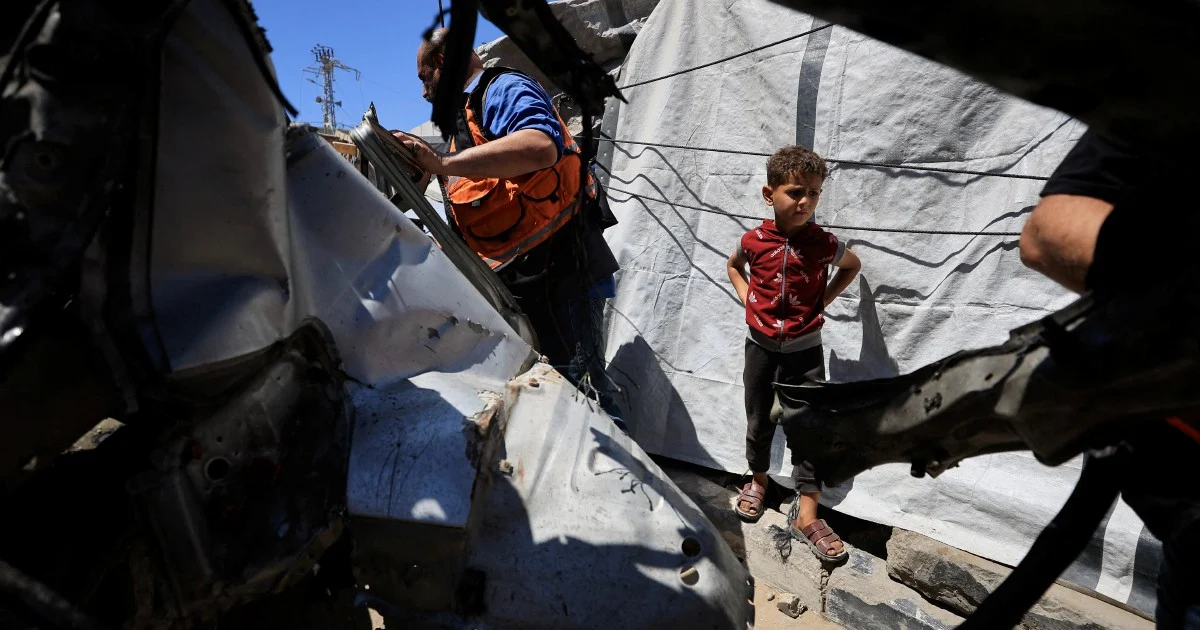
A United Nations investigative body released findings on Tuesday alleging that Israeli forces are engaging in deliberate attacks on Palestinian children in Gaza, framing such actions as integral to what the panel describes as genocidal conduct. The investigation, conducted by UN human rights authorities based in Geneva, represents one of the most serious charges levelled against Israel's military operations in the Palestinian territory since the conflict intensified last year.
The distinction between civilian casualties in warfare and deliberate targeting of children carries profound legal and moral weight. Under international humanitarian law, deliberately attacking civilians—particularly children—constitutes a war crime, and when committed with genocidal intent, raises allegations of crimes against humanity. The UN investigators' characterization goes beyond documenting collateral damage and asserts intentionality, a far graver accusation that strikes at the strategic conduct of military operations.
Israel's government has categorically rejected the UN findings, dismissing the investigation as biased and politically motivated. Such accusations have become a recurring flashpoint in the international arena, with Israel consistently arguing that it adheres to laws of armed conflict and that civilian casualties result from militant groups' use of civilian infrastructure for military purposes. The Israeli government maintains that Hamas deliberately places weapons, command centres, and fighters among civilian populations, complicating military targeting and creating inherent risks to non-combatants.
The investigation's framing of the situation as genocide carries particular weight because of the legal threshold the term entails. Genocide requires proof of specific intent to destroy, in whole or in part, a particular group. The UN panel's conclusion that deliberate targeting of children forms part of genocidal conduct suggests investigators have gathered evidence they believe demonstrates this intent extends beyond military necessity to calculated elimination of a protected group.
For Malaysia and the broader Southeast Asian region, the UN findings carry implications beyond the immediate conflict. Southeast Asian nations, many with significant Palestinian diaspora communities and historically sympathetic foreign policies toward Palestinian causes, face mounting pressure to respond to such allegations. The credibility and authority of UN investigative mechanisms become increasingly contested when major powers dispute their findings, potentially undermining the organization's role in addressing humanitarian crises elsewhere in the region.
The investigation's documentation of alleged targeting patterns may influence ongoing discussions at the International Court of Justice and International Criminal Court, where cases related to Gaza have been filed. While UN investigative bodies lack prosecutorial power, their findings frequently inform proceedings at these judicial institutions and shape the evidentiary record available to prosecutors and judges examining potential crimes.
Palestinian authorities and rights organizations have consistently presented data showing disproportionate casualties among children in Gaza. Medical facilities and humanitarian organizations operating in the territory have documented thousands of child deaths, though figures remain contested regarding the extent to which these resulted from direct targeting versus proximity to military operations. The UN investigators' work presumably involved analysing attack patterns, satellite imagery, witness testimony, and military communications to distinguish between indiscriminate harm and deliberate selection of child victims.
The broader geopolitical context matters significantly for understanding both the investigation's conclusions and Israel's response. The UN Human Rights Council, which oversees such investigations, includes countries with varying relationships to Israel and Palestine. This composition has historically made the body a contested arena where investigations are sometimes viewed through a political lens rather than purely factual analysis. Israel's rejection of the current findings sits within a longer pattern of dispute with UN bodies over investigations into its conduct.
For regional policymakers, the UN allegations underscore the humanitarian stakes in the Gaza conflict and the need for international pressure toward ceasefire negotiations. Southeast Asian governments have largely called for peace while avoiding explicit blame assignments, a diplomatic posture increasingly difficult to maintain as alleged atrocities accumulate and international institutions reach formal conclusions.
The investigation's emphasis on systematic targeting rather than isolated incidents suggests the UN panel found evidence of deliberate policy or operational doctrine rather than individual commander misconduct. This distinction bears significantly on questions of command responsibility and institutional accountability. If targeting patterns reflect systematic approach rather than aberrations, responsibility potentially extends to higher military and political leadership.
Moving forward, the UN findings will likely feature prominently in international advocacy efforts, humanitarian law discussions, and diplomatic initiatives. How states respond—whether through supporting international judicial mechanisms, facilitating investigations, or strengthening humanitarian access—will reveal their commitment to universal human rights standards versus strategic considerations in Middle Eastern politics.
The investigation's release occurs amid continuing humanitarian crisis in Gaza, where civilian infrastructure remains damaged and access to medical services, food, and water remains severely constrained. International attention to allegations of targeting children may accelerate diplomatic efforts toward cessation of hostilities, though deep divides between Israeli and Palestinian positions persist on fundamental issues regarding territory, refugees, and political structure.