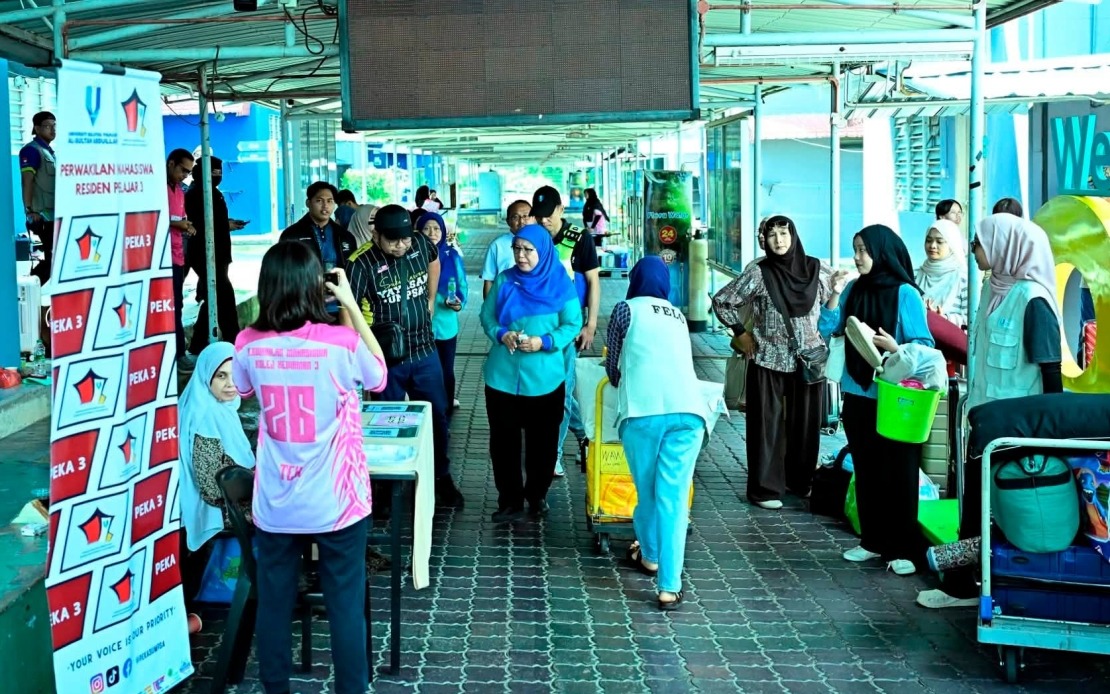
Universiti Malaysia Pahang Al-Sultan Abdullah (UMPSA) has reinforced its institutional commitment to supporting students from disadvantaged backgrounds, positioning student welfare as a central pillar of the university's educational mission. Vice-chancellor Prof Dr Yatimah Alias made the declaration on July 19 whilst engaged in welcoming new cohorts during the registration period, emphasising that the institution remains steadfast in creating pathways to tertiary education for those facing financial constraints.
The university's approach extends across multiple dimensions of student support, reflecting recognition that financial barriers often represent the most significant obstacle to educational aspiration among lower-income Malaysians. Beyond conventional tuition fee assistance, UMPSA has constructed a layered support ecosystem encompassing monthly stipends, academic mentorship, and targeted emergency provisions designed to address the varied challenges confronting economically vulnerable learners throughout their academic journeys.
During the latest registration cycle, UMPSA distributed scholarships to 20 qualifying students, with each award encompassing full coverage of tuition expenses alongside monthly allowances to offset living costs. This integrated funding model acknowledges the reality that many promising students abandon their studies not because of academic capability but because they lack sufficient resources to sustain themselves whilst studying. By combining fee waivers with cash stipends, the university removes a crucial disincentive to persistence.
Complementing the scholarship programme, UMPSA has established an Early Education Incentive scheme that provides immediate financial relief of RM1,000 to students demonstrating genuine financial need. Financed through the UMPSA Foundation, this emergency assistance mechanism offers crucial breathing room during critical junctures when unexpected expenses might otherwise force withdrawal. The distinction between comprehensive scholarships and targeted emergency grants represents sophisticated policy design that acknowledges different vulnerability profiles within the student population.
The timing of these welfare commitments coincides with a record intake of 1,045 new diploma students enrolled for the 2026/2027 academic year, representing the largest cohort UMPSA has admitted since its establishment. This expansion creates both opportunity and responsibility—whilst growth signals institutional strength and enhanced access, it simultaneously intensifies pressure to maintain quality support systems across an enlarged student base. Yatimah's public emphasis on welfare priorities suggests institutional recognition that numerical expansion must not compromise the individualised attention that disadvantaged students often require to succeed.
Within the Malaysian higher education landscape, UMPSA's programmatic approach to student welfare carries particular significance. Economic inequality remains a persistent determinant of educational outcomes across the Southeast Asian region, with university access disproportionately concentrated among middle and upper-income families. Public institutions that prioritise scholarship distribution and financial aid fundamentally alter the demographic composition of the university, transforming higher education from a privilege of the wealthy into a genuine avenue for social mobility.
The scholarship recipients and emergency aid recipients embody a demographic reality often overlooked in discussions of Malaysian university expansion. These students frequently combine full-time study with part-time employment, manage family obligations alongside academic responsibilities, and navigate educational environments where peer networks often presuppose financial security. Institutional support programmes that acknowledge these realities—rather than implicitly assuming a traditional student profile with parental financial backing—create conditions where disadvantaged students can concentrate on studies rather than survival.
Yatimah's articulation of equal educational opportunity speaks to a broader institutional philosophy that positions university education as a public good rather than a market commodity. This ideological framing has practical implications: it commits resources towards access rather than exclusively towards prestige, directing funding towards scholarship schemes rather than elite research programmes or luxury campus facilities. For Malaysian policymakers and tertiary education stakeholders, such prioritisation establishes a model of public university governance aligned with equity objectives rather than commercial imperatives.
The integration of academic support alongside financial assistance further distinguishes UMPSA's approach from minimal provision. Underprivileged students frequently emerge from educational systems with inadequate preparation for university-level work, making subject tutoring and study skills coaching essential complements to financial aid. By bundling these interventions, UMPSA addresses both material constraints and the pedagogical vulnerabilities that often accompany them, substantially improving retention and graduation likelihoods among assisted students.
Looking forward, the expansion of UMPSA's student cohort creates momentum for welfare programme development. Absorbing record numbers of diploma students—many presumably from lower-income backgrounds given the demographic profile of vocational education—tests institutional capacity to deliver promised support. Success in maintaining service quality during expansion would constitute a powerful demonstration of equitable growth, whilst failure could represent a cautionary narrative about the limits of welfare commitment under resource constraints.
For Malaysian institutions navigating the tension between expansion and equity, UMPSA's public positioning offers instructive lessons. The vice-chancellor's explicit, repeated commitment to disadvantaged student welfare—articulated not in abstract policy documents but during concrete interactions with new students—signals that access and support remain institutional priorities even amid growth pressures. This messaging carries particular weight in societies where educational opportunity remains correlated with family income, and where universities possess considerable discretion in allocating scarce resources between competing objectives.

