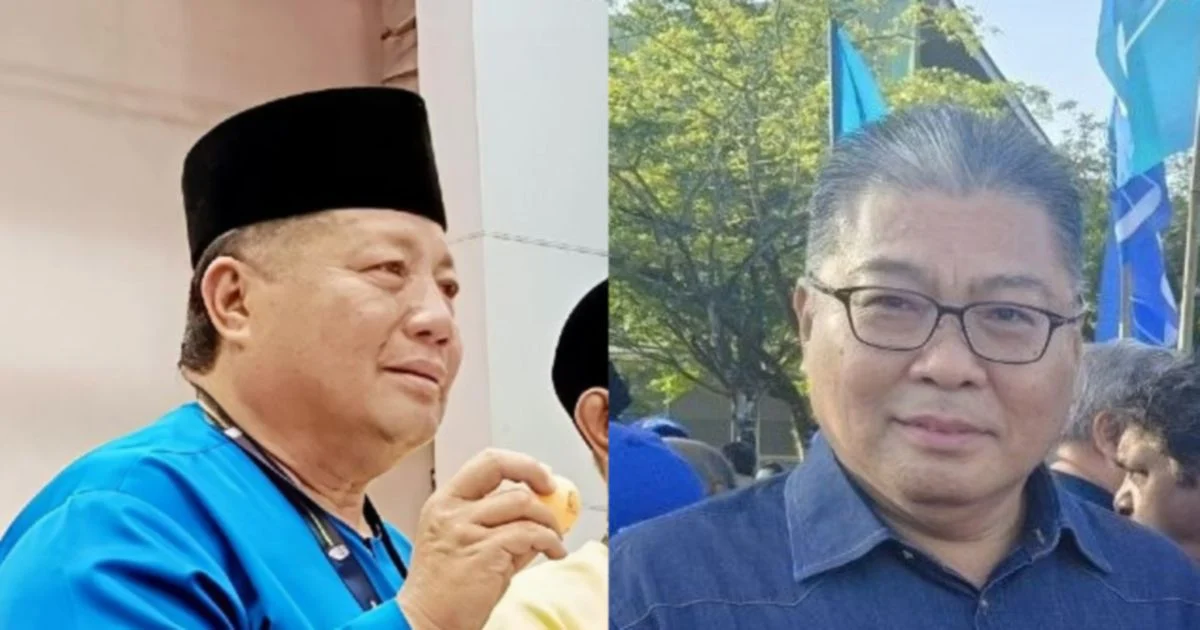
The fraternal bond between two brothers has risen above the increasingly fierce political divisions gripping Johor, with former Tebrau Umno division chief Datuk Maulizan Bujang publicly backing his younger sibling Mazlan's electoral bid in Kahang despite their conflicting party loyalties. The gesture reveals the complex human dimensions underlying Malaysia's intensifying state-level political contests, where family ties can transcend the partisan battles consuming the national consciousness.
Mazlan's decision to represent Perikatan Nasional in the Kahang constituency puts him in direct opposition to his older brother's long-standing allegiance to Umno, the dominant coalition partner within Barisan Nasional. Yet Maulizan's warm wishes suggest that personal relationships and mutual respect between relatives need not fracture under the weight of electoral competition. This sentiment carries particular significance in Malaysian political culture, where familial networks have historically wielded considerable influence over candidacy selections and campaign strategies.
The Kahang seat represents one of several hotly contested battlegrounds across Johor, a state whose political complexion has shifted markedly over the past decade. The willingness of established figures like Maulizan to publicly acknowledge and encourage their relatives' participation in rival campaigns demonstrates a maturity in political conduct that has occasionally been absent from Malaysian electoral discourse. Rather than attempting to influence or undermine Mazlan's PN campaign, the former Tebrau leader has chosen instead to respect his brother's political convictions and aspirations.
This family dynamic reflects broader tensions within Johor's political landscape, where Umno and PN have emerged as the primary competing forces vying for voter support. The state, which has long served as a crucial power base for both the Malay-Muslim establishment and opposition movements, remains pivotal to national coalition politics. Control of Johor state assembly seats directly influences the balance of power in Putrajaya, making even individual constituency contests matters of strategic importance to party hierarchies in Kuala Lumpur.
Maulizan's previous tenure as Tebrau division chief positioned him within the upper echelons of Umno's organizational structure, a role that carries substantial prestige and responsibility within the party apparatus. His decision to publicly extend goodwill toward Mazlan's PN campaign rather than launch a counter-campaign demonstrates either considerable personal generosity or, perhaps more pragmatically, an acknowledgment that such contests are ultimately decided by voters rather than family interventions. The approach also insulates both brothers from potential accusations of nepotism or preferential treatment that might otherwise complicate their respective political standings.
Peikatan Nasional's expansion into Johor represents a significant challenge to Barisan Nasional's traditional dominance in the state. By fielding candidates across numerous constituencies, including Kahang, PN is attempting to replicate the momentum it has generated in other states and at the federal level. Mazlan's candidacy forms part of this broader strategic push, and his brother's public acknowledgment of his campaign adds a layer of local legitimacy that might resonate with voters concerned about maintaining connections to established political figures.
The Kahang constituency, like many others in Johor, encompasses diverse voter demographics ranging from rural agricultural communities to suburban residents commuting to larger urban centres. Understanding local dynamics and building grassroots support structures remains essential for success in such areas, regardless of a candidate's party affiliation. Both Maulizan's Umno background and Mazlan's PN representation would bring different perspectives and networks to bear on constituent services and policy advocacy.
This episode also illustrates how Malaysian electoral politics increasingly operates at multiple levels simultaneously. While national leadership remains fixated on coalition-building and strategic positioning at the federal level, individual candidates and their supporters navigate far more localized calculations rooted in community relationships, economic conditions, and historical voting patterns. The personal endorsement from one brother to another carries weight precisely because it acknowledges these local realities rather than treating politics as purely an ideological or partisan affair.
The contrast between Maulizan's gracious approach and the sometimes vicious partisan rhetoric characterizing recent Malaysian campaigns deserves attention. By declining to attack or undermine his brother's candidacy, the former Tebrau chief demonstrates that competitive electoral politics need not entail personal animosity or family rupture. This distinction between disagreement over political affiliation and respect for individual dignity represents a potentially stabilizing force in an increasingly polarized political environment.
As voters in Johor prepare to cast their ballots, the Kahang constituency will likely reflect broader statewide patterns, where choices between Umno-led Barisan Nasional and the PN alternative represent competing visions for governance and resource allocation. Regardless of which brother ultimately prevails in this particular contest, the mutual respect demonstrated between them offers a modest but meaningful reminder that political engagement at the electoral level need not sacrifice the human connections that bind families and communities together.

