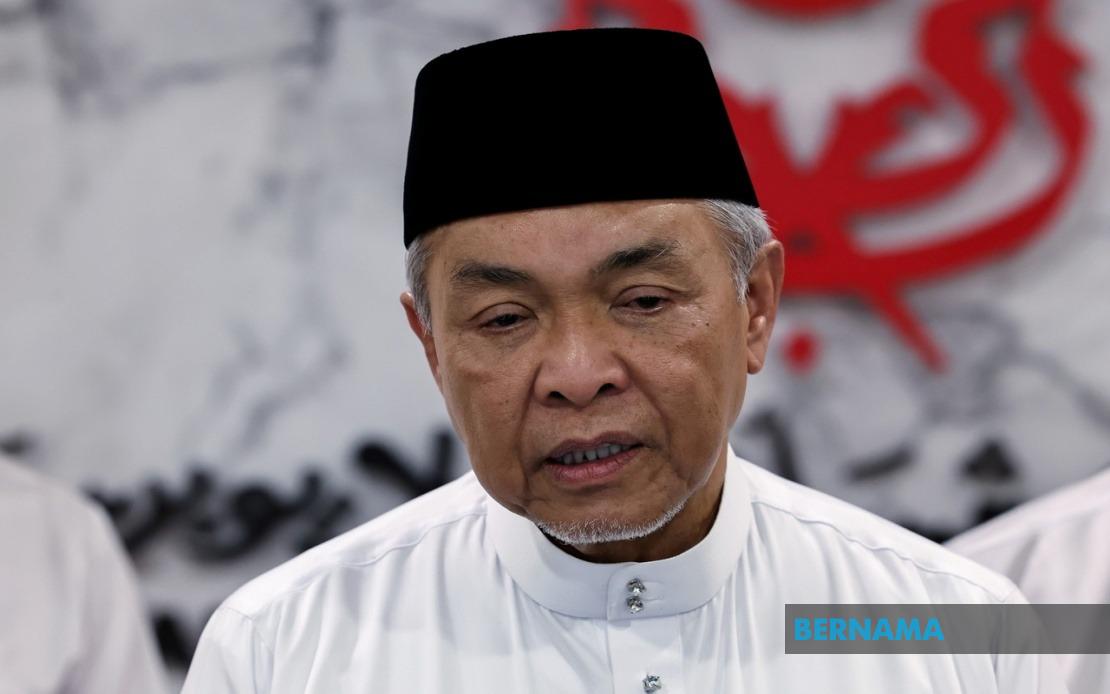
UMNO has signalled its readiness to pursue formal negotiations on prospective electoral alliances for the upcoming Melaka state election, with party president Datuk Seri Dr Ahmad Zahid Hamidi confirming that talks will commence only after the state legislative assembly is formally dissolved. The clarification addresses mounting speculation about potential cooperation arrangements as the state approaches an election cycle, a matter of considerable significance given Melaka's strategic importance in Malaysian politics and its swing-state characteristics in determining broader coalition dynamics.
According to Ahmad Zahid, Melaka Chief Minister Datuk Seri Ab Rauf Yusoh will spearhead the negotiating process on behalf of the party. This delegation reflects UMNO's hierarchical decision-making structure in state-level affairs, placing responsibility for diplomatic engagement with potential partners directly in the hands of the state's chief executive. The choice of Ab Rauf as lead negotiator carries particular weight, as his performance and standing within both UMNO and the broader Melaka political establishment will likely influence the terms and outcomes of any eventual discussions.
The Deputy Prime Minister drew a distinction between the preliminary exchanges currently taking place and the substantive engagement that will follow the assembly's dissolution. While Ahmad Zahid acknowledged that informal conversations may already be underway among party figures, he emphasized that any formal framework for cooperation would only materialize once the constitutional and procedural requirement of assembly dissolution is completed. This demarcation between informal and formal processes suggests UMNO's desire to maintain flexibility in its positioning while adhering to established protocols.
The reference to possible cooperation with Perikatan Nasional (PN) indicates the specific context prompting these discussions. Perikatan Nasional, as a significant political coalition in Malaysia's contemporary landscape, represents both an opportunity and a challenge for UMNO's electoral strategy. The question of whether to collaborate with PN, compete against it, or maintain a posture of selective engagement has become a recurring negotiation point in various state and national political contexts, and Melaka presents another arena for such deliberations.
Ahmad Zahid's account reveals that UMNO has undertaken substantial preparatory work at the state level in advance of any formal negotiations. The party's Melaka Political Bureau has compiled comprehensive assessments regarding the party's electoral readiness, reflecting institutional capacity-building and strategic planning that extends beyond the immediate cooperation question. This layered approach—combining grassroots analysis with high-level strategic review—demonstrates UMNO's investment in understanding local political dynamics before committing to any particular course of action.
The presentation brought before the UMNO Supreme Council (MKT) for discussion represents a critical juncture in the decision-making process. The Supreme Council's deliberation of detailed data gathered through UMNO Melaka's operational structures indicates that any future cooperation framework will be informed by factual assessment rather than purely ideological positioning or personal factional interests. This emphasis on data-driven analysis reflects contemporary political practice in Malaysia, where sophisticated campaign infrastructure and voter analysis have become increasingly integral to strategic planning.
For Malaysian observers, UMNO's cautious approach to these negotiations carries broader implications for the country's political architecture. Melaka's electoral outcomes have historically reverberated across national politics, influencing coalition stability and intra-party dynamics at the highest levels. The manner in which UMNO navigates cooperation questions in this state may establish precedents or signal shifts in the party's broader alliance strategy at a time when Malaysia's political coalitions remain fluid and subject to reconfiguration.
The timing of these discussions merits consideration within the context of Malaysia's electoral calendar and the interplay between state and federal political fortunes. State elections serve as important indicators of voter sentiment and can reshape parliamentary dynamics, making Melaka's election outcome consequential for multiple stakeholders across the political spectrum. UMNO's deliberate pacing of formal negotiations—waiting for assembly dissolution rather than engaging prematurely—suggests awareness of these broader implications and a preference for avoiding commitments that might constrain future options.
For political analysts and observers in Southeast Asia, UMNO's positioning reflects the complex realities of coalition management in Malaysia's multi-party, multi-level governance system. The party must simultaneously address factional interests within its own structure, manage expectations among potential coalition partners, and maintain strategic flexibility in response to evolving circumstances. The Melaka situation exemplifies these crosscutting tensions and the sophisticated negotiations required to navigate them successfully.
The acknowledgment that negotiations will be led by the Chief Minister also underscores the decentralized nature of political decision-making on such matters within UMNO. State-level leaders retain significant autonomy in crafting electoral strategies tailored to local conditions, even while operating within parameters established by national party leadership. This structure allows for responsiveness to regional political contexts while maintaining overall party cohesion on fundamental strategic questions.

