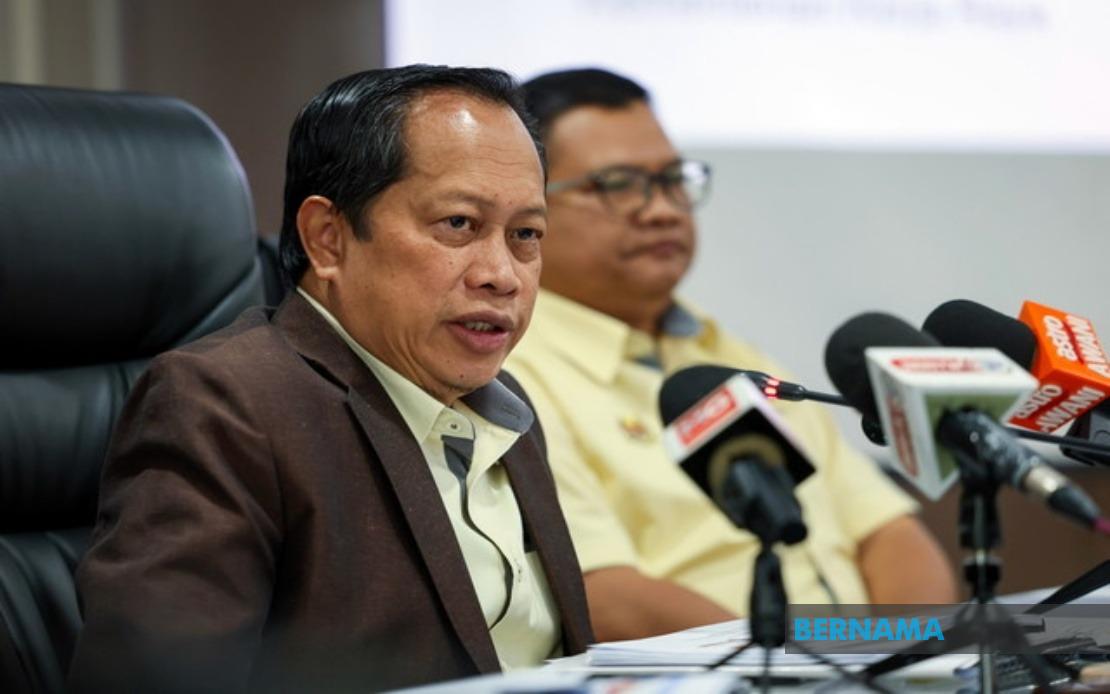
UMNO's top decision-making body will gather on August 28 to chart the party's course for the upcoming Melaka state election, with deliberations expected to centre on whether the Barisan Nasional should maintain its current arrangements or pursue alternative political partnerships. The UMNO Supreme Council meeting, chaired by president Datuk Seri Dr Ahmad Zahid Hamidi, will tackle the critical question of the party's political direction in the state, according to senior party figure Datuk Seri Dr Ahmad Maslan, who serves as Deputy Works Minister and sits on the Supreme Council.
The timing of this meeting carries particular weight as the Melaka state government's five-year term approaches expiration on December 31, leaving just over four months for the election machinery to mobilise. No formal decision has yet been reached on how Barisan Nasional should position itself electorally, despite weeks of speculation among political observers and media coverage suggesting multiple scenarios. The uncertainty reflects genuine strategic deliberation within UMNO rather than indecision, with party leadership weighing the comparative advantages of each approach against the current political landscape.
Speculation about potential configurations has intensified following various public statements by UMNO figures in Melaka, with some suggesting cooperation with Pakatan Harapan while others have hinted at possibilities involving Perikatan Nasional. These floating proposals underscore the complex political mathematics now governing coalition-building in Malaysia's states, where simple binaries of government versus opposition have given way to fluid, multi-party negotiations. Dr Ahmad Maslan's acknowledgment that discussions remain at the exploratory stage suggests the party leadership has deliberately refrained from prematurely constraining its options.
The current political composition of Melaka provides important context for these deliberations. Barisan Nasional secured 21 of the 28 state assembly seats in the previous election, while Pakatan Harapan obtained five seats and Perikatan Nasional managed two. This decisive majority has provided political stability, yet the state executive council notably includes Pakatan Harapan assemblymen within its ranks—an arrangement that mirrors the federal-level Unity Government structure and suggests a working framework already exists for cross-coalition governance.
This existing collaborative model between Barisan Nasional and Pakatan Harapan at the state level offers one compelling template that could be replicated in the coming election. The presence of opposition members within the executive council demonstrates that functional governance partnerships can transcend traditional electoral contest dynamics. However, this arrangement also raises questions about whether voters might perceive such configurations as artificial or whether electoral politics might demand a clearer choice than the current ambiguity provides.
The Deputy Works Minister's emphasis that all party members must respect whatever decision emerges from the August 28 meeting signals party leadership's determination to enforce discipline following the deliberation process. This framing reflects awareness that significant factions within UMNO hold divergent preferences regarding coalition strategy, and premature consensus-building could undermine the authority of whatever decision the Supreme Council ultimately adopts. By stressing the need for unified obedience to the party hierarchy's judgment, UMNO's leadership seeks to prevent the kind of factional defections that could prove costly in an electoral contest.
Dr Ahmad Maslan further underscored that UMNO's strategic approach must remain contextual and state-specific rather than uniformly applied across all contexts. This principle carries implications beyond Melaka, acknowledging that different states face distinct political circumstances requiring tailored responses. In Melaka's case, the relatively comfortable parliamentary majority and the already-functional collaboration with Pakatan Harapan elements present different strategic considerations than might apply elsewhere.
For Malaysian observers tracking federal-level politics, the Melaka decision holds significance as a potential indicator of broader coalition trajectory. The Unity Government at the federal level remains relatively young and untested through major electoral contests. How Barisan Nasional and Pakatan Harapan choose to position themselves in Melaka could signal whether this partnership represents durable political repositioning or a more temporary arrangement of convenience. An electoral agreement would suggest deeper structural commitment, while a contested contest might indicate continuing fundamental divisions despite the federal cooperation framework.
The Perikatan Nasional factor introduces additional complexity. Though the coalition secured only two Melaka seats in the previous election, recent developments in other states suggest it remains an unpredictable force capable of reshaping political calculations. The fact that PN receives mention alongside Pakatan Harapan as a potential coalition partner indicates UMNO has not dismissed this possibility, even if the previous electoral results might suggest limited appeal to Melaka voters.
The coming weeks will likely witness intensified maneuvering as various factions within UMNO, and potentially across coalitions, seek to influence the August 28 deliberations. Media reporting will provide windows into these internal discussions, though final positions may remain obscure until the Supreme Council meeting itself. The decision ultimately made will set the framework within which all UMNO machinery must operate, and party discipline typically ensures compliance even from factions dissatisfied with the chosen direction.
For Southeast Asian students of contemporary Malaysian politics, the Melaka situation exemplifies the structural challenges confronting coalition governance in complex multi-party democracies. The ability to resolve such strategic questions through orderly internal processes rather than through splits or rebellions will substantially influence whether the Unity Government emerges as Malaysia's new political normal or represents merely a transitional arrangement.

