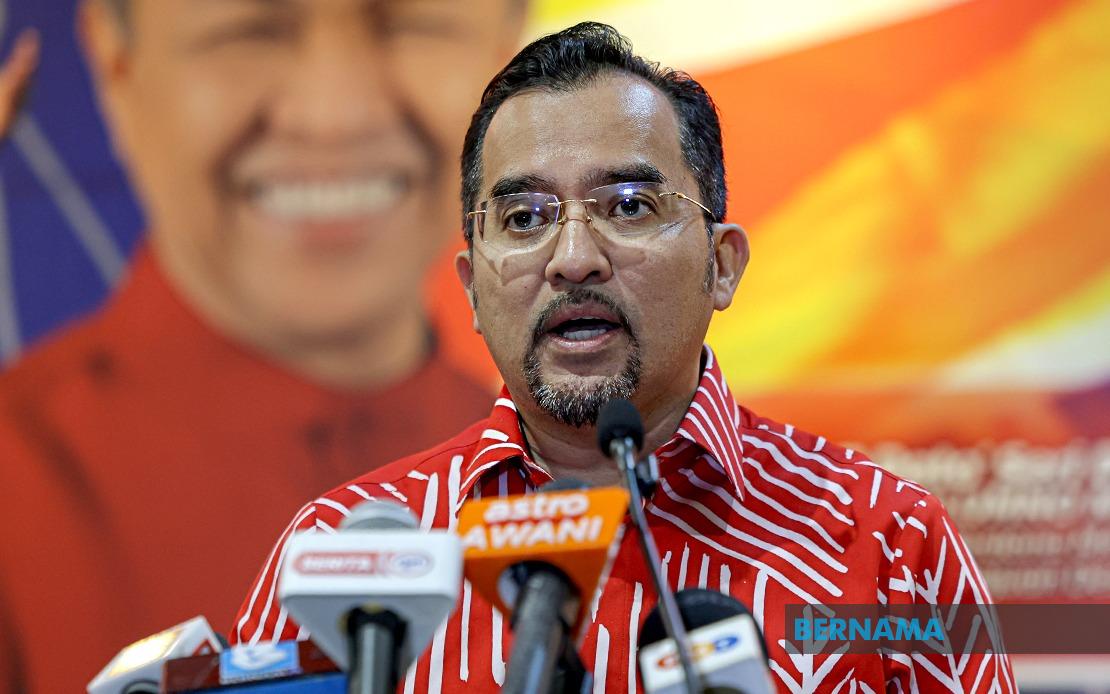
UMNO has granted its state-level leadership the authority to enter into discussions and negotiations with any political party seeking to establish cooperative arrangements for the forthcoming election cycle. The approval came during a Supreme Council meeting held at Menara Dato' Onn in Kuala Lumpur on Wednesday evening, with UMNO secretary-general Datuk Dr Asyraf Wajdi Dusuki announcing the decision to journalists afterwards.
The Supreme Council, chaired by party president Datuk Seri Dr Ahmad Zahid Hamidi and attended by deputy president Datuk Seri Mohamad Hasan and other senior members, moved to decentralise coalition-building efforts to state branches rather than keeping negotiations solely within the federal leadership. This strategic shift reflects UMNO's recognition that electoral dynamics operate differently across Malaysia's thirteen states and federal territories, and that state-level organisational structures may be better positioned to assess local political landscapes and identify viable partnership opportunities.
Dr Asyraf Wajdi emphasised that any discussions conducted under this mandate must be grounded in principles of integrity and mutual confidence between participating parties. He specifically cautioned against employing coercive tactics or threats as negotiating tools, underscoring that sustainable political cooperation requires a foundation of genuine commitment rather than pressure or intimidation. This language suggests UMNO's awareness of tensions within Malaysia's broader political coalition ecosystem and its intention to pursue partnerships through principled engagement.
The timing of this authorisation carries significance for Malaysia's electoral calendar. With the next general election potentially approaching—though no fixed date has been announced—UMNO is positioning itself to maximise flexibility in coalition arrangements while the political terrain remains fluid. By delegating negotiating authority to state leadership, the party avoids the delays and constraints that centralised decision-making might impose, enabling rapid response to emerging partnership opportunities at the ground level.
Simultaneously, the Supreme Council extended a formal invitation to PAS leadership to attend UMNO's 2026 General Assembly, scheduled for September 9 to 12. This gesture carries symbolic weight, particularly given the historical competition and occasional friction between UMNO and PAS for Malay-Muslim support bases. The invitation signals UMNO's willingness to maintain high-level engagement with PAS and suggests that despite their rivalry, sufficient common ground exists to warrant institutional recognition through participation in party assemblies.
The September 9-12 assembly period will host multiple significant programmes beyond the main general assembly itself. Three separate events have been scheduled for September 8, including the 2026 Malay Education Convention, the Malaysian Islamic Scholars Convention, and Laman Wanita Kreatif. This programming structure demonstrates UMNO's effort to construct a comprehensive platform addressing education policy, Islamic affairs, and women's engagement—constituencies that matter substantially to both UMNO and its potential coalition partners.
UMNO's public positioning on the rule of law and political accountability also figured prominently in the Supreme Council's deliberations. Dr Asyraf Wajdi articulated the party's commitment to upholding legal principles and rejecting the notion that individuals deserve presumptions of guilt without formal charges, trial, and conviction. This statement carries implicit weight given ongoing legal proceedings involving various political figures across Malaysia's spectrum, including some within UMNO itself. By reiterating this principle, UMNO attempts to signal institutional commitment to accountability while maintaining that due process must be respected.
The party further declared its unwillingness to shield members or leaders from legal consequences when allegations of wrongdoing, misconduct, or deviation arise. This principled stance reflects the complex balance UMNO must maintain between defending party interests and acknowledging public expectations that political organisations demonstrate genuine commitment to ethical governance. Such declarations become particularly important during coalition negotiations, as prospective partners assess whether UMNO possesses sufficient institutional discipline to serve as a reliable alliance member.
For Malaysian observers and stakeholders across the region, UMNO's decision to decentralise coalition negotiations reflects broader shifts in how Malaysia's major political organisations approach electoral competition. Rather than top-down, strictly controlled negotiating processes, contemporary Malaysian politics increasingly involves multiple simultaneous conversations occurring at federal, state, and district levels. This complexity requires greater flexibility and trust within party structures, as state leaders must exercise considerable discretion in representing their organisations' interests.
The implications extend beyond UMNO itself. Other major Malaysian political parties—including PKR, DAP, and PAS—will likely interpret this move as an invitation to engage at multiple levels simultaneously. State governments currently controlled by different coalitions will become focal points for realignment discussions, particularly in states where electoral mathematics remain uncertain or where demographic shifts threaten incumbent positions. This fragmentation of negotiating authority across territorial levels reflects Malaysia's federalised political system and increasingly complex factional dynamics.
For Southeast Asian political analysts, UMNO's evolution illustrates how established governing parties in the region navigate adaptation pressures. Rather than attempting comprehensive party reorganisation, UMNO is making incremental institutional adjustments that preserve hierarchical authority while increasing operational flexibility. This gradualist approach allows the party to respond to changing electoral circumstances without triggering internal destabilisation or radical ideological repositioning.
The authorisation also signals UMNO's confidence in its state leadership cadre, trusting them with sensitive negotiations regarding party alliances and electoral strategy. This implicit vote of confidence in state-level operators suggests UMNO believes its organisational structures remain sufficiently robust to handle decentralised authority without fragmenting into competing factions or contradictory public positions. Whether this confidence proves warranted will become apparent as various state branches begin negotiating partnerships over coming months.
As Malaysia moves through the election cycle, UMNO's decision to empower state leadership will shape coalition dynamics significantly. The flexibility this permits could enable UMNO to secure advantageous electoral arrangements, but it also introduces risks that state-level negotiators might make commitments exceeding federal leadership's tolerance. How UMNO manages these tensions between decentralisation and coordination will offer valuable lessons in how established Asian governing parties adapt to contemporary political pressures.

