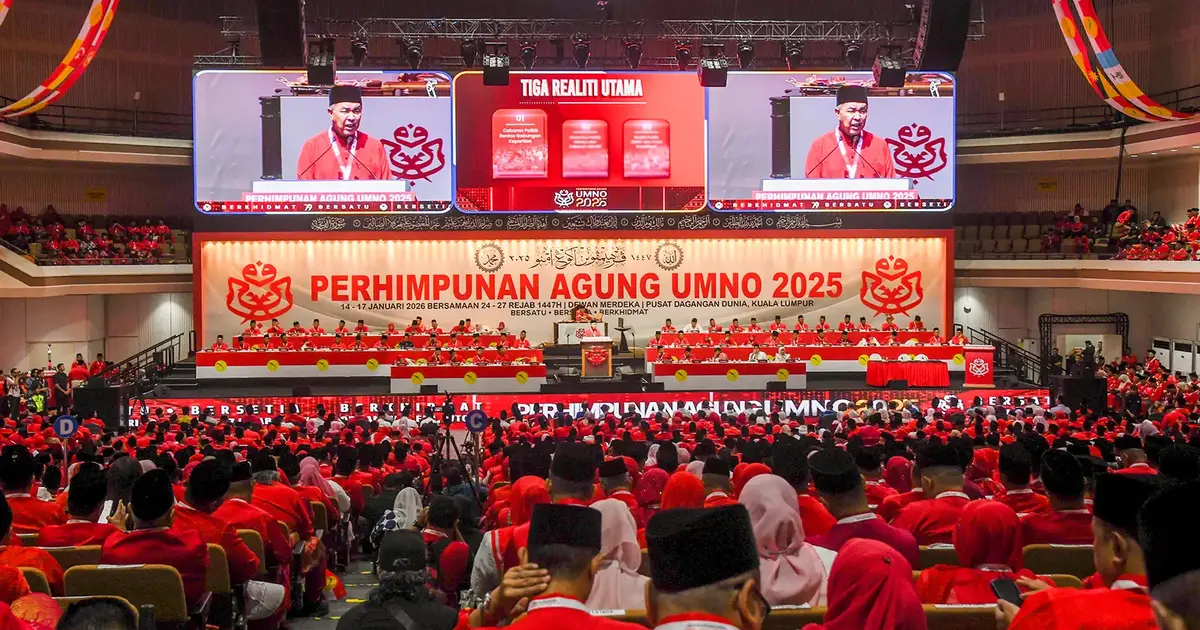
Discontent is brewing within Umno's Negeri Sembilan ranks following the distribution of parliamentary seats in what appears to be a fresh coalition understanding, with party division chiefs openly expressing dismay at the allocation favouring Perikatan Nasional. The arrangement has sparked considerable friction at ground level, threatening to undermine party morale in a state traditionally considered a Umno stronghold, according to reports circulating within party circles.
The core of the grievance centres on the sheer scale of the concession, with Perikatan Nasional securing 11 of the state's parliamentary constituencies. For a party accustomed to electoral dominance in Negeri Sembilan, the prospect of surrendering such a substantial portion of winnable seats to coalition partners represents a significant strategic retreat. Division leaders, who bear responsibility for mobilising grassroots support and managing local expectations, now face an uncomfortable task in justifying this arrangement to their members and constituents who have long viewed these seats as Umno territory.
Wawasan's position in this equation has particularly inflamed tempers among Umno functionaries. The newly established political vehicle has been allocated four parliamentary seats despite having no electoral track record whatsoever. For Umno veterans who have spent decades building party infrastructure, cultivating voter relationships, and sustaining electoral momentum in their constituencies, the notion of surrendering four seats to an untested newcomer feels especially unjust. This allocation pattern raises strategic questions about the durability and electoral viability of Wawasan, a party that must now attempt to secure parliamentary seats without the benefit of prior election experience or established grassroots networks.
The underlying tension reflects broader challenges within Malaysia's evolving political landscape, where seat-sharing arrangements have become increasingly complex as coalitions attempt to balance diverse interests and accommodate new players. Umno's position has become more nuanced following recent electoral cycles, forcing the party into negotiations where it no longer commands unilateral dominance. This shift from hegemonic control to negotiated settlement sits uncomfortably with party culture, where division leaders have traditionally wielded significant discretionary power over candidate selection and campaign strategy.
Negeri Sembilan holds particular symbolic importance for Umno's political standing. The state has historically represented a core Umno base, with the party's capacity to deliver overwhelming victories in the state serving as a barometer for its national organisational strength. Any erosion of that dominance carries implications beyond electoral mathematics—it signals shifting party fortunes and can influence perceptions among fence-sitting voters in other states where Umno remains competitive. Division leaders understand these broader implications and recognise that accepting a diminished role in Negeri Sembilan might establish precedents for similar arrangements elsewhere.
The discontent among grassroots leadership also reflects practical concerns about candidate selection and resource allocation. When a division leader must nominate candidates for fewer seats, the process becomes zero-sum, inevitably disappointing party veterans and aspiring candidates who find themselves sidelined. This creates resentment that extends beyond the immediate individuals affected to encompass wider networks of supporters and potential volunteers who feel their dedication to party building has been undervalued. The cumulative effect can dampen enthusiasm for campaign mobilisation, potentially affecting electoral performance in constituencies Umno retains.
From a coalition management perspective, the Umno leadership must navigate between appeasing disgruntled division chiefs and maintaining discipline within the broader coalition framework. Publicly acknowledging grievances risks appearing weak and could encourage further complaints from other state chapters facing similar arrangements. Conversely, dismissing concerns risks deepening alienation among grassroots activists whose continued engagement remains essential for campaign effectiveness. This balancing act requires sophisticated communication and, possibly, compensatory measures that address underlying anxieties without overtly reversing coalition agreements.
The Wawasan allocation warrants particular attention when analysing coalition dynamics. As a newcomer to Malaysian electoral politics, Wawasan's success depends substantially on securing parliamentary seats in this initial contest to establish credibility and momentum. From the coalition architect's perspective, allocating competitive seats to Wawasan demonstrates commitment to the partnership and signals willingness to share spoils with new members. However, this logic provides little comfort to Umno functionaries who view seats as hard-won party assets accumulated through years of sustained political work.
For Malaysian voters observing these internal coalition tensions, the friction highlights the inherent contradictions between electoral alliances pursuing national legitimacy and the granular realities of state and local politics where party identity and historical dominance retain emotional significance. Negeri Sembilan voters with long memories will likely notice Umno's reduced footprint, potentially influencing voting calculations based on perceptions of party strength and ability to deliver local benefits. The distribution arrangement thus carries consequences extending beyond immediate parliamentary seats to encompass questions of representation and local political influence that resonate with constituents.
The resolution of these tensions will likely depend on how the upcoming campaign unfolds and whether Umno and its coalition partners can articulate a convincing narrative about why the arrangement serves broader political objectives. Should the coalition succeed in communicating effectively to voters, the internal friction may diminish as electoral success provides retroactive justification. Conversely, disappointing results could intensify divisions and provide ammunition for those questioning the wisdom of coalition arrangements that dilute Umno's traditional dominance in strategically important states.

