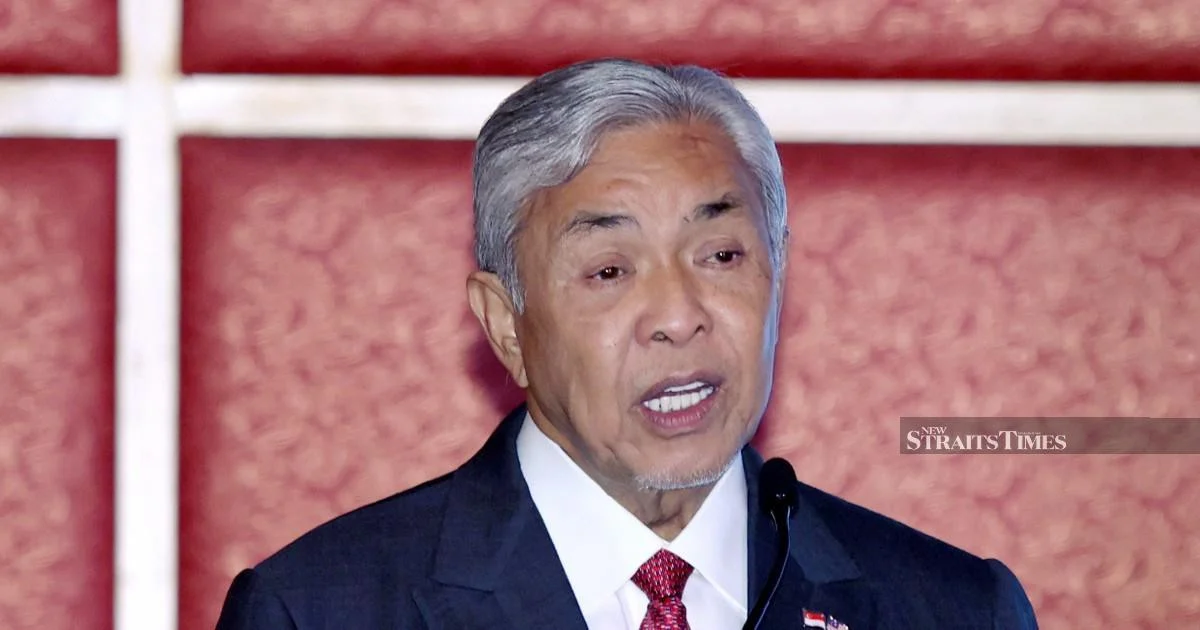
Umno president Datuk Seri Dr Ahmad Zahid Hamidi has categorically denied that his party has concluded any seat-sharing agreement with Pas regarding the upcoming Negri Sembilan state election, effectively dismissing recent reports suggesting otherwise. The clarification comes amid speculation within political circles about how the Barisan Nasional components and their Perikatan Nasional counterparts might coordinate their electoral strategy in the state, particularly given the complex political landscape that has characterised Malaysian politics in recent years.
The denial carries significant weight given Zahid's position as the highest-ranking official in Umno, and his statement represents the party's official position on negotiations that have apparently been the subject of considerable media attention and backroom discussions. Political observers have been closely monitoring interactions between Umno and Pas, two major Malay-Muslim parties that have alternated between cooperation and rivalry depending on electoral circumstances and leadership dynamics. The Negri Sembilan election, whenever it is called, will represent an important test of whether these parties can effectively work together or whether traditional rivalries will predominate.
For Malaysian readers, the distinction is more than semantic. Umno and Pas have fundamentally different governing philosophies and organisational structures. While Umno has anchored the federal power structure since independence, Pas has built strength in specific states and regions, particularly in the northern and eastern constituencies of Peninsular Malaysia. When these parties cooperate, they typically do so under broader coalition arrangements rather than through bilateral seat-sharing compacts. The absence of a formal agreement, as Zahid emphasises, suggests either that preliminary discussions remain inconclusive or that Umno prefers to preserve its autonomy in Negri Sembilan.
Negri Sembilan occupies a middling position in Malaysian electoral geography. The state is not an Umno stronghold comparable to certain other states, nor is it a Pas bastion. Instead, it has demonstrated more competitive and sometimes unpredictable voting patterns. Control over the state assembly carries symbolic importance and provides influence in federal coalition mathematics. Any seat arrangement in Negri Sembilan would therefore affect not just local politics but potentially the broader stability of Barisan Nasional's parliamentary position at the federal level.
Zahid's statement may also reflect internal Umno considerations. Within the party, different factions maintain varying views on cooperation with Pas. Some Umno leaders favour pragmatic alliances where they advance shared objectives, while others remain wary of Pas's theological positions and fear losing voter support to accusations of insufficient Malay or Islamic credentials. By firmly denying an agreement, Zahid positions himself as protecting Umno's interests against external pressure, a posture that resonates with party members concerned about subordinating Umno's interests to coalition partners.
The timing of Zahid's clarification merits examination. Denials are typically issued in response to specific claims or reports circulating in the media or political channels. The specificity of his rejection—focused on Negri Sembilan rather than on Umno-Pas relations generally—suggests that particular reports about seat negotiations in that state triggered the response. This pattern often indicates that confidential discussions were either ongoing, recently concluded, or publicly disclosed in ways that embarrassed one party or the other.
For the broader Southeast Asian context, Malaysian coalition politics continues to demonstrate the complexities of managing multiparty democracies with strong ethnic and religious dimensions. The inability of parties to commit to formal pre-election agreements, even when they might benefit electorally, highlights how institutional cultures, historical rivalries, and leadership personalities constrain cooperation. This differs from coalition arrangements in neighbouring democracies, where agreements are frequently formalised and publicly announced well before polling day.
The Negri Sembilan situation also reflects the precarious equilibrium in Malaysian politics following a series of electoral surprises over the past decade. Neither Barisan Nasional nor Perikatan Nasional can afford electoral complacency, yet internal divisions prevent the kind of unified approach that might guarantee outcomes. Parties must balance the desire for coalition coordination with maintaining distinct identities and preserving organisational autonomy between elections. Zahid's statement reflects this perpetual tension.
Further developments will likely emerge as the timeline for the Negri Sembilan election becomes clearer. Whether Umno and Pas eventually reach a formal agreement, an informal understanding, or contest seats independently will reveal much about the current state of relations between the two largest Malay-Muslim parties. For now, Zahid's emphatic denial signals that Umno leadership retains decision-making authority on electoral strategy without external pressure constraining its choices.

