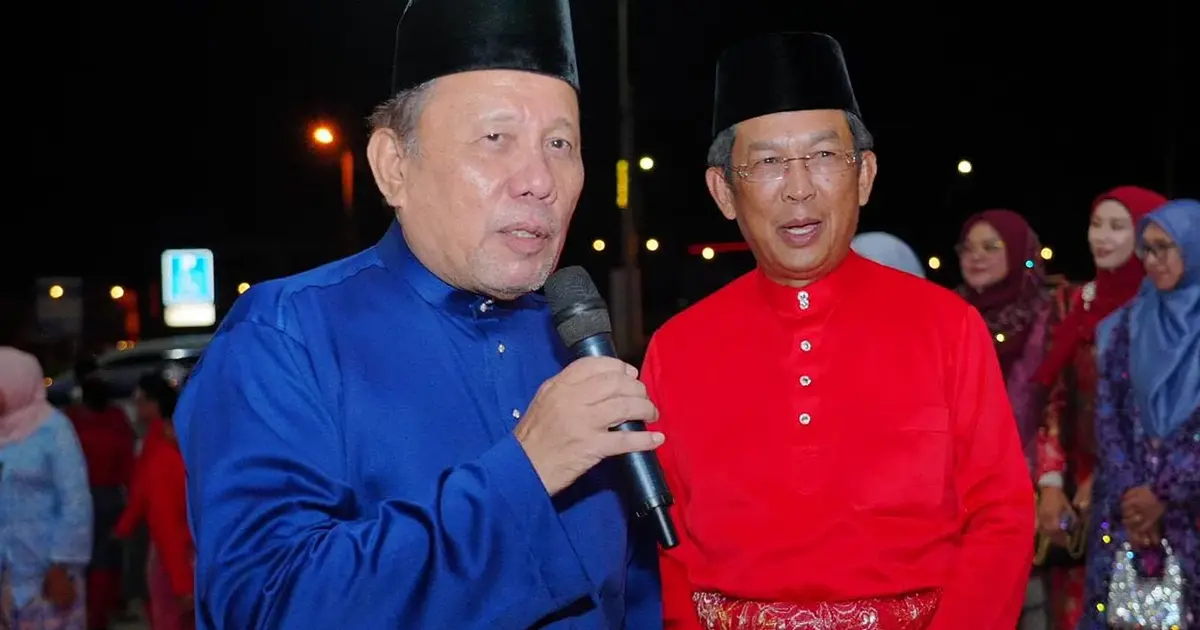
Jalaluddin has categorically denied involvement in any scheme to remove the Negeri Sembilan menteri besar or undermine the state ruler's position, pushing back against mounting allegations that have surfaced in recent weeks. The state Umno chief's forceful rebuttal comes as speculation continues regarding internal party maneuvering at the highest levels of Negeri Sembilan governance, an issue that has drawn increasing scrutiny from both party members and observers of state politics.
According to reports circulating through political circles, Jalaluddin stands accused of participating in coordinated efforts to compel the menteri besar into endorsing documentation that would fundamentally alter the constitutional arrangement in Negeri Sembilan. Such moves would represent an unprecedented intervention in the state's delicate power structure, where the ruler holds significant ceremonial and constitutional authority. The gravity of such allegations has prompted the Umno leadership to issue unequivocal denials, emphasizing their commitment to institutional stability and constitutional propriety.
The controversy reflects deeper tensions within Umno's Negeri Sembilan division, where factional rivalries have occasionally surfaced regarding resource allocation, candidate selection, and influence over state policy direction. These internal party dynamics, while not unusual in Malaysian politics, have assumed heightened importance given the composition of the current state government and the delicate coalition arrangements that underpin legislative stability in the assembly.
Negeri Sembilan's political landscape has experienced considerable flux over recent years, with successive changes in state leadership and shifting alignments between Umno, its coalition partners, and opposition blocs. The state's governance structure places significant power in the hands of the menteri besar, who serves at the pleasure of both the legislative assembly and, symbolically, the ruler. Any attempt to manipulate this arrangement through extralegal means would constitute a serious breach of political convention and constitutional understanding.
The ruler's position in Negeri Sembilan occupies a unique constitutional space within Malaysia's federal system. Unlike the Prime Minister at the federal level, who commands executive authority, the state ruler functions primarily as a constitutional figurehead, though with important ceremonial responsibilities and the theoretical power to withhold consent for significant state legislation. Moves to remove or diminish the ruler's authority would therefore strike at the foundation of Malaysia's constitutional monarchy framework, even at the state level.
Umno's explicit rejection of these allegations serves multiple strategic purposes within the party's current political environment. The party has consistently sought to portray itself as a defender of institutional stability and constitutional governance, particularly as it navigates complex coalition arrangements and competes for public confidence following periods of internal turbulence. Any association with schemes to circumvent constitutional processes would undermine these messaging efforts and potentially alienate the party's traditional support base among the Malay-Muslim majority who value institutional continuity.
The timing of these allegations and subsequent denials reflects the high stakes surrounding Negeri Sembilan's political future. Control over a state government confers significant patronage resources, influence over developmental priorities, and positioning for national-level political leverage. Competition for these assets has historically generated friction within parties and between ruling coalitions, particularly in states where electoral margins are narrow or factional alignments remain fluid.
For Malaysian political observers, the Negeri Sembilan situation encapsulates broader challenges facing political parties as they attempt to maintain internal coherence while satisfying competing factional interests and managing relationships with constitutional institutions. The state has often served as a bellwether for larger national political trends, and the current controversy may signal shifts in factional power within Umno that could have implications extending beyond Negeri Sembilan's borders.
The institutional implications of the alleged scheme, had it proceeded, would have been particularly troubling given Malaysia's emphasis on constitutional governance and rule of law. Pressure tactics designed to extract endorsements for constitutional modifications represent precisely the kind of extra-institutional maneuvering that undermines public confidence in political leadership and democratic institutions. Jalaluddin's categorical denial effectively reestablishes the importance of respecting constitutional boundaries, even when factional advantages might appear attractive in the short term.
Governance challenges in Negeri Sembilan must ultimately be resolved through legitimate channels that respect both party rules and constitutional procedures. This episode, whether viewed as baseless rumor or as a narrowly averted constitutional crisis, underscores the importance of maintaining clear separation between party politics and institutional authority. As Malaysian politics continues its evolution, the preservation of these distinctions becomes increasingly vital to ensuring stable governance and sustained public confidence in state and federal institutions.

