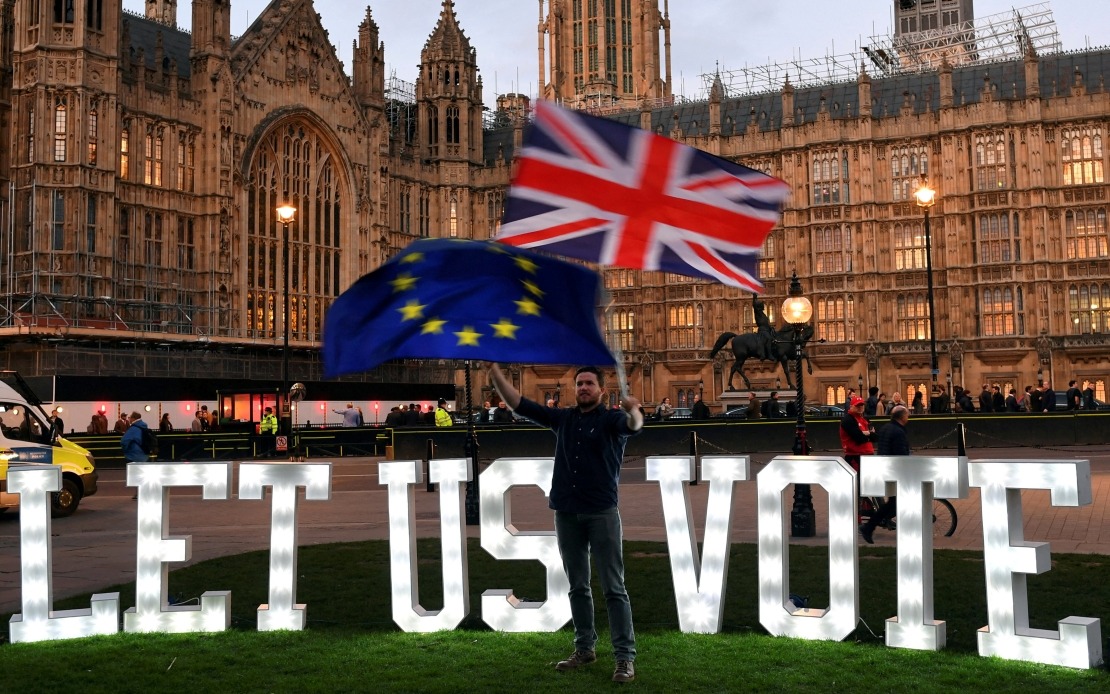
With Britain marking a decade since the Brexit referendum, questions persist about whether a new UK government might reverse the historic 2016 decision to leave the European Union. Richard Balfe, a Conservative member of the House of Lords, has thrown cold water on such speculation, arguing that rejoining the bloc remains politically improbable regardless of which party holds power in Westminster. His assessment comes as the United Kingdom navigates significant political transition, with the Labour government undertaking a leadership succession process.
Balfe's characterisation of potential EU re-entry attempts as "halfhearted" reflects deeper scepticism about the political appetite for such a dramatic reversal. The peer suggested that even if a future administration attempted to undo Britain's departure from the union, the effort would ultimately prove unsuccessful. This perspective underscores the entrenched nature of Brexit sentiment within British politics, where both major parties have largely accepted the referendum outcome as definitive. Despite persistent calls from Remain campaigners and some business interests for reconsideration, the political calculus has shifted significantly away from membership reversal since the 2016 vote.
Instead of pursuing formal EU reintegration, Balfe predicted that successive British governments would adopt a strategy of pragmatic accommodation, continuing to "muddle along" with existing arrangements while gradually aligning more closely with American interests and influence. This characterisation suggests a Britain increasingly oriented toward transatlantic partnership rather than deeper European integration. The observation carries particular weight given Balfe's insider perspective within Conservative circles, where questions about Britain's European orientation have long generated considerable debate.
The political context for this assessment has shifted dramatically with Prime Minister Keir Starmer's announcement on Monday that he would step down as Labour Party leader while remaining in office temporarily. Starmer indicated that the contest to choose his successor would commence on July 9 and conclude before Parliament reconvenes in September. This succession process introduces substantial uncertainty into British governance at a moment when the country continues grappling with post-Brexit adjustments and economic headwinds. The timing raises questions about ministerial focus and decision-making capacity during the transition period.
June 23 held particular symbolic significance as the date marking ten years since British voters decisively endorsed leaving the European Union, with 52 per cent voting to depart. That referendum outcome set in motion events that formally culminated on January 31, 2020, when the United Kingdom terminated its 47-year membership in the bloc. The departure itself represented one of the most significant geopolitical developments in recent European history, fundamentally reshaping Britain's institutional relationships and policy framework across numerous domains.
The immediate aftermath of formal exit involved a carefully structured transition phase designed to permit orderly adjustment for businesses, workers, and government institutions. During this transition period, extending through December 31, 2020, European Union laws and regulations remained fully operational in Britain, and British and EU citizens continued enjoying simplified travel arrangements. This transitional architecture provided breathing room for establishing new administrative systems and negotiating detailed post-membership arrangements. However, this arrangement ultimately represented a temporary pause rather than a permanent solution to the underlying challenge of reconfiguring British-European relations.
On January 1, 2021, a trade and cooperation agreement negotiated between London and Brussels formally took effect, establishing the new legal framework governing economic relations between the country and the bloc. This agreement fundamentally altered the commercial landscape, introducing customs declarations, tariff barriers, and regulatory divergences that had previously been absent. The transition from integrated EU membership to a bilateral trade relationship imposed substantial adjustment costs on British businesses, particularly those relying on complex cross-border supply chains or integrated production networks.
The economic consequences of Brexit have proven substantial and measurable. The Financial Times reported that the United Kingdom had forfeited its position as a globally significant trade hub as a direct consequence of leaving the European Union. Additionally, the Brexit transition has substantially complicated investment decisions regarding British companies, as international investors navigate new regulatory frameworks, tariff structures, and operational complexities. These economic headwinds have persisted despite various government efforts to secure alternative trade arrangements and attract investment through regulatory flexibility and tax incentives.
For Malaysian readers, Britain's Brexit experience offers instructive lessons regarding the complexities of regional economic integration and the difficulties of reversing such arrangements once established. Malaysia's own role within ASEAN and broader regional economic frameworks has generated occasional domestic debate about optimal levels of integration and sovereignty preservation. The British experience demonstrates that even wealthy, developed democracies face genuine challenges in managing the transition away from deep regional integration, suggesting that such decisions warrant careful long-term consideration before implementation.
The Malaysian context differs substantially from Britain's European situation, yet the underlying dynamics of regional integration carry relevance. ASEAN's consensus-based decision-making processes and emphasis on non-interference differ markedly from the European Union's supranational institutional structure. However, questions about balancing regional cooperation benefits against national policy autonomy resonate across different geographic and economic contexts. Britain's experience offers a cautionary tale about underestimating the complexity and cost of reversing integrated regional frameworks, even when serious political constituencies advocate for such reversal.
Balfe's analysis ultimately suggests that Britain has crossed a Rubicon regarding European integration. Regardless of leadership changes, the political and economic architecture established through Brexit appears durable and unlikely to be fundamentally reversed through formal EU reaccession. Instead, future governments will presumably focus on optimising Britain's position within its new external relationship with the bloc while exploring alternative strategic partnerships and trade arrangements. This trajectory implies a Britain increasingly distinct from continental Europe in institutional orientation and policy framework, with implications extending across global trade, security arrangements, and cultural relationships that remain to unfold across coming decades.