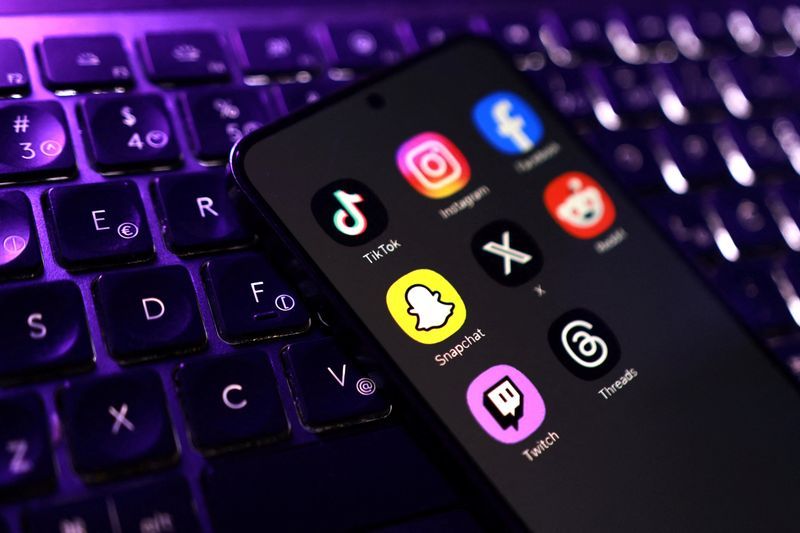
British teenagers who submitted to a government-commissioned trial of social media restrictions showed measurable improvements in sleep quality, mental focus and family relationships, according to findings released this week. The research, undertaken before outgoing Prime Minister Keir Starmer's push for a blanket social media ban for those under 16, examined whether limiting teens' access to platforms could yield genuine wellbeing gains. The results suggest that targeted interventions do work—at least in the short term—though the practical reality of enforcing such restrictions reveals significant loopholes and compliance challenges that policymakers will need to address.
The trial enrolled 309 households across Britain and asked teenagers aged 13 to 17 to participate in one of three approaches for a single month. One group received a strict 15-minute daily allowance per app, another operated under a 9 p.m. to 7 a.m. curfew preventing access during sleeping hours, and a third had social media apps entirely removed from their devices. All three groups reported gains across multiple dimensions of wellbeing. Participants consistently noted better sleep patterns, improved mood, sharper concentration on schoolwork and study time, and warmer interactions within their families. The consistency of these self-reported benefits across different intervention types suggests that reducing social media exposure—regardless of the specific method—generates positive outcomes for adolescent health.
However, the three approaches produced notably different experiences. The overnight curfew emerged as the most sustainable and practical option for families to maintain. Teenagers found it relatively easy to understand and follow, and it delivered the most reliable sleep improvements without requiring them to abandon social connections during waking hours. By contrast, the strictest approach—removing apps entirely from devices—generated the strongest reported gains in concentration and focus but created the greatest social disruption. Teens described feeling isolated from peer groups, particularly where platforms like Snapchat served as the primary means of communication among their friend networks. The middle option, a 15-minute daily limit per app, proved the most frustrating. Young people found the constant interruption of conversations impractical and disruptive; it fragmented their social interaction rather than eliminating it, making this approach the least compliant among participants.
A critical weakness exposed by the trial is the relative ease with which determined teenagers circumvented restrictions. Many simply shifted their social media use to other devices—tablets, laptops, or older phones not subject to the controls. This highlights a fundamental enforcement problem: controlling a single device or app does not address the broader digital ecosystem that modern teens navigate. More ambitious restriction schemes face additional workarounds. Young people acknowledged they could bypass broader family controls through virtual private networks, or could easily declare false ages to re-establish accounts on platforms. These workarounds underscore the technological sophistication of the generation targeted by such policies and suggest that legislation alone, without complementary digital literacy education and industry cooperation, may struggle to achieve lasting results.
The findings carry particular relevance for Southeast Asia, where smartphone penetration among teenagers is among the highest globally and social media usage rates often exceed those in Western countries. Malaysia, along with Singapore, Indonesia, and the Philippines, has seen governments grapple with regulating youth access to digital platforms. The UK trial provides empirical evidence that restrictions do produce genuine wellbeing gains, lending scientific weight to policy proposals in the region. However, the enforcement challenges identified in the British study—device-hopping, VPN usage, and account manipulation—are likely to be even more pronounced in markets where digital sophistication among youth is high and where oversight capacity may be more limited.
Teen feedback from the trial also highlighted the importance of developmental considerations in designing restrictions. Older adolescents, particularly those aged 16 and 17, expressed frustration at blanket controls that did not account for their greater maturity and responsibility. Many argued that restrictions should be calibrated by age and individual readiness rather than applied uniformly. This perspective raises a policy question that Malaysian and regional governments will confront: whether a strict blanket ban on social media for under-16s, as Starmer has proposed, adequately accounts for the diversity of teenage maturity levels and the legitimate social and educational uses of digital platforms.
The research also reveals the extent to which major platforms have become embedded in adolescent social infrastructure. The distress many participants experienced when unable to access Snapchat during the trial reflects how thoroughly these services have replaced traditional communication channels for peer interaction. For policymakers, this raises uncomfortable questions: restricting platforms may improve sleep and focus metrics, but does it genuinely serve teen wellbeing if it creates profound social isolation? Or does it simply shift the problem rather than solve it? The data suggests the answer lies somewhere in between—restrictions demonstrably help with sleep and concentration, but the social cost is real and should not be dismissed.
The trial's single-month duration also warrants consideration. The improvements participants reported may partly reflect the novelty effect of participation in a study, or a temporary boost from conscious behaviour change. Sustaining such discipline over months or years, particularly as adolescents grow older and seek greater autonomy, represents a different challenge altogether. The ease with which teenagers identified workarounds suggests that compliance would likely erode over time unless restrictions were enforced with increasing rigour—a path that raises separate questions about family dynamics, privacy, and the wisdom of treating teen digital behaviour as a compliance problem requiring constant surveillance.
For Malaysia and the broader region, the UK trial offers both encouraging and cautionary findings. Encouraging, because it provides evidence that social media restrictions genuinely improve several important dimensions of adolescent wellbeing. Cautionary, because it exposes the practical difficulties of implementation and the limits of top-down regulatory approaches without broader societal engagement. Rather than importing the UK's proposed under-16 ban wholesale, regional policymakers might instead consider how the trial's insights about graduated restrictions, age-appropriate autonomy, and the importance of addressing underlying drivers of excessive social media use could inform more nuanced and effective policy frameworks.

