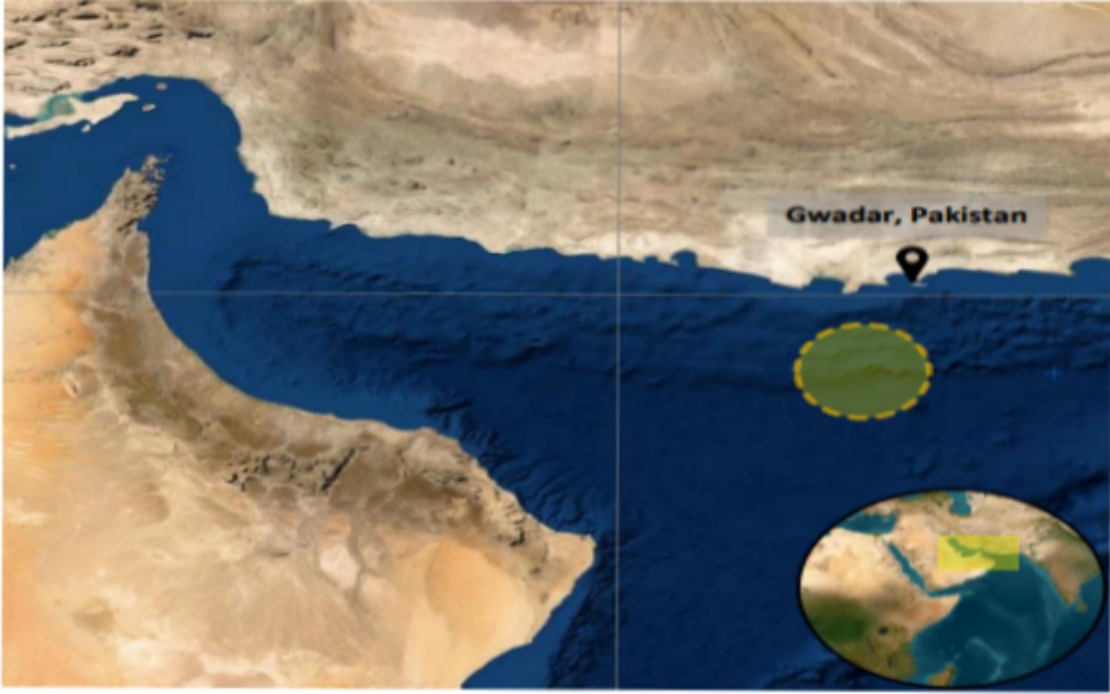
The UK Maritime Trade Operations (UKMTO) agency confirmed on Tuesday that it has received reports of an incident involving a commercial tanker and military forces operating in the Gulf of Oman, in waters near Gwadar on Pakistan's southwestern coast. The precise nature of the encounter and the identity of the vessels and military assets involved remain undisclosed, though the agency has formally notified the international maritime community of the development through an official advisory notice.
In its statement, UKMTO instructed mariners transiting the contested waters to exercise heightened caution and review the latest available maritime security bulletins before proceeding through the region. The guidance reflects growing concern among international maritime authorities about the unpredictable operational environment that has developed across one of the world's most strategically critical shipping corridors. Vessel masters and operators have been advised to maintain continuous situational awareness and remain prepared to respond to evolving circumstances on the water.
The agency noted that relevant government authorities are actively investigating the incident and that inquiries remain ongoing. However, UKMTO refrained from releasing additional specifics regarding the tanker's identity, cargo manifest, flag state, or the military organisations allegedly involved in the encounter. The statement contained no information about potential casualties, injuries, or structural damage to vessels participating in the incident, leaving significant gaps in the public record about what actually transpired.
This latest maritime security incident punctuates an already volatile period in the Gulf of Oman, a body of water that serves as the gateway to the Strait of Hormuz—the narrow passage through which approximately one-third of the world's seaborne oil exports flow daily. The strategic importance of this waterway cannot be overstated for energy security across Asia and beyond, including for Malaysian and regional economies heavily dependent on stable energy supplies and uninterrupted maritime commerce.
The reported incident arrives against a backdrop of escalating military confrontations between the United States and Iran, two regional powers whose competition for influence and strategic advantage has repeatedly spilled over into maritime altercations. Previous months have witnessed various encounters between American naval vessels and Iranian military craft, with both sides accusing each other of provocative and destabilizing behaviour. The pattern of incidents has generated anxiety within the international shipping industry about transit through these waters.
For Southeast Asian nations, including Malaysia, such disturbances in the Gulf of Oman carry direct implications for regional stability and economic prosperity. Malaysian shipping companies, which operate substantial fleets engaged in international trade, regularly navigate these waters or depend on vessels transiting the route to deliver goods to and from markets throughout the region. Any disruption to maritime security or freedom of navigation in this corridor elevates shipping costs, insurance premiums, and supply chain risks across Southeast Asia.
The advisory issued by UKMTO represents a standard precautionary measure employed by maritime authorities when conditions deteriorate in strategic waterways. However, the fact that such notices have become increasingly frequent in the Gulf of Oman underscores the transformation of what was once a relatively stable shipping lane into a zone of elevated risk. Insurance companies have already responded by adjusting premiums for vessels transiting the Strait of Hormuz and adjacent waters, effectively pricing the geopolitical risk into commercial maritime operations.
The lack of detailed information from UKMTO about the specific nature of this incident frustrates efforts to assess whether this encounter represents a one-off occurrence or part of a concerning trend. Some maritime analysts have suggested that such reported incidents may sometimes involve minor infractions or routine interdictions that escalate into diplomatic incidents due to the sensitive political environment. Others contend that genuine security threats are increasing as various state and non-state actors test international resolve and seek to project power through naval operations.
For Malaysian policymakers and business leaders, the persistence of such incidents underscores the importance of advocating for de-escalation and respect for international maritime law within regional and global forums. Malaysia's own strategic position in Southeast Asia, combined with its role in the Association of Southeast Asian Nations (ASEAN), potentially positions it to contribute to dialogue aimed at reducing tensions and ensuring that international waters remain open to peaceful commerce.
The broader implications of maritime instability in the Gulf of Oman extend beyond shipping and energy security to encompass questions of international law, regional stability, and the balance of power in the Indo-Pacific. The incident highlighted by UKMTO serves as a reminder that even in an era of globalisation and economic interdependence, geopolitical competition continues to create friction points that can disrupt trade and investment. Malaysian stakeholders, from government officials to business executives, must remain attentive to developments in this critical region and their potential reverberations across Southeast Asian markets and supply chains.

