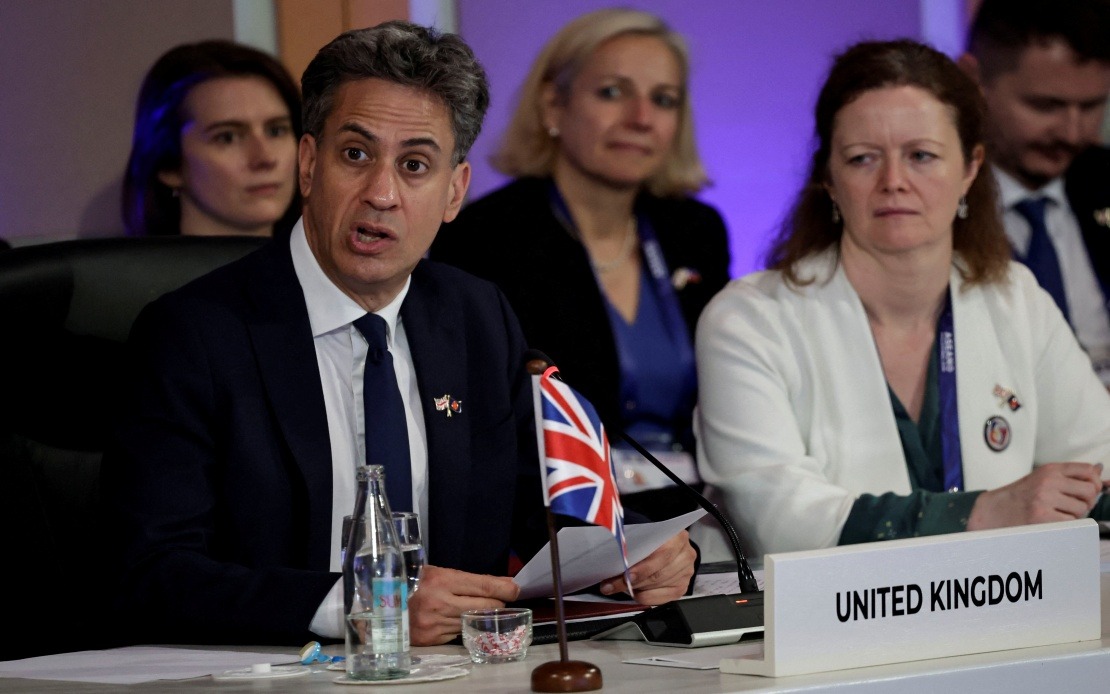
Ed Miliband, newly appointed foreign secretary of the United Kingdom, is embarking on his inaugural visit to continental Europe this week, signalling the government's determination to rebuild and deepen relationships with key EU member states. The trip represents a significant diplomatic gesture, arriving at a critical juncture for European security and transatlantic relations. By choosing France and Spain as his first destinations, Miliband is demonstrating that London intends to maintain close working relationships with Europe's major powers, particularly as the region grapples with interconnected challenges from geopolitical tensions to environmental catastrophe.
The foreign secretary's itinerary takes him to Paris on Wednesday, where he will engage with French counterpart Jean-Noël Barrot. These discussions will centre on fortifying European defences in an increasingly unstable global environment, with particular emphasis on sustaining diplomatic and practical support for Ukraine as its conflict with Russia drags into its third year. The talks will also address the precarious situation in West Asia, where conflicts in Gaza and broader regional tensions demand coordinated international responses. By meeting Barrot early in his tenure, Miliband is positioning Britain as an active participant in European strategic deliberations rather than a peripheral observer.
Following his Paris engagement, Miliband will travel to Madrid to meet Spanish Foreign Minister José Manuel Albares. The bilateral discussion will encompass the long-standing UK-EU Gibraltar treaty, a historically sensitive issue that continues to require careful diplomatic management. Gibraltar's unique status—a British Overseas Territory with a Spanish territorial claim—has frequently complicated UK-Spain relations and broader Brexit negotiations. The inclusion of this matter on the agenda demonstrates that Miliband intends to tackle complex bilateral issues head-on, seeking collaborative solutions that respect both nations' concerns whilst maintaining regional stability.
The timing of these visits coincides with unprecedented natural disasters unfolding across both nations. France and Spain are currently battling devastating wildfires that have displaced approximately 330,000 people, destroying homes, agricultural land, and critical infrastructure. Climate scientists have linked the intensity and frequency of such events to accelerating global warming, a phenomenon that transcends borders and demands coordinated international action. By visiting these countries during their crisis, Miliband is not merely offering ceremonial condolences; he is positioning Britain as a concerned neighbour ready to provide practical assistance and to engage seriously on the systemic causes driving these catastrophes.
Climate change will feature prominently across both meetings, framing the wildfire crises as visceral reminders of the urgency surrounding the climate emergency. The foreign secretary intends to argue that these disasters exemplify why the global community must intensify its commitment to emissions reduction and climate adaptation. For Malaysia and Southeast Asia, this messaging carries particular relevance. The region faces equally severe climate-related challenges, including rising sea levels, increasingly intense monsoons, and agricultural disruption. By positioning climate action as a central pillar of European-British diplomatic engagement, Miliband is reinforcing that climate security is now inseparable from traditional security concerns—a message that resonates deeply with nations like Malaysia that face existential climate risks.
Migration and border management are also expected to feature in the Paris discussions, reflecting the pressing nature of displacement crises affecting Europe. Both the refugee situations stemming from conflicts in Ukraine and West Asia, as well as irregular migration flows across the Mediterranean, continue to strain European resources and societies. Britain's approach to these challenges, particularly post-Brexit, has diverged significantly from EU member states, making dialogue essential for harmonising responses and preventing uncoordinated, counterproductive policies. The foreign secretary's willingness to engage on this thorny issue suggests a desire to move beyond the confrontational tone that characterised Brexit negotiations.
The diplomatic architecture that underpins these visits reflects broader strategic calculations about Britain's place in a rapidly shifting geopolitical landscape. With NATO's eastern flank increasingly militarised due to Russian aggression, European solidarity has become both more valuable and more fragile. America's evolving commitment to European defence—dependent partly on electoral outcomes and political shifts in Washington—has prompted European capitals to seek reassurance that Britain remains a reliable security partner. Miliband's tour signals continuity in this regard, whilst simultaneously positioning the UK as an independent actor capable of building coalitions around shared values and interests rather than as a mere appendage to Washington or Brussels.
For Southeast Asian nations observing these developments, the implications merit careful consideration. A Britain actively engaged with European security architecture is a Britain less inclined to redirect its full diplomatic and military attention to Indo-Pacific affairs. However, the strengthening of Euro-British ties also reinforces a broader Western alliance that has strategic interests in regional stability, particularly regarding freedom of navigation, supply chain security, and the rules-based international order. Malaysian policymakers should recognise that European internal cohesion and stability ultimately affects regional prosperity and security calculus.
The security partnership discussions encompass crucial geopolitical dimensions that extend beyond Europe itself. The West Asian instability referenced in Miliband's agenda touches on issues ranging from Iran's nuclear programme to Israeli-Palestinian dynamics to Yemen's humanitarian catastrophe. Britain's diplomatic weight, though diminished since its imperial zenith, remains consequential in these theatres. Spain, with historical and contemporary ties to the Maghreb and wider Mediterranean region, brings complementary perspectives and capabilities to these discussions. Together, coordinated British-Spanish-French approaches could shape international responses to regional conflicts in ways that affect global energy markets, weapons proliferation, and humanitarian outcomes.
Ultimately, Miliband's inaugural European visit represents a deliberate choice to prioritise relationship-building and multilateral engagement. The choice of substance over symbolism—addressing climate crisis, Ukraine, West Asian security, migration, and the Gibraltar treaty rather than offering superficial pleasantries—suggests a foreign secretary intent on restoring Britain's reputation as a serious diplomatic actor. For Malaysia, this European rebalancing underscores the multipolar nature of contemporary international relations, where different regions pursue distinct but interconnected diplomatic agendas, and where Southeast Asia must navigate great power competitions whilst advancing its own development and security priorities.

